The red dirt of northern Australia does not care about global politics. For generations, it has simply baked under a relentless sun, shifting only when the monsoon rains turn the dust into thick, impenetrable clay. If you stand outside a town like Katherine or Darwin at dusk, the world feels impossibly vast, quiet, and isolated.
Distance used to be Australia’s shield. Today, it is a strategic crucible.
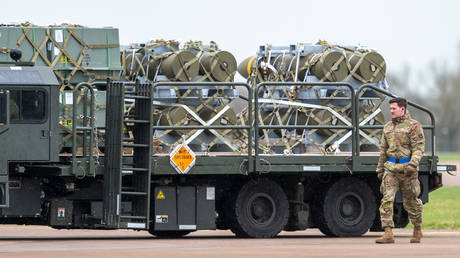
Deep within these remote stretches, something massive is shifting. Heavy machinery is cutting through the silence. Concrete is pouring. Behind the bureaucratic announcements of military cooperation lies a staggering logistical reality: the United States is quietly turning parts of the Australian continent into a massive, war-ready supply depot.
This is not a temporary training exercise. It is a profound rewiring of Indo-Pacific deterrence.
To understand why this matters, look at a map through the eyes of a military logistics officer. Let us call him Marcus. Marcus is a hypothetical planner, but his daily headaches are entirely real. His job is not to fire weapons; it is to worry about spark plugs, medical supplies, and artillery shells.
Marcus looks at the Pacific Ocean and sees a terrifying void.
If a conflict erupts in the South China Sea or the Taiwan Strait, the American military faces a brutal mathematical problem known as the tyranny of distance. The distance from the United States mainland to Taipei is roughly 6,000 miles. Shipping heavy munitions across an ocean during an active conflict is a terrifyingly slow endeavor. Cargo ships are vulnerable. Transport planes can only carry so much.
If a crisis hits, waiting for a shipment from California means the battle is already lost.
The solution? Put the gear there ahead of time.
The Logistics of Prevention
This explains the recent agreements between Washington and Canberra to establish what they call an enduring logistics support area. This means building massive, hardened warehouses filled with everything a modern military needs to sustain a high-intensity conflict for weeks or months.
We are talking about spare parts for fighter jets, fuel, rations, and precise, highly destructive missiles.
Consider the sheer scale of modern warfare. During the opening months of recent global conflicts, nations burned through ammunition stocks faster than factories could replicate them in a year. War eats metal. It devours resources. By placing these stockpiles in northern Australia, the US military effectively cuts thousands of miles off its supply chain.
But why Australia?
Geography tells the story. The northern coast of the continent sits right on the edge of Southeast Asia, close enough to project power rapidly, yet far enough south to remain outside the immediate, dense envelope of short-range ballistic missiles. It is a sanctuary. A fortress.
For the locals living near these expanding bases, the transformation is tangible. The quiet roads now rumble with heavy transport vehicles. Local contractors are building thick concrete bunkers designed to withstand satellite-guided bombardment.
The air smells of fresh asphalt and aviation fuel.
The Invisible Costs of Deterrence
There is an eerie paradox at the heart of this strategy. The entire point of spending billions of dollars to move millions of tons of steel to the Australian outback is to ensure those weapons are never used.
It is deterrence through sheer presence. The goal is to make any potential adversary look at the massive stockpiles, calculate the sheer staying power of the US-Australian alliance, and decide that today is not the day to start a war.
Yet, this security comes with profound anxiety.
By housing America’s war reserves, Australia is tying its geopolitical destiny directly to Washington. For decades, Canberra walked a delicate tightrope, balancing its deep security alliance with the US against its massive economic reliance on trade with China. That tightrope is fraying.
The warehouses represent a choice.
Step inside a hypothetical bunker in the Northern Territory. It is climate-controlled to protect delicate electronic guidance systems from the brutal tropical humidity. Rows of grey crates stretch into the shadows. Each crate holds a component of a larger machine.
Without these parts, ships sit idle. Aircraft remain grounded.
The strategy relies on a simple truth: battles are won by soldiers, but wars are won by mechanics and supply clerks. The US military calls this pre-positioned stock. It sounds dry. It sounds boring.
It is anything but.
A Change in the Air
Critics look at these developments and see a dangerous escalation. They argue that turning northern Australia into a launchpad for American power makes the continent a primary target in any future conflict. If war breaks out, those silent warehouses in the red dirt will be the very first things the enemy tries to destroy.
The local community feels this tension implicitly. They see the economic boost from base construction, the new jobs, and the upgraded airfields. But they also see the grey hulls of warships arriving in regular rotations and the fighter jets tearing through the sky, shattering the peaceful afternoon.
The quiet outback is quiet no longer.
This massive buildup is fundamentally reshaping the balance of power in the region. It signals to the world that the Indo-Pacific is no longer an ocean that can be easily policed from afar. The stakes are grounded firmly in the earth.
As the concrete cures under the northern sun, the message sent across the water is clear. The supplies are waiting. The lines are drawn. The red dirt of Australia is now a cornerstone of global stability, holding a heavy, silent weight that the region cannot ignore.