The Girl with Two Throats
Sophie is seven years old, and she is currently living in two different worlds at the exact same time.
In one world, she is navigating the sharp, rhythmic precision of German grammar. She is learning that a "bridge" is feminine (die Brücke) and a "girl" is, curiously, neutral (das Mädchen). In the other world, she is laughing in English, the global tongue of the playground, where the rules are looser and the vowels stretch like saltwater taffy. Discover more on a similar issue: this related article.
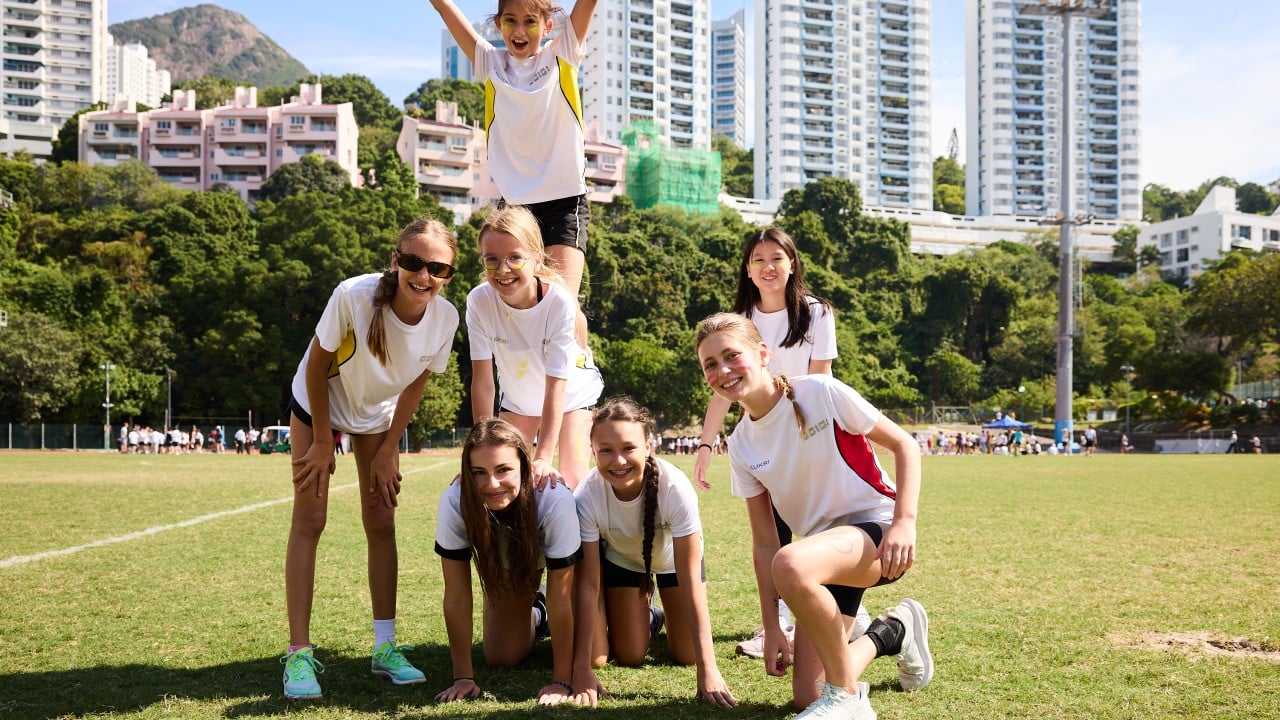
If you watched Sophie at the German Swiss International School (GSIS), you wouldn't see a child struggling with a heavy academic load. You would see a child whose brain is physically reshaping itself to accommodate a broader reality. She isn't just learning words. She is learning how to think twice.
Most people look at bilingual education as a practical tool—a line on a resume or a way to order coffee in Berlin. They see it as an "extra." They are wrong. Further analysis by Refinery29 highlights similar views on this issue.
Bilingualism is not an accessory. It is a fundamental rewiring of the human operating system. When a child like Sophie switches from one language to another, she isn't just translating. she is engaging in a high-speed cognitive dance that affects everything from her emotional intelligence to her ability to solve a complex math problem.
The cold facts tell us that bilingual students often outperform their monolingual peers in standardized testing. But the facts don't tell us why. To understand the "why," we have to look at what happens in the quiet moments of a classroom where two languages live in harmony.
The Cognitive Gym
Imagine your brain is a muscle. Most of us spend our lives lifting the same five-pound weight in the same repetitive motion. We speak one language, we see one culture, and we follow one set of social cues.
A bilingual child is doing cross-fit.
Every time Sophie hears a sentence, her brain has to perform a split-second "inhibition" task. She has to suppress the English word for "apple" to let the German Apfel come to the front. This constant management of competing information strengthens the prefrontal cortex. This is the part of the brain responsible for "executive function"—the CEO of the mind. It handles focus, switching between tasks, and holding information in mind while working on a problem.
Researchers have found that this mental gymnastics leads to something called "cognitive flexibility." While a monolingual child might see a problem and look for the one "correct" way to solve it, a child trained in two linguistic systems is used to the idea that there are multiple ways to describe the same reality.
They don't just see the bridge. They see the Brücke. They understand, intuitively, that the label is not the thing itself. This creates a layer of intellectual detachment that allows for deeper, more creative problem-solving.
It is the difference between being a passenger on a train and being the person who understands how the tracks were laid.
Beyond the Dictionary
There is a common fear among parents that immersion might lead to confusion. They worry their child will become a "jack of all trades, master of none," stumbling through two languages without ever grasping the poetry of either.
The reality at institutions like GSIS suggests the opposite.
Language is the skin of a culture. When you teach a child German, you aren't just teaching them vocabulary; you are giving them access to a specific way of viewing the world—one that values structure, precision, and a certain philosophical depth. When they switch to English, they tap into a history of trade, expansion, and adaptability.
This creates a "bicultural" identity.
Think about a conflict on the playground. A child who only speaks one language sees the world through a single lens. A child who inhabits two languages is more likely to understand that people can have different perspectives based on their background. They develop empathy faster because they have spent their entire lives translating not just words, but intentions.
They become "cultural chameleons."
This isn't about being "polite" in two languages. It’s about the ability to walk into a room of strangers and instinctively understand the unspoken rules of the engagement. In an increasingly fractured world, this isn't just a school skill. It’s a survival skill.
The Economic Ghost in the Room
We can't ignore the pragmatism of it all. We live in a global economy that no longer rewards those who stay in their lane.
The traditional model of education was built for the industrial age: learn a trade, stay in your city, and speak the local tongue. That world is gone. It has been replaced by a digital landscape where a developer in Hong Kong collaborates with a designer in Munich and a project manager in London.
The bilingual child enters this arena with a massive head start.
Statistically, bilingual adults earn more. They have access to a wider net of jobs. But more importantly, they possess the "soft skills" that AI cannot yet replicate: nuance, irony, and the ability to bridge the gap between two different ways of being.
At GSIS, the bilingual curriculum isn't just about passing the Abitur or the IB. It’s about creating a graduate who is "future-proof." When the job market shifts—and it will shift—the person who can pivot, reframe, and communicate across borders is the one who stays relevant.
The Late-Night Struggle
It isn't always easy. There are nights when Sophie comes home exhausted. There are moments when she mixes her syntax, putting the verb at the end of an English sentence because that’s where the German logic told her it belonged.
Her parents sometimes wonder if they are pushing too hard.
But then, they see her talking to a new student who just arrived from Europe. They see her bridge the gap between the newcomer and the local kids. They see the light go on in her eyes when she realizes she can read a book that half the world cannot.
The struggle is the point.
Growth happens at the edge of discomfort. By placing children in an environment where they must constantly navigate the "in-between," we are teaching them that they can handle complexity. We are teaching them that being "lost in translation" is actually an opportunity to find a better way to say something.
The Long Game
Perhaps the most startling benefit of this education doesn't show up until decades later.
Neurologists have discovered that bilingualism acts as a form of "cognitive reserve." In studies of patients with Alzheimer’s and dementia, bilingual individuals typically show symptoms four to five years later than monolingual patients with the same level of brain pathology.
The "gym" Sophie is visiting today is building a fortress for her future self.
The benefits of a GSIS education aren't just found in the grades or the university placements. They are found in the quiet, invisible resilience being built inside the brain of a seven-year-old.
We often talk about what we want our children to know. We should be talking more about who we want them to be.
Do we want them to be citizens of a single street, or citizens of the world? Do we want them to see the walls, or do we want them to see the doors?
Sophie walks through those doors every morning. She enters a building where the air is thick with the sounds of two distinct histories, two distinct futures, and a thousand different possibilities. She isn't just learning a second language. She is learning that the world is much bigger than her own reflection.
She is learning that a bridge isn't just something you walk across.
A bridge is something you become.
Would you like me to generate a specific curriculum comparison table between the bilingual and monolingual tracks to see how they stack up?