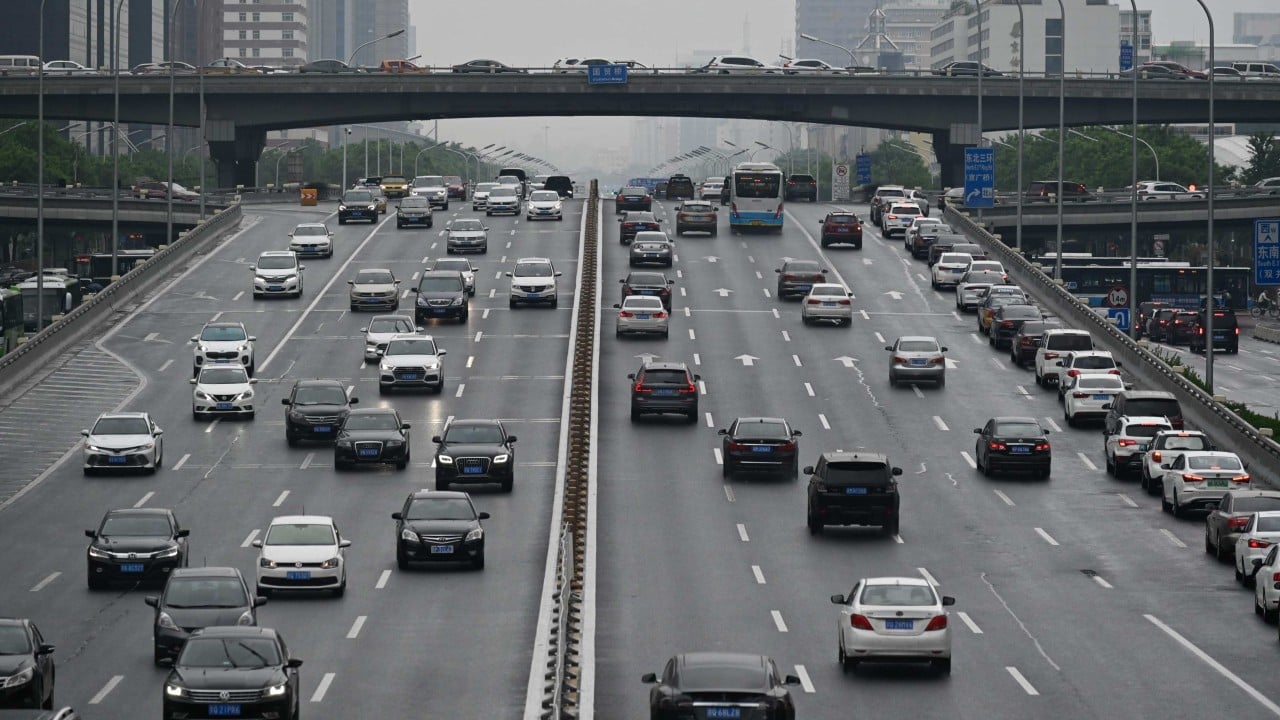
The quiet is what hits you first. If you stand on a street corner in Shenzhen at rush hour, the expected roar of a metropolis is missing. Millions of commuter cars, delivery vans, and city buses glide past with nothing more than a collective, electric hiss. It feels like stepping into a tomorrow that arrived five minutes early.
On paper, this is a triumph. Just last week, global electric vehicle sales smashed through yet another glass ceiling, driven by an unyielding manufacturing blitz in China. The graphs in corporate boardrooms are beautiful, steep cliffs climbing toward a zero-emission utopia. But graphs hide the friction of reality. They don't show the sweat, the economic chokeholds, or the colossal heaps of discarded machinery accumulating just outside the frame.
To understand the true cost of this frictionless future, you have to look at what happens when the machines stop moving.
The Mirage of the Overflow Lot
Consider a hypothetical commuter named Zhao. Like millions of others, he was lured by the promises of the early EV wave: free license plates in crowded cities, government subsidies that made the cars cheaper than a gas-powered equivalent, and the undeniable thrill of driving a tech-forward machine. For three years, his compact electric hatchback was a dream. Then, the battery health degraded.
When Zhao took the car in for service, the mechanic delivered a quiet financial execution. Replacing the lithium-ion battery pack would cost more than the current market value of the entire vehicle.
This is the structural flaw built into the foundation of the boom. Early-generation EVs are becoming economically disposable long before their mechanical components wear out.
Drive an hour outside the gleaming tech hubs of eastern China, and the narrative shifts from high-tech salvation to environmental surrealism. Fields that once grew crops are now populated by thousands of abandoned electric cars. They sit bumper-to-bumper, wrapped in vines, their bright green and white paint jobs fading under the sun. These are the "EV graveyards." Many belong to failed ride-hailing startups that went bankrupt when subsidies dried up; others are older models traded in by consumers who realized that a dead battery is a financial dead end.
We treat these cars like smartphones on wheels. But a smartphone weighs a few ounces. An EV battery pack weighs nearly half a ton, packed with cobalt, lithium, and nickel. When we discard the car, we aren't just tossing away steel and plastic. We are burying the very materials we mined the earth to save.
The Chemistry of the Squeeze
The global appetite for these vehicles has created a frantic, hyper-accelerated supply chain that operates entirely on razor-thin margins. Inside the massive gigafactories, the pressure is relentless.
Think of an EV battery like a highly sensitive, industrial sponge. To get more driving range, engineers have to cram more energy into the same physical footprint. This requires chemistries that are incredibly volatile. The industry has largely split into two camps: Lithium Iron Phosphate (LFP) and Nickel Manganese Cobalt (NMC). LFP batteries are cheaper and safer, but they don't love the cold and offer less range. NMC batteries can take you across a province on a single charge, but they require raw materials that are messy to extract and prone to thermal runaway if damaged.
The race to dominate this market has triggered an economic whiplash. Manufacturers are locked in a brutal price war, slashing the costs of new vehicles to capture market share.
But this downward pressure doesn't just evaporate. It flows backward through the supply chain. It squeezes the component suppliers, the cell assemblers, and ultimately, the miners pulling raw ore out of the ground half a world away. When a new electric sedan drops its price by three thousand dollars overnight to beat a competitor, that discount is paid for by someone else's compromised margin.
The Grid in the Shadows
There is a second, darker irony humming beneath the surface of the record-breaking sales numbers. An electric vehicle is only as clean as the wire it plugs into.
When millions of drivers plug their cars into the grid at 6:00 PM, the sudden spike in demand requires an immediate, massive surge in power generation. In many of the regions driving the manufacturing boom, that surge is met by spinning up coal-fired peaking plants.
The tailpipe emissions have vanished from the city centers, yes. But they haven't disappeared from the planet. They have merely been displaced, pushed outward to rural power stations where towering smokestacks billow into the skies above communities that will never own an electric car.
This displacement creates a profound sense of cognitive dissonance. We celebrate the clean air of the metropolis while ignoring the coal dust settling on provincial farmlands. The transition is happening so fast that the infrastructure cannot keep pace. Building a million electric cars takes months; updating an entire regional electrical grid to handle renewable energy storage takes decades.
The Unseen Balance Sheet
We are participating in a massive, real-time experiment in consumer psychology and industrial scaling. The excitement is real, and the technological achievements are undeniable. The cars are faster, smarter, and objectively better to drive than almost anything that came before them.
But the bill always comes due.
As the older fleet of electric vehicles reaches the end of its first life cycle, the world is facing an unprecedented waste management crisis. Recycling facilities are being built, but they are expensive, energy-intensive, and currently incapable of handling the volume of batteries heading their way. Extracting pure lithium from a spent battery is often more expensive than digging new ore out of a mountain. Until that equation changes, the economic incentive will always favor extraction over circularity.
The quiet streets of the modern city are a beautiful illusion. They suggest that we have solved the problem of human mobility without paying a price. But if you follow the wires past the high-rises, past the suburbs, and into the forgotten valleys where the old models go to rot, you see the real ledger.
A thousands-strong fleet of abandoned vehicles sits in a silent valley outside Hangzhou. The headlights are clouded by moisture, and wild grass grows through the floorboards. A small bird nests in the plastic molding of a charging port that will never see electricity again. The rain falls steadily, washing over the sleek, aerodynamic hoods, a monument to a race that forgot to figure out where the finish line was.