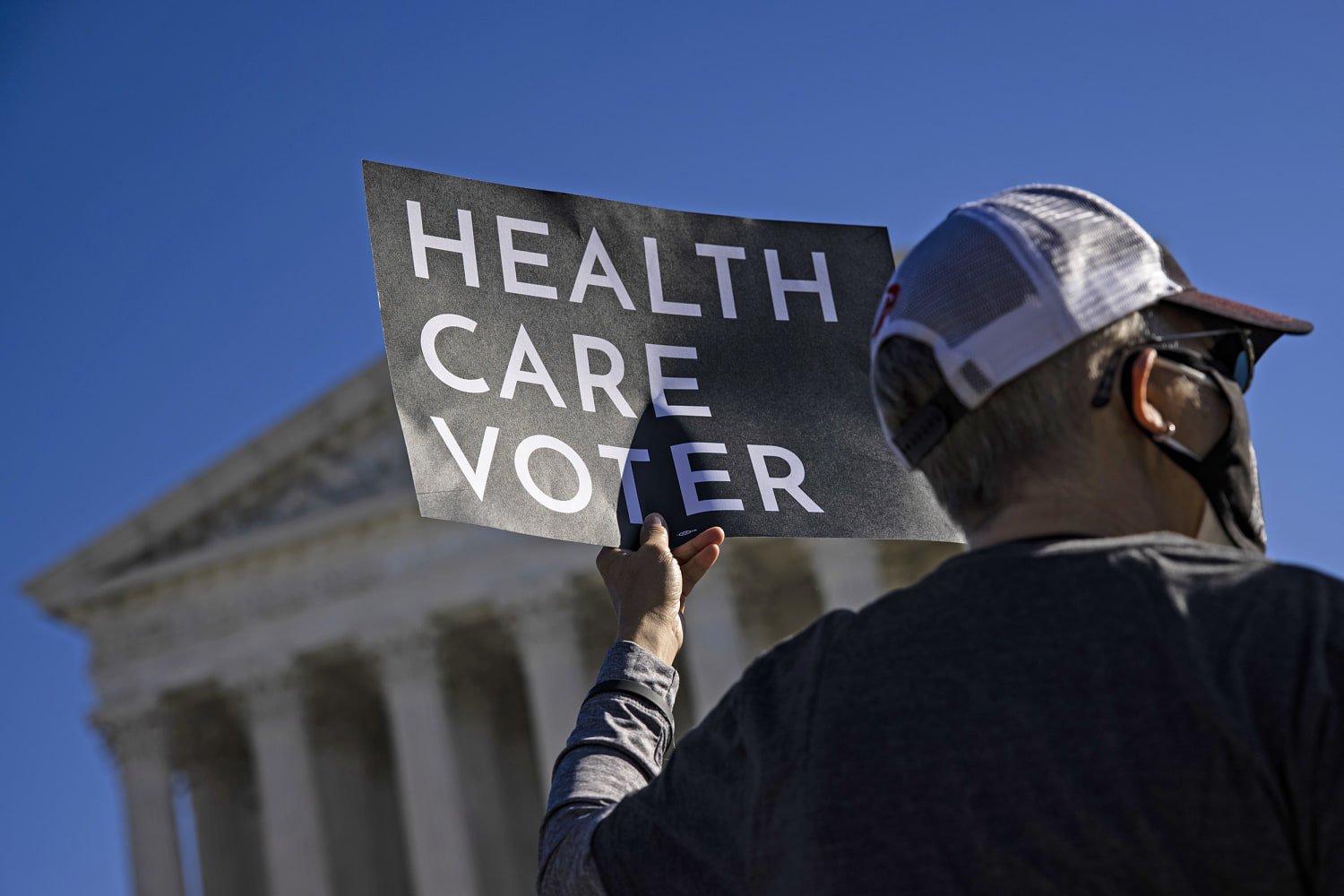
The push for a federally funded, universal primary care system is no longer a fringe academic exercise. It has moved from the faculty lounges of public health schools directly into the center of the Democratic party's policy engine. A prominent think tank has laid out a blueprint that would essentially eliminate copays and deductibles for every American visiting a general practitioner. The goal is to treat the family doctor like the local fire department: a service paid for by taxes that you use whenever you need it, without checking your bank balance first.
While the rhetoric focuses on "health equity," the underlying mechanics are about a radical shift in how the United States manages its most expensive industry. By making primary care free at the point of service, proponents believe they can starve the more expensive parts of the system—emergency rooms and specialized surgical centers—of their steady stream of late-stage, preventable illnesses.
The High Cost of the Front Door
The American healthcare system is an inverted pyramid. We spend trillions on the most complex, high-tech interventions while the foundation—the relationship between a patient and a primary care provider—is crumbling. Currently, a person with a high-deductible insurance plan might ignore a persistent cough or a weird mole because they don't want to shell out $200 for an office visit. Six months later, that cough is Stage IV lung cancer, and the cost to the system jumps from a two-digit office visit to a six-digit chemotherapy regimen.
Think tanks are now betting that the federal government can save money by spending it earlier. The proposal involves the government directly paying primary care practices a monthly fee per patient, rather than the current "fee-for-service" model where doctors are paid for every test and procedure they run. This shift aims to move doctors away from the "hamster wheel" of seeing 30 patients a day just to keep the lights on.
The Capitation Trap
Beneath the surface of "free care" lies a massive change in how doctors earn their living. The proposed model relies heavily on capitation. In this system, a clinic receives a set amount of money per month for every patient on their books. If you are healthy and don't visit, the clinic keeps the money. If you are very sick and require constant attention, the clinic might actually lose money on you.
Critics of this approach point to the risk of "cherry-picking." If a doctor is paid a flat rate, they have a financial incentive to avoid the "difficult" patients—those with multiple chronic conditions or social challenges that require hours of coordination. While the policy includes "risk adjustment" to pay more for sicker patients, the math is notoriously difficult to get right. We have seen this play out in various Medicare Advantage experiments where insurers and providers spent more energy on coding patients as "sick" to get higher payments than they did on actual medical care.
The Workforce Wall
You cannot give everyone a free ticket to the theater if the theater only has ten seats. The biggest obstacle to universal primary care isn't just the money; it is the sheer lack of humans to do the work. The United States is facing a projected shortage of up to 48,000 primary care physicians by the early 2030s.
Years of underpayment compared to specialists have driven medical students toward cardiology, orthopedics, and plastic surgery. Why spend a decade in school to earn $220,000 as a family doctor when you can earn $600,000 as a specialist? Making primary care free will instantly flood clinics with millions of new appointments. If the supply of doctors doesn't increase, "free" will quickly translate to "a six-month wait."
This is where the policy starts to lean heavily on Nurse Practitioners (NPs) and Physician Assistants (PAs). The silent reality of the "free primary care" movement is that many patients will rarely see an actual MD. The model depends on "team-based care," a phrase that sounds collaborative but is often a necessity driven by a shortage of specialized labor.
Where the Money Comes From
The price tag for this initiative is staggering. Even if we assume that preventative care reduces emergency room visits, the upfront cost of covering every American's primary care would run into the hundreds of billions annually.
Proponents suggest several funding streams:
- Redirecting existing subsidies: Rolling in the billions currently spent on various tax credits and community health grants.
- New payroll taxes: A modest increase that would be offset by the elimination of private insurance premiums for primary care.
- Negotiated savings: Forcing down the prices of laboratory tests and basic diagnostic imaging through federal mandates.
However, the political math is even harder than the fiscal math. Private insurance companies currently use primary care as a "loss leader" or a gatekeeper to keep people away from expensive specialists. If the government takes over the primary care "gate," the insurance companies lose their most effective tool for managing their own costs. You can expect the insurance lobby to fight this with every resource they have, painting it as the first step toward a total government takeover of medicine.
The Hidden Power of Data
There is a darker, or at least more clinical, side to this proposal. When the government pays for every primary care visit, the government gets the data for every primary care visit. This creates a national database of the health status of every citizen.
While this is a goldmine for public health researchers—allowing them to track outbreaks or the effectiveness of new drugs in real-time—it raises significant privacy concerns. In a polarized political environment, the idea of a centralized federal database containing the intimate details of every American's "wellness check" is a tough sell.
The policy also hints at mandatory outcomes. If the government is paying for your care, they may eventually want to dictate what that care looks like. We could see a system where doctor's offices are penalized if their patient population doesn't meet certain targets for weight loss, smoking cessation, or blood pressure management. This moves the doctor-patient relationship away from a private partnership and toward a system of state-monitored compliance.
The Corporate Primary Care Counter-Offensive
While the think tanks are drafting white papers, the private sector is already moving. Companies like Amazon, CVS, and Walgreens have spent billions acquiring primary care networks. They see the same thing the policy wonks see: the "front door" of healthcare is the most valuable real estate in the economy.
These corporations are building their own versions of "membership-based" primary care. If the government moves too slowly, the public might find that the "universal" system has already been privatized by retail giants. The battle is now between a public-utility model of health and a subscription-service model.
In the public model, the priority is population health. In the corporate model, the priority is capturing the patient so they buy their prescriptions, their groceries, and their household goods from the same parent company. The Democratic proposal is an attempt to preempt this corporate consolidation before the independent family doctor becomes an extinct species.
The Reality of the "Free" Label
Nothing is ever free. "Free primary care" simply means shifting the cost from the patient's wallet to the taxpayer's ledger. The real question is whether that shift creates enough efficiency to justify the massive disruption to the current insurance market.
The proposal assumes that people are rational actors who will use "free" care responsibly. However, history shows that when the price of a service drops to zero, demand often spikes beyond what is medically necessary. This is known as moral hazard. Clinics could become clogged with the "worried well," leaving those with actual acute needs stuck in the waiting room.
To make this work, the system would need a ruthless level of triaging. You might get a free appointment, but you might have to clear a rigorous set of hurdles before you are allowed to see a specialist or get an MRI. The "freedom" from cost at the front door might lead to a "lockdown" at the back door.
Breaking the Specialized Monopoly
The most radical part of the proposal is the attack on the specialized medical monopoly. For decades, the American Medical Association and various specialty boards have controlled the supply of doctors and the prices they charge. By funneling all money through a primary care "hub," the government is essentially trying to break the power of the high-priced specialist.
If the primary care doctor is the one holding the purse strings—deciding which surgeon gets the referral based on cost and quality rather than just hospital affiliation—the entire economics of the hospital system changes. This is the "how" that many people miss. It’s not just about making the doctor visit cheaper; it’s about using the primary care doctor as a weapon to force the rest of the medical industry to lower its prices.
This requires doctors to be more than healers; they have to be budget managers. Many physicians are rightfully wary of this role. They went to med school to treat patients, not to act as human calculators for the federal treasury.
The Transition Problem
Even if the legislation passed tomorrow, the transition would be a decade-long nightmare. Thousands of private contracts between insurers and doctors would have to be torn up. Modernizing the IT infrastructure of small, rural clinics to handle federal billing would cost billions alone.
We also have the issue of "bridge" populations. People who currently have excellent private insurance might find that their "free" government care is actually a step down in terms of convenience and access. Selling a policy that helps the uninsured but slightly inconveniences the middle class has been the third rail of American politics for fifty years.
The think tank’s push is a recognition that the current path is unsustainable. We are spending 18% of our GDP on healthcare, and our outcomes are lagging behind almost every other developed nation. The plan to nationalize the front door of the doctor's office is an act of desperation disguised as an act of progress.
Stop looking at the price tag at the checkout counter and start looking at the architecture of the building. The goal isn't just to save you a $30 copay; it's to rebuild the entire delivery mechanism of American life from the ground up, starting with the person who hits your knee with a rubber hammer.