The United States government has extended a critical sanctions waiver allowing specific financial transactions for the purchase of Russian energy, a move that signals a quiet admission of economic vulnerability despite a public stance of isolationism. This isn't a diplomatic olive branch. It is a mathematical necessity. By renewing the license, the Treasury Department is effectively keeping the lights on in global markets while maintaining the illusion of a tightening noose around Moscow’s neck.
The core of the issue lies in the 180-day cycle of Office of Foreign Assets Control (OFAC) General Licenses. These are not permanent laws but temporary reprieves that allow Western banks to process payments for Russian oil, gas, and coal without fear of being severed from the dollar-clearing system. If the White House let these waivers expire, the immediate result wouldn't be the collapse of the Kremlin’s war machine; it would be a catastrophic spike in global Brent crude prices that would hit American gas stations and European heating bills within forty-eight hours.
The Invisible Plumbing of Global Energy Trade
Sanctions are often discussed as if they are a simple "on" or "off" switch. The reality is far messier. The global oil market is an interconnected web of credit, insurance, and shipping. When the U.S. imposes sanctions, it targets the financial institutions that facilitate these trades. However, if those institutions stop processing payments for Russian energy entirely, roughly 7 million barrels of oil per day would effectively vanish from the legal market.
To prevent this, the U.S. Treasury uses General License 8 (and its subsequent versions). This license provides a "carve-out" for major Russian banks, including Sberbank, VTB, and the Central Bank of Russia, specifically for energy-related transactions. It allows the world to buy the oil it needs while the U.S. maintains the legal framework to punish Russia for other activities. It is a high-wire act of economic signaling.
The Price Cap Illusion
The waiver works in tandem with the G7 price cap, which mandates that Russian oil cannot be sold above $60 per barrel if it uses Western services like insurance or shipping. But the price cap is only as strong as its enforcement, and the renewal of these waivers suggests that the U.S. is more concerned with supply stability than with perfect compliance.
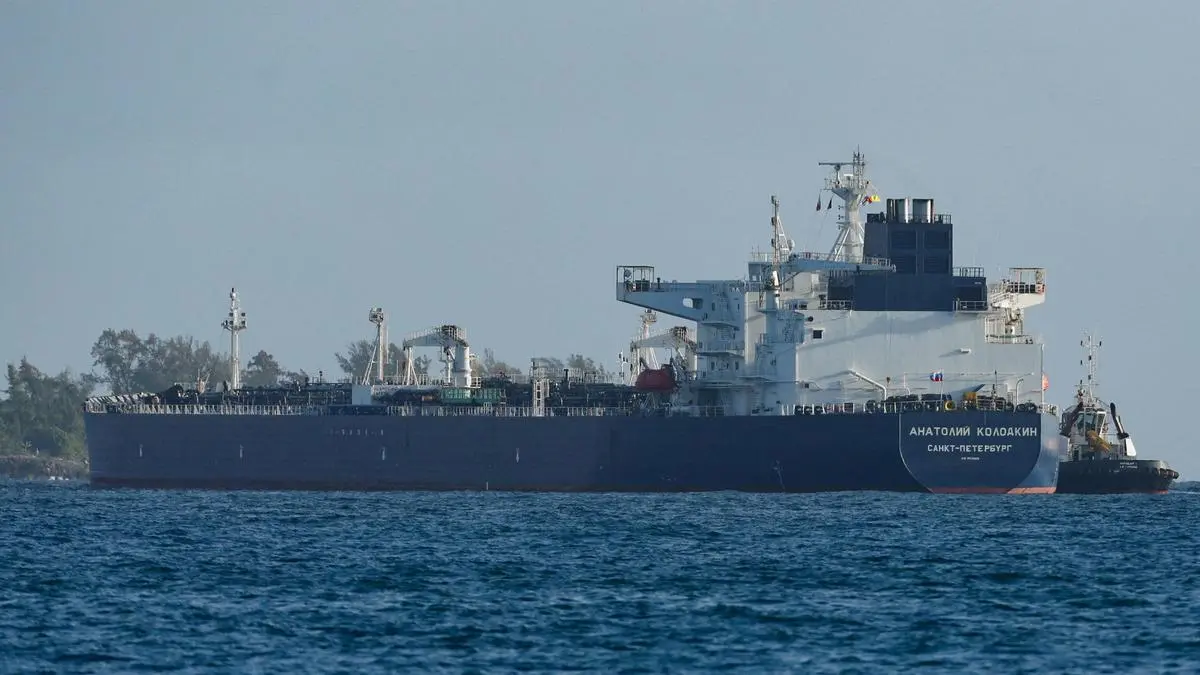
Russia has successfully navigated these restrictions by building a "shadow fleet" of aging tankers that operate outside Western jurisdiction. These ships often lack standard P&I (Protection and Indemnity) insurance, creating a massive environmental risk on the high seas. Yet, the U.S. has been hesitant to crack down on this fleet with full force because, again, those barrels are needed to prevent a global supply crunch.
Why the Domestic Political Stakes Outweigh Foreign Policy
Foreign policy is often just domestic policy in a trench coat. For any sitting administration, the "misery index"—a combination of inflation and unemployment—is the ultimate metric of survival. High energy prices are the most visible driver of inflation. They affect everything from the cost of shipping a head of lettuce to the price of a commuter’s daily drive.
By renewing the Russian oil waiver, the administration is effectively buying insurance against a domestic political crisis. It allows them to claim they are "tough on Russia" while ensuring that the average voter doesn't feel the full weight of that toughness at the pump. It is a cynical but effective strategy that prioritizes the stability of the domestic economy over the absolute efficacy of an international sanctions regime.
The European Dependence Factor
While the U.S. is largely energy independent thanks to the Permian Basin, its allies in Europe are not. The European Union has made significant strides in weaning itself off Russian pipeline gas, but the continent remains deeply integrated into global oil markets. If the U.S. were to unilaterally end these waivers, it would put immense pressure on European banks and refineries.
This interdependence creates a ceiling for how far sanctions can actually go. The U.S. cannot afford to bankrupt its allies in an attempt to bankrupt its enemies. This leads to the current "holding pattern" where the rhetoric remains aggressive, but the financial channels remain open.
The Role of Intermediate Markets
Much of the Russian oil that ostensibly falls under these waivers doesn't go straight to New York or London. It flows to refineries in India, Turkey, and China. Once refined into gasoline or diesel, these molecules are legally considered products of the refining country, not Russia.
This "laundering" of Russian crude is a feature, not a bug, of the current sanctions landscape. It keeps the volume of oil in the market high, which keeps prices low, while technically allowing Western nations to say they are no longer buying Russian crude. The waiver is the grease that keeps these third-party transactions moving through the global financial system.
The Risks of Perpetual Extensions
There is a growing danger in the "business as usual" approach to these renewals. By constantly extending the deadline, the U.S. signals to the market—and to Moscow—that its red lines are flexible. This creates a moral hazard where Russian energy remains a foundational part of the global economy, making it even harder to decouple in the future.
Furthermore, the reliance on these waivers exposes the limits of the dollar’s power. Countries like China and India are increasingly looking for ways to settle energy trades in non-dollar currencies to avoid the reach of OFAC. Every time the U.S. uses the dollar as a weapon, it incentivizes the world to find a shield.
The Infrastructure of Evasion
Russia’s ability to withstand these sanctions isn't just about finding new buyers; it’s about the physical and digital infrastructure of the trade. They have developed sovereign insurance schemes and used shell companies in Dubai and Hong Kong to manage their oil sales. The U.S. knows this, yet the waivers continue.
The investigative reality is that the U.S. government is caught in a trap of its own making. It has committed to a policy of "maximum pressure" while being terrified of the "maximum price" that policy would produce. The renewal of the waiver is the sound of the pressure valve being released before the boiler explodes.
Strategic Petroleum Reserve Constraints
In previous years, the U.S. could use the Strategic Petroleum Reserve (SPR) to blunt the impact of supply shocks. However, after massive releases in 2022 to combat post-pandemic inflation, the SPR is at its lowest level in decades. This leaves the administration with very little margin for error. They cannot afford a supply disruption from Russia because they no longer have the "cushion" to absorb it.
This lack of a safety net makes the Russian oil waivers more than just a bureaucratic update; they are now a primary tool of economic survival. The U.S. is essentially forced to keep the Russian oil taps open because it has no other way to manage the global price of crude.
The Shadow Economy of Energy
We are witnessing the birth of a two-tier global energy market. On one side, you have the transparent, Western-aligned market that follows the rules and pays the "compliance tax." On the other, you have a growing, opaque market where Russian, Iranian, and Venezuelan oil flows through a network of unmonitored tankers and non-Western banks.
The U.S. sanctions waivers are the bridge between these two worlds. They allow the transparent market to interact with the shadow market just enough to keep the global economy functioning. Without these waivers, the friction between these two systems would create enough heat to melt down the global financial order.
A Systemic Lack of Alternatives
The harsh truth that few in Washington want to admit is that there is currently no viable alternative to Russian oil on the global stage. OPEC+ has shown no interest in increasing production to help the West lower prices. U.S. shale producers are focusing on returning value to shareholders rather than "drilling at any cost." And green energy transitions, while moving forward, are not yet at the scale required to replace the millions of barrels Russia provides every day.
This leaves the U.S. with a choice between two evils: allow Russia to continue profiting from its energy exports, or plunge the global economy into a deep recession. For now, every six months, the U.S. chooses the former.
The renewal of the Russian oil waiver is not a sign of policy success; it is a ledger of the world’s continued addiction to a commodity that remains under the control of a geopolitical rival. The sanctions are the theater, but the waivers are the reality.
Expect the next renewal to arrive exactly on schedule.