Don't panic about the terrifying headlines flashing across your feed today. Yes, an Iran-linked cyber group claims it breached the FBI's drone fleet. Yes, they are openly threatening the newly opened World Cup. But when you look closely at the actual evidence, the whole thing starts to unravel.
This isn't a catastrophic security failure. It's a classic influence operation designed to freak you out while the world watches the soccer pitch.
Inside the Handala Hack Claims
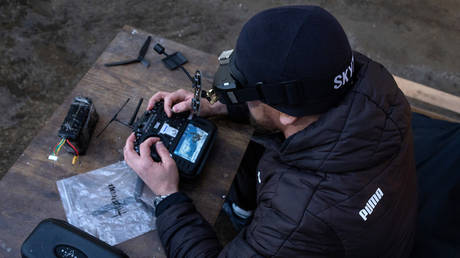
The group behind the noise calls itself Handala. According to the SITE Intelligence Group, which tracks digital threats, Handala dropped a massive statement claiming they’ve had backend access "for months" to first-person view (FPV) drones operated by the FBI.
They claim they've been sitting on facial recognition data, license plate captures, and counterterrorism intelligence. To make matters worse, they paired the announcement with a direct threat aimed at the World Cup match venues. They explicitly warned that an FPV drone could "end up right in your team's bus."
It sounds like a movie script. Fortunately, it also looks like one.
Security researchers immediately started digging into the footage Handala published as proof of the hack. The verification fell apart fast. SITE discovered that one of the main videos Handala used to prove its digital intrusion was actually stolen from an American software company's promotional material from December 2024. The original video showed drone technology helping a local police department scan tornado damage.
They didn't hack the FBI's active drone feeds. They literally re-used old marketing footage from a completely unrelated event and slapped their own digital watermark on it.
The Reality of World Cup Drone Defense
If you're worried about the security of the tournament, you should know that the FBI and the Department of Homeland Security have been preparing for these exact scenarios for years. They aren't relying on vulnerable, easily hijacked consumer drones.
The federal government has invested heavily in counter-UAS (Unmanned Aircraft Systems) tech. Over the last seven years, the FBI built up specific tactical teams designed to intercept, track, and take control of unauthorized drones entering restricted airspace.
- The Department of Transportation set up strict temporary flight restrictions over every stadium, team hotel, and fan zone.
- The federal government handed out $250 million in FEMA funding to the 11 American host states specifically to harden local security infrastructure.
- Security teams are deploying physical drone mitigation tools that can sever the radio frequency signals of hostile tech instantly.
Basically, if an unauthorized drone gets anywhere near a stadium, it won't make it to the parking lot, let alone a team bus. The FBI's Los Angeles and Seattle field offices already confirmed their tactical teams are running constant monitoring loops. Anyone trying to mess with the airspace faces $100,000 fines and immediate criminal charges.
This Group Has a History of Loud Bluffs
This isn't Handala's first attempt to grab global attention by stretching the truth. Back in March, the same group made waves by claiming they completely compromised the personal email account of FBI Director Kash Patel. They dumped a bunch of files online and claimed they brought America's security apparatus to its knees.
The truth was much more boring.
Cybersecurity firm Check Point analyzed that specific leak and found that the compromised files were just historical backups from an old, inactive account. The data dated between 2010 and 2019, way before Patel was even running the bureau. The group scored some old photos of the director smoking cigars and posing with an antique car, but zero active government intelligence.
The U.S. government isn't amused by these stunts, though. The State Department still maintains a $10 million bounty for information leading to the identification of Handala's members. The Justice Department also seized several domains linked to Handala, proving that the digital pressure goes both ways.
What This Means for Everyday Security
Don't mistake these fake drone videos for total incompetence. Handala might be exaggerating their technical capabilities, but they are highly effective at psychological warfare. The Justice Department previously warned that Iranian state-backed groups would ramp up cyber activities following the heavy U.S. and Israeli military strikes on Tehran earlier this winter.
When a group can't win a direct conventional conflict, they turn to digital intimidation. They know the entire world is watching the World Cup. They know that threatening a sports team's bus guarantees international news coverage.
For the average person, the takeaway here is simple. Stop taking hacker manifestos at face value.
When a group claims a massive, earth-shattering breach but delivers recycled YouTube clips as evidence, they're desperate for attention. Watch the games, enjoy the tournament, and let the counter-UAS teams do their jobs.