The Los Angeles City Council recently codified Executive Directive 1 into a permanent municipal ordinance, a move sold as a victory for affordable housing. On paper, it sounds like a triumph of common sense. By exempting 100% affordable projects from the grueling discretionary review process, the city claims it will shave years off construction timelines and millions from budgets. But the math of Los Angeles real estate rarely obeys the optimism of a press release. While the ordinance removes specific bureaucratic hurdles, it leaves the underlying engine of the city’s housing crisis—the skyrocketing cost of land and the sheer physical scarcity of buildable lots—completely untouched.
For years, the "discretionary review" was the weapon of choice for NIMBY groups and slow-growth advocates. Any major project required a series of public hearings that functioned as a gantlet. Local stakeholders could stall a project for months over shadows, traffic patterns, or the aesthetic "character" of a neighborhood. By making these approvals ministerial—meaning they happen automatically if the building meets zoning rules—City Hall has effectively disarmed the neighborhood councils.
The strategy is straightforward. If a developer promises that every single unit in a building will be reserved for low-income residents, they get a fast-track pass. No environmental impact reports that take two years. No public shaming in basement community rooms. However, the victory is narrow. The ordinance mostly serves a specific class of non-profit developers who rely on tax credits. For the average Angeleno, the impact will be a slow burn, not a sudden explosion of available keys.
The Hidden Math of the 100 Percent Mandate
The fatal flaw in many housing policies is the assumption that developers are a monolith. They aren't. There is a massive gulf between the "luxury" builder and the "affordable" specialist. By requiring a project to be 100% affordable to skip the red tape, the city has created a binary system that ignores the "missing middle."
Building in Los Angeles is an expensive sport. Between 2020 and 2024, the cost of labor and materials surged. When you add the price of land in a city hemmed in by mountains and the ocean, the "all-in" cost to produce a single unit of housing often exceeds $600,000. If a developer cannot charge market-rate rents for at least a portion of the building, the project cannot survive without massive government subsidies.
The new ordinance doesn't provide new money. It only provides speed. Speed is valuable, but it doesn't pay the plumber. Without a corresponding increase in state and federal vouchers or local subsidies like Measure HHH funds, the ordinance is a high-speed lane with no cars in it. Non-profit developers are already capped by how much subsidy they can grab in a single year. You can streamline the permit process to thirty days, but if the developer is still waiting three years for a federal tax credit allocation, the building stays on the drawing board.
Why Mixed Income Got Left Behind
Early versions of this ordinance were much more ambitious. There were discussions about including "mixed-income" buildings—projects where 20% of the units are affordable and 80% are market rate. These are the projects that actually move the needle on supply because they are funded by private equity rather than overextended government coffers.
The City Council blinked.
Political pressure from labor groups and tenant advocates pushed the council to stick to the 100% requirement. The fear was that allowing market-rate developers to bypass public hearings would lead to "gentrification" and the demolition of existing rent-controlled units. It was a trade-off. The city chose ideological purity over scale. By excluding mixed-income projects, the council ensured that the vast majority of new construction in L.A. will still have to fight the old, slow, expensive war.
The Geography of Exclusion
Where these buildings actually go is the next battleground. The ordinance includes provisions to protect single-family neighborhoods, which cover the vast majority of Los Angeles land. Even under this "revolutionary" new rule, you cannot build a five-story affordable complex in the middle of a street lined with bungalows in Bel Air or Beverly Grove.
This creates a geographic bottleneck. Affordable housing will continue to be crammed into the same "high-density" corridors where it has always been: alongside freeways, in industrial fringes, and in already crowded parts of South L.A. and the Eastside.
Critics argue this is just a new flavor of the same old segregation. If the city were serious about a housing revolution, it would have used this ordinance to "up-zone" the wealthy, low-density neighborhoods that have historically avoided their fair share of development. Instead, the ordinance reinforces a map where the poorest residents are sequestered in the loudest, most polluted parts of the city, albeit in brand-new buildings.
The Transit Oriented Communities Loophole
To understand the current state of L.A. housing, you have to look at the Transit Oriented Communities (TOC) program. This was the predecessor to the new ordinance. TOC allowed developers to build bigger and taller if they were near a bus or train station and included affordable units.
It worked. TOC has been responsible for a significant portion of L.A.’s new housing stock over the last five years. But TOC projects are still mostly market-rate. The new ordinance attempts to take the TOC incentives—like density bonuses and reduced parking requirements—and give them exclusively to the 100% affordable crowd.
The problem? Most 100% affordable projects already had these perks through state law (SB 35 and the State Density Bonus). The city is essentially layering a local rule on top of a state rule. It adds some clarity, but it isn't the radical deregulation that the headlines suggest. It is a refinement of a system that was already tilted toward non-profits.
The Labor Trap
No discussion of Los Angeles construction is complete without mentioning the "Project Labor Agreement" (PLA) debates. Labor unions are the most powerful political force in City Hall. They want every project that receives a city benefit to pay prevailing wages and hire from local union halls.
While this is great for workers, it adds roughly 20% to 30% to the cost of construction. For an affordable housing project already operating on razor-thin margins, that 30% increase can be the difference between a project that gets built and one that is abandoned.
The new ordinance stays largely silent on new labor mandates, but the shadow of future requirements looms. If the city eventually ties the "fast-track" approval to mandatory union contracts for all projects, even the speed won't save the developers. The cost of the labor will swallow the savings from the shortened timeline. This is the tension at the heart of L.A. progressivism: the desire for "good jobs" constantly clashing with the desperate need for "cheap housing."
The Parking Problem
One of the few genuine wins in the new ordinance is the continued assault on parking requirements. For decades, L.A. required nearly two parking spots for every apartment. In a city where a single underground parking space can cost $50,000 to build, these rules were a silent killer of affordability.
The ordinance allows developers to slash or eliminate parking for affordable units near transit. This is a cold, hard financial win. It allows more units to be fit onto a smaller footprint and removes the need for expensive subterranean digging. It is also a bet on a future Los Angeles that isn't dependent on the car—a bet that current traffic patterns suggest is still decades away from paying off.
The Ghost of Executive Directive 1
Before this ordinance, there was Karen Bass’s Executive Directive 1 (ED1). When the Mayor first signed it, it was an emergency measure. It was messy, it was fast, and it worked surprisingly well because it was a blunt instrument.
The transition from an "emergency directive" to a "permanent ordinance" is where the rot usually sets in. When a policy goes through the committee process, every interest group gets to take a bite out of it. By the time the final version was passed, it was riddled with exemptions and protections for specific "historic" zones and rent-stabilized properties.
What started as a way to "build everything, everywhere, fast" has become a way to "build specific things, in specific places, slightly faster."
The Investor Perspective
Wall Street and private equity firms are watching this closely, but they aren't reaching for their checkbooks yet. For a sophisticated investor, the "100% affordable" model is a low-yield, high-compliance headache. They prefer the mixed-income model where they can use the market-rate units to subsidize the affordable ones and still give their limited partners a 15% return.
By doubling down on the 100% affordable requirement, Los Angeles has effectively told private capital to stay in the luxury sector. This creates a bifurcated city: gleaming glass towers for the ultra-wealthy, and government-subsidized boxes for the very poor. The working class—the teachers, the nurses, the people making $70,000 a year—are stuck in the middle. They make too much for the new subsidized buildings and not enough for the new luxury ones.
This ordinance does nothing for them.
The Looming Litigation
The city thinks it has solved the NIMBY problem, but the lawyers are just getting started. Opponents of high-density housing have already begun scouting for loopholes in how the ordinance interacts with the California Environmental Quality Act (CEQA).
Even if the city says a project is exempt from "discretionary review," a creative attorney can still sue the city for failing to properly "categorize" the project. These lawsuits don't necessarily need to win to be effective. They just need to create enough delay that the developer’s bridge loan expires or the interest rates jump.
The ordinance is a shield, but it isn't an impenetrable one. The city has moved the goalposts, but the game of "not in my backyard" is simply moving to the courtroom.
Why the Mayor is Still Smiling
Despite the limitations, Mayor Karen Bass needs this win. The homelessness crisis is the metric by which her entire legacy will be judged. If she can point to 10,000 units in the "pipeline" because of this ordinance, it provides political cover.
Whether those units actually open their doors in the next three years is a different question. The "pipeline" is a deceptive place; it is full of projects that are approved but not funded, or funded but stuck in litigation.
The Verdict on the New Rule
The streamlining ordinance is a necessary evolution, but calling it a "game-changer" (a term the city loves but the reality rejects) is a stretch. It is a technical fix for a systemic disaster.
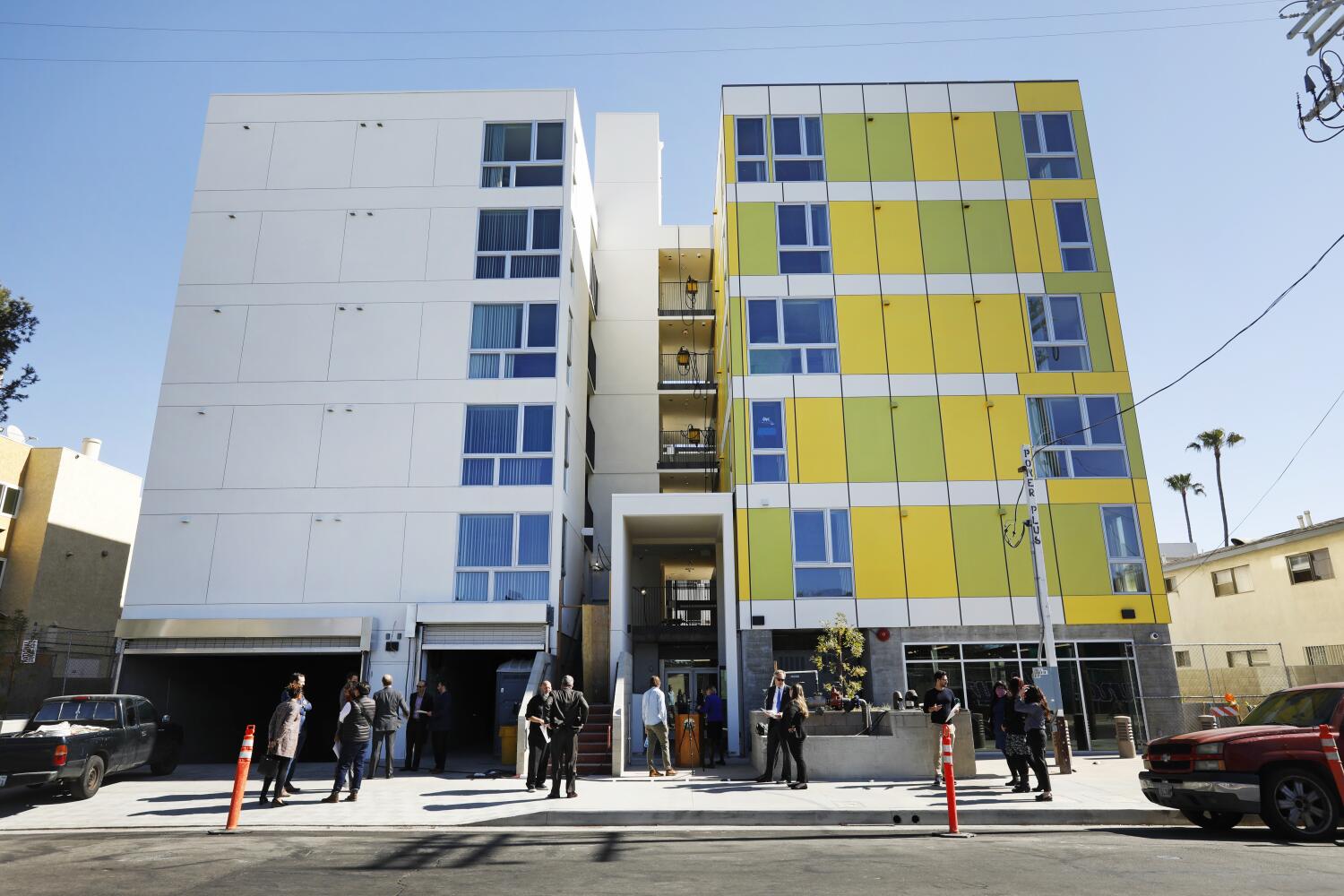
If you want to build a 50-unit building for the formerly homeless in a commercial corridor, your life just got 40% easier. That is a measurable good. But if you are hoping this will lower the average rent in Los Angeles, or make it possible for a middle-class family to find an apartment that doesn't consume half their paycheck, you are looking at the wrong piece of paper.
The city has cleared a path for a very specific type of housing that relies on a very limited pool of government money. It has ignored the larger, more difficult task of making it profitable to build for everyone else. Until the city addresses the land use rules that make 70% of the city off-limits to anything but a single mansion, the housing crisis will continue to outpace the bureaucracy's ability to fix it.
The ordinance isn't the end of the struggle; it is a change in the rules of engagement. Developers now have a map of where they are allowed to succeed without a fight. The rest of the city remains a minefield.
Identify the specific parcels of land currently zoned for commercial use that allow for the density bonuses mentioned in the ordinance to find where the next cluster of construction will actually happen.