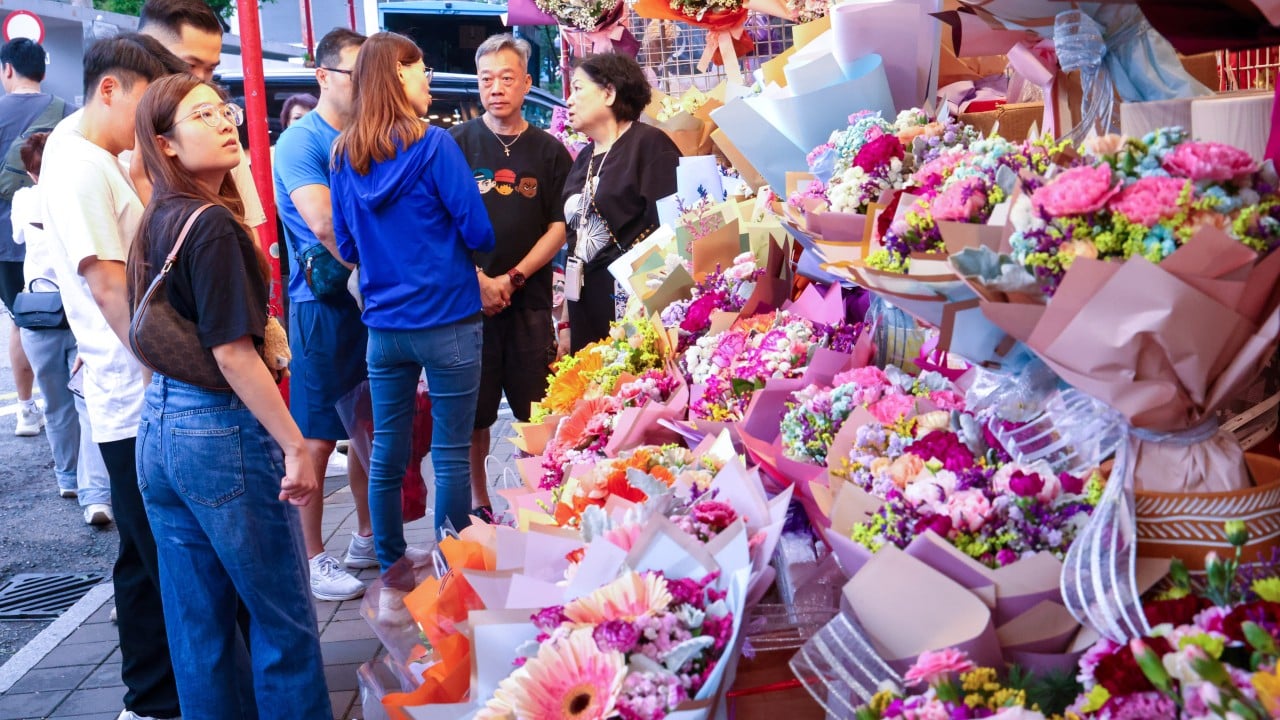
The scent of lilies in Mong Kok’s Flower Market usually hits you like a physical wall, thick enough to taste. It is the smell of high-stakes affection. But this year, the air feels thinner.
Mrs. Wong has stood behind the same wooden stall for thirty years. Her hands are a map of her trade, etched with the fine, green scars of rose thorns and the permanent staining of damp soil. Usually, in the week leading up to Mother’s Day, she doesn't have time to look up. She would be waist-deep in cellophane and ribbon, barking orders at assistants as the line of panicked sons and husbands snaked around the corner onto Flower Market Road.
This year, she is leaning against her counter, watching the foot traffic drift past.
The bouquets are there. They are vibrant, architectural, and—most tellingly—cheaper than they have been in a decade. In a city where the cost of living usually climbs with the relentless pace of a skyscraper’s elevator, the price of a carnation is plummeting. It is a strange, fragrant canary in the coal mine for the Hong Kong economy.
The Economics of a Wilted Budget
Last year, a premium bouquet of imported Dutch tulips or South American roses could easily command eight hundred Hong Kong dollars. This year, those same arrangements are being slashed to five hundred. Some shops are even pushing "entry-level" bundles for as little as one hundred and fifty.
Why? Because the invisible hand of the market is currently holding an empty wallet.
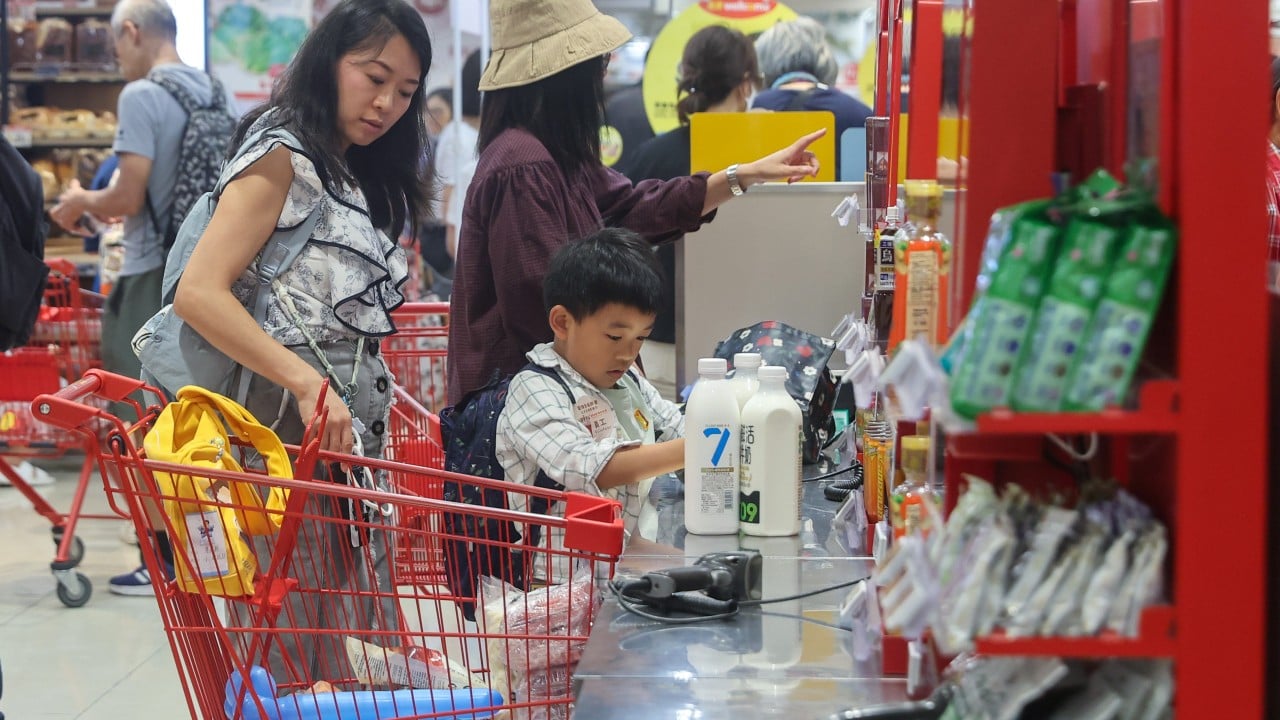
Hong Kong is grappling with a shift in consumer soul. The post-pandemic boom didn't quite explode the way the spreadsheets predicted. Instead, a cautious quiet has settled over the retail districts. Residents are crossing the border to Shenzhen in record numbers, seeking cheaper groceries and entertainment, leaving local shopkeepers staring at quiet sidewalks.
Consider a hypothetical young professional named Adrian. In 2018, Adrian wouldn't have blinked at spending a thousand dollars on a centerpiece for his mother’s Sunday brunch. He viewed it as a tax on his busy schedule—a way to say I’m sorry I missed three Sunday dinners this month in the language of peonies.
Today, Adrian is looking at his rent, his diminishing stock portfolio, and the rising cost of his daily dim sum. He still loves his mother. He still wants to honor her. But the math has changed. He is no longer looking for the most impressive display; he is looking for the most "reasonable" one.
Florists, who are among the most sensitive barometers of discretionary spending, saw this coming. They had a choice: hold their prices and watch the flowers rot, or cut deep and hope for volume.
The Logistics of a Lower Margin
The flowers don't know there is a retail slump. They grow on their own schedules in the highlands of Yunnan or the greenhouses of Kenya.
To understand the pressure on a local florist, you have to look at the "cold chain." A rose is a ticking time bomb of biological decay. From the moment it is clipped, the clock starts. It requires refrigerated transport, meticulous hydration, and a swift journey from the airport to the stall. These costs are fixed. Fuel prices haven't dropped. Electricity for the shop’s walk-in coolers hasn't dropped.
When a florist like Mrs. Wong cuts her prices by thirty percent, she isn't just "sharing the joy." She is eating her own livelihood.
"We are pruning the prices just to keep the water flowing," she says, using a Cantonese idiom that implies keeping a business barely alive. "If I sell at last year's price, I sell ten bouquets. If I sell at the new price, I sell fifty. I work five times harder for the same profit, but at least the flowers don't end up in the bin."
This race to the bottom has created a bizarre irony. Mother’s Day is technically "on sale," but the atmosphere in the market is far from celebratory. It is a grind. It is a desperate attempt to capture a shrinking pool of local dollars before they migrate north to the mainland or stay tucked safely in a high-interest savings account.
A Change in the Language of Love
The shift isn't purely financial; it’s emotional. We are witnessing a recalibration of what a "gift" signifies in a city that is reinventing itself.
For decades, Hong Kong's love language was "The Big Spend." Status was measured in the height of the floral arrangement and the prestige of the brand on the box. But as the economy tightens, people are being forced to find meaning in the gesture rather than the price tag.
There is a certain vulnerability in this. It is uncomfortable to walk into a shop and ask for the cheapest option. It feels like a confession of failure. The florists know this. They have become accidental therapists, reassuring customers that a smaller bunch of carnations—traditionally the "mother's flower" in Chinese culture—is just as valid as a towering display of exotic lilies.
Actually, the carnation is the hero of this year’s narrative. It is hardy. It lasts longer in the humid May heat than the temperamental rose. And, crucially, it is affordable.
The "Carnation Comeback" tells us that the Hong Kong consumer is becoming pragmatic. They are stripping away the performance of wealth and returning to the basics of the holiday. The stakes are no longer about outdoing the neighbors; they are about maintaining a tradition in a world that feels increasingly expensive and uncertain.
The Invisible Stakes for the Neighborhood
If we lose the mid-tier florist, we lose a piece of the city’s sensory map.
Large supermarket chains can afford to sell flowers as a "loss leader"—pricing them below cost to get you in the door to buy expensive champagne and cake. But the independent stalls in Mong Kok don't have that luxury. They only have the flowers.
When you see a price war in the flower market, you are seeing a fight for the survival of a specific type of urban life. These stalls are the lungs of the district. They provide the color that breaks up the grey of the high-rises. If the margins disappear entirely, these stalls become phone accessory shops or empty storefronts.
The low prices we see today are a gift to the consumer’s wallet, but they are a heavy burden for the person behind the counter.
Every time Mrs. Wong wraps a discounted bouquet, she is performing a delicate dance. She has to use less expensive foliage to fill the gaps. She has to use simpler ribbons. She has to hope that the sheer volume of "budget" shoppers will make up for the loss of the "big spenders."
It is a high-volume, low-reward strategy that leaves no room for error. A single broken shipment or a sudden rainstorm on Mother’s Day Sunday could turn a break-even season into a disaster.
The Reality Behind the Petals
Marketing experts might call this "market correction" or "consumer sentiment shifts."
Those terms are too sterile.
This is about the guy standing in the heat, counting his coins to see if he can afford the baby’s breath to go with the roses. This is about the grandmother who runs the shop, staying up until 3:00 AM to hand-trim stems because she can no longer afford to hire extra help for the holiday rush.
We often think of luxury as something permanent—gold, diamonds, real estate. Flowers are the opposite. They are the ultimate "perishable luxury." They are a declaration that something beautiful matters even if it only lasts for five days.
In a city that is currently watching its pennies, that declaration is getting harder to make.
The price cuts are a symptom of a city holding its breath. We are waiting to see if the vibrance returns, or if this new, leaner reality is simply the way things are now.
When you walk through the Flower Market this week, the colors are still there. The vibrant purples of the orchids and the deep crimsons of the roses still catch the light. But look closer at the handwritten price tags, scribbled over with red ink and lower numbers.
The bargain isn't just a discount. It’s a compromise.
As the sun sets over the stalls, Mrs. Wong finally makes a sale. A teenager buys a single, wrapped carnation. It costs him twenty dollars. He holds it like it’s made of glass. She watches him walk away, then turns back to her buckets of water, her hands moving instinctively to check the freshness of a leaf.
The flowers are cheaper, but the effort to keep the beauty alive has never been more expensive.