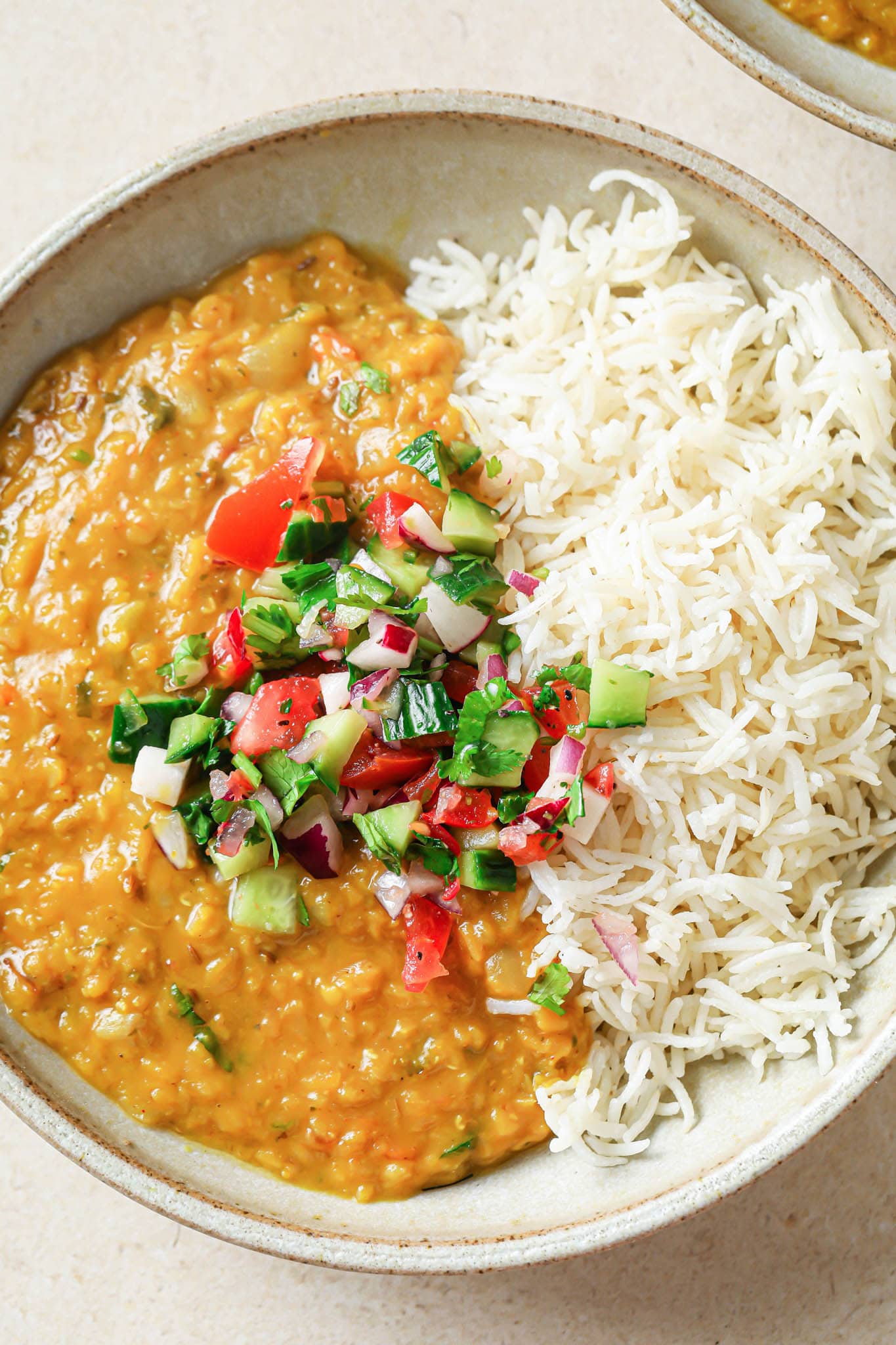
Most people treat a red lentil dahl recipe like a backup plan. It’s that bag of pulses sitting in the back of the pantry for six months, dragged out only when the fridge is empty and the grocery store feels too far away. You boil them. You throw in some curry powder. You eat a bowl of beige mush and wonder why it doesn't taste like the vibrant, soul-warming bowls served at your favorite Indian spot.
It’s frustrating.
The truth is that red lentils, or masoor dal, are chemically predisposed to becoming a flavorless paste if you treat them with indifference. They cook fast—about 15 to 20 minutes—which is both their greatest strength and their biggest trap. Because they break down so quickly, they don't have the luxury of a long simmer to develop complexity. You have to build that complexity before and after the lentils hit the water.
The Myth of the One-Pot Dahl
We’ve all seen the "dump and start" recipes. They promise a world-class meal in 15 minutes with zero effort. Honestly? They're lying to you. If you just throw dry spices, water, and lentils into a pot together, you’re essentially making spiced tea with beans in it.
To get a red lentil dahl recipe that actually commands attention, you need to understand the tadka (or tarka). This isn't just a fancy garnish. It is the literal soul of the dish. In traditional Indian cooking, spices are fat-soluble. Dumping turmeric and cumin into boiling water is a waste of money because the flavor compounds never truly "bloom." You need a fat—preferably ghee, though a neutral oil or coconut oil works—to unlock the essential oils in the spices.
Why Texture Matters More Than You Think
Red lentils are unique because they lack a hull. Unlike green or brown lentils, which hold their shape, red lentils are meant to disintegrate. This creates a natural creaminess without needing heavy cream or even coconut milk, though coconut milk is a common addition in South Indian styles like parippu vada or Sri Lankan dahl.
But there’s a fine line between "creamy" and "wallpaper paste."
A common mistake is using too much water. You want just enough to let them soften, but not so much that they turn into soup. Think of it like a thick porridge. If it's too thick, you can always thin it out with a splash of hot water at the end. If it's too thin? Well, you're stuck with lentil juice.
Building the Foundation: Aromatics and Fat
Forget the powdered stuff for a second. If your red lentil dahl recipe starts with a generic "yellow curry powder," you’re capping your flavor potential at about 40%.
Start with the basics. Onion, ginger, and garlic. But here’s the kicker: don't just soften the onions. You want them to actually brown. This is a process called the Maillard reaction. When the sugars in the onion caramelize, they provide a savory backbone that balances the earthy, slightly sweet profile of the lentils.
- The Ginger-Garlic Paste: Don't use the stuff from a jar. It tastes like vinegar and preservatives. Take two inches of fresh ginger and four cloves of garlic. Smash them in a mortar and pestle. The physical crushing releases more oils than a knife ever could.
- The Fat Choice: Ghee is king here. It has a high smoke point and a nutty flavor that mirrors the lentils. If you're vegan, use a high-quality coconut oil, but make sure it’s the unrefined kind if you want that tropical aroma.
The Spice Blueprint
You don't need twenty different jars. You need five.
- Turmeric: Use this sparingly. Too much makes the dish bitter and metallic. Half a teaspoon is usually plenty for a standard batch.
- Cumin Seeds: These go in the hot oil first. When they sizzle and turn dark brown (not black!), they’re ready.
- Black Mustard Seeds: They add a tiny, peppery pop that breaks up the soft texture of the dish.
- Dried Red Chilies: Keep them whole for a mild heat, or snap them in half if you want to feel something.
- Kashmiri Chili Powder: This is prized for its vibrant red color and mild heat. It’s much better than standard cayenne, which is just pure burn.
Step-by-Step: A Better Red Lentil Dahl Recipe
Let’s get into the actual mechanics. I’m going to describe this the way a chef would, focusing on the sensory cues rather than just "cups and spoons."
First, wash your lentils. Seriously. Do it. Red lentils are dusty. If you don't rinse them until the water runs clear, that dust turns into a weird foam on top of your pot that ruins the mouthfeel.
The Initial Simmer
In a heavy-bottomed pot, add your rinsed lentils and water (or vegetable stock). Use a ratio of roughly 1:3 lentils to liquid. Add your turmeric and maybe a pinch of salt now, but don't add acidic things like lemon juice or tomatoes yet—acid can sometimes prevent the lentils from softening properly. Bring it to a boil, then drop it to a whisper of a simmer. Skim off any white foam that rises to the top.
While that’s happening, start your tadka in a separate small skillet.
The Magic of the Tadka
Heat two tablespoons of ghee. Throw in your cumin seeds and mustard seeds. Wait for the "pop." Once they’re dancing, add your finely chopped onions. Cook them until the edges are dark brown. Add your ginger-garlic paste and stir for exactly 30 seconds—garlic burns fast, and burnt garlic is the quickest way to ruin a meal.
Add your chili powder and maybe some chopped tomatoes if you want a bit of tang. Cook the tomatoes until they break down into a jammy consistency. This is your flavor concentrate.
Once the lentils in the other pot are soft and have lost their shape, pour this entire sizzling oil-and-spice mixture directly into the lentils. It will hiss. It will smell incredible. This is the moment your dahl transforms from a health food project into a restaurant-quality meal.
Common Pitfalls and How to Fix Them
I've seen a lot of people struggle with "blandness" even after following a recipe. Usually, it's a salt issue. Lentils are like potatoes; they absorb a massive amount of salt. If it tastes "flat," add another pinch.
Another issue is brightness.
A red lentil dahl recipe is heavy. It's earthy. It's dense. You need acid to cut through that. A huge squeeze of fresh lime or lemon juice right before serving is non-negotiable. Don't cook the juice; just stir it in at the end. It wakes up all the other flavors.
Fresh Herbs: Not Just for Show
Cilantro is polarizing. I get it. If you think it tastes like soap, skip it. But if you don't, use the stems too! Most people throw the stems away, but that’s where all the concentrated flavor lives. Finely mince the stems and stir them into the lentils while they simmer, then save the leaves for the top.
Beyond the Basics: Regional Variations
If you travel across India, you’ll realize there is no single "correct" way to make dahl. It changes every 50 miles.
In West Bengal, they might use Panch Phoron, a five-spice blend containing fenugreek and nigella seeds. It gives the dahl a sophisticated, slightly bitter edge. In South India, the addition of curry leaves and a splash of coconut milk is standard. The curry leaves are particularly important—they don't taste like "curry powder." They have a citrusy, herbal aroma that is impossible to replicate with anything else.
If you can find fresh curry leaves at an international grocery store, buy them. Fry them in your tadka until they’re crisp. It’s a game-changer.
Nutrition and Reality
Lentils are basically nature’s multivitamin. They’re packed with folate, iron, and protein. But let's be real: most people eat them because they’re cheap. That doesn't mean they have to taste cheap. By using the tadka method, you’re taking ingredients that cost pennies and turning them into something that feels like a luxury.
Actionable Steps for Your Next Batch
If you’re going to make this tonight, do these three things differently:
- Toast your lentils: Before adding water, stir the dry, rinsed lentils in a little bit of fat for two minutes. It gives them a nutty, toasted flavor that survives the boiling process.
- Double the aromatics: Whatever amount of garlic the recipe calls for, double it. Most recipes are too conservative with aromatics because they’re written for the "lowest common denominator" palate.
- The "Second Tadka": If you want to be extra, save a little bit of the spiced oil and pour it over the individual bowls just before serving. It creates a beautiful visual swirl and ensures the first thing you taste is the toasted spices.
Red lentil dahl is more of a technique than a strict set of measurements. Once you master the balance of the blooming spices and the creaminess of the lentils, you won't need a recipe anymore. You’ll just know by the smell when the cumin is ready and by the look of the lentils when they've hit that perfect, velvety consistency.
Stop boiling your lentils into submission and start treating them with the respect they deserve. Your dinner guests—and your taste buds—will thank you.