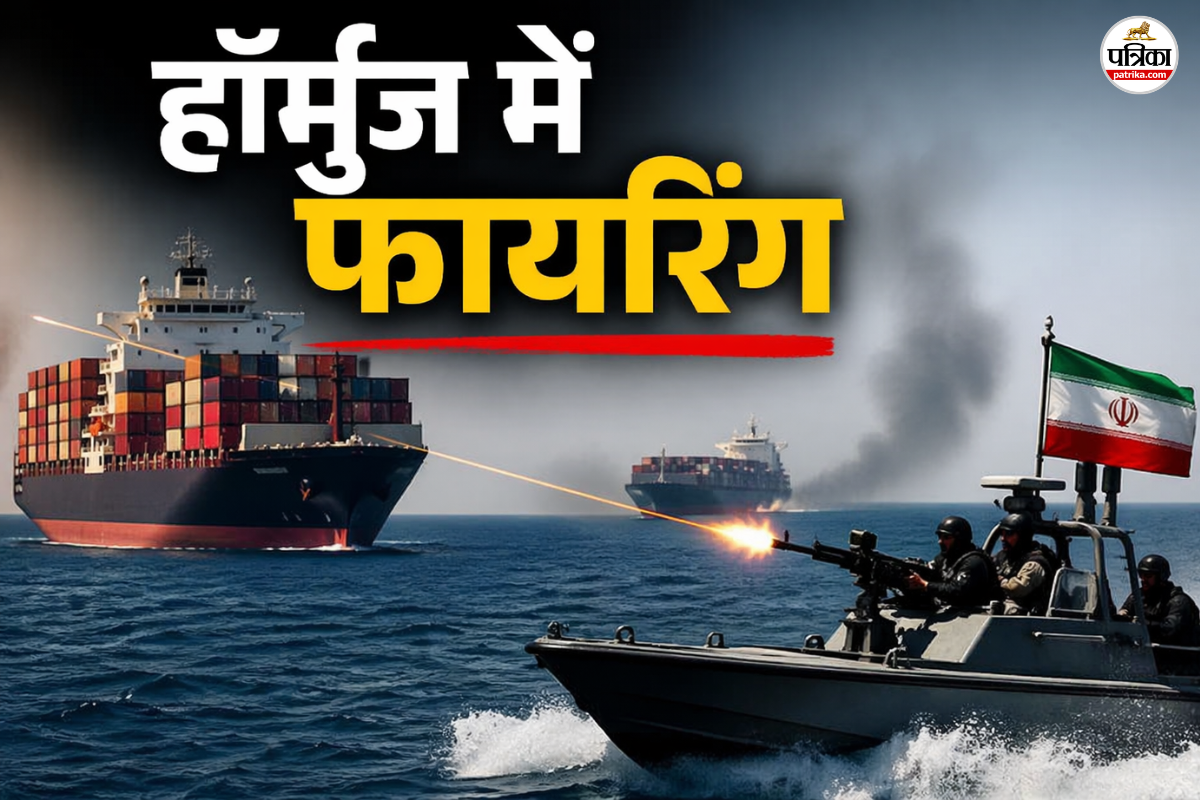
The ink on the ceasefire agreement was barely dry. For a few fleeting hours, the world breathed a collective sigh of relief, imagining that the gears of war had finally ground to a halt. But in the narrow, turquoise neck of the Strait of Hormuz, peace is often nothing more than a tactical pause.
Imagine a merchant sailor named Elias. He is thousands of miles from home, standing on the bridge of a massive tanker. He drinks lukewarm coffee and watches the radar sweep. For men like him, a "ceasefire" in a distant capital doesn't mean the ocean is safe; it just means the danger has changed its shape. The air in the Strait is thick, salty, and heavy with the scent of diesel. It is a place where 20% of the world's oil pulses like blood through an artery. If that artery is pinched, the world feels the pain in every gas station and grocery aisle from London to Mumbai.
The silence broke not with a shout, but with the rhythmic, terrifying thud of heavy machine-gun fire.
The Illusion of a Quiet Sea
Just hours after the diplomatic world celebrated a cessation of hostilities, the Iranian Revolutionary Guard Corps (IRGC) reminded everyone who truly holds the keys to the Persian Gulf. Three commercial vessels, moving through international waters, suddenly found themselves in the crosshairs. This wasn't a mistake. It wasn't a rogue commander losing his nerve. It was a calculated, cinematic display of power intended to prove that a signature on a document in a far-off city does not dictate the reality of the waves.
The speedboats came fast. They are small, agile, and swarm like hornets around the lumbering giants of global commerce. When the tracer rounds began to streak across the water, the message was clear: the ceasefire was a political tool, not a functional reality on the front lines.
Why fire on merchant ships? Why now?
To understand this, we have to look past the hardware. We have to look at the psychology of the Strait. Iran views the Hormuz as its backyard. When they feel backed into a corner or squeezed by international pressure, they reach for the lever they know will make the entire planet flinch. By targeting these ships, they aren't just hitting steel and cargo; they are hitting the global nervous system.
The Cost of a Bullet
When a bullet hits the hull of a tanker, the price of crude oil doesn't just tick upward on a screen in New York. The ripple effect is human.
Think about the logistics manager in a small town who suddenly has to tell her drivers that fuel surcharges are doubling. Think about the family wondering why the price of grain has spiked again. We often discuss "geopolitics" as if it were a game of chess played by giants, but the pawns are made of flesh and blood. Every burst of gunfire in the Strait is a tax on the poorest people on Earth.
The ships targeted were not warships. They carried no missiles. They carried the mundane necessities of modern life. Yet, in the theater of modern conflict, the "soft target" is the most effective stage. Iran knows that the West is weary of "forever wars." They know that every time they rattle the cage of the global economy, they create a friction that diplomats struggle to grease.
A Pattern of Shadow and Light
This isn't an isolated incident. It is part of a long, jagged history of "shadow docking" and maritime brinkmanship. For decades, the Strait of Hormuz has been the world's most dangerous choke point. It is a geographic reality that cannot be bypassed. You cannot move the oil fields of the Middle East, and you cannot easily move the path to the Indian Ocean.
The IRGC utilizes a strategy of "calibrated escalation." They do enough to terrify, but just enough to stay below the threshold of a full-scale regional war. It is a high-wire act performed over a pit of fire. One miscalculation, one stray round hitting a pressurized tank, and the "action" becomes a catastrophe.
Consider the perspective of the Iranian commanders on those speedboats. They aren't just soldiers; they are the physical manifestation of a domestic narrative. To their supporters, this isn't "firing on ships"—it is "defending the sovereignty of the Persian Gulf against imperialist intruders." It is a story they tell themselves to justify the risk of starting a global conflagration.
The Fragility of Paper Peace
We want to believe that when leaders shake hands, the world changes. We want to believe that the "big players" have total control over their forces. The reality is much messier. A ceasefire is often a period of extreme vulnerability. It is the moment when hardliners on both sides feel the need to prove they haven't "gone soft."
The firing on these three ships was a deliberate puncture in the balloon of optimism. It served as a grim reminder that the roots of this conflict are deeper than any single treaty can reach. They are buried in decades of distrust, religious fervor, and a desperate struggle for regional hegemony.
What does the sailor, Elias, do when the firing starts? He follows protocol. He signals for help. He prays that the nearby destroyers from the international coalition are watching their monitors. He realizes, in a way that people sitting in air-conditioned offices never will, that his life is a currency being traded in a market he didn't join.
The Invisible Stakes
If we look at the statistics, the damage to the ships was minimal. No one sank. No one died this time. On paper, it might seem like a minor skirmish, a footnote in the evening news.
But the real damage is to the concept of order. When international waters become a shooting gallery, the "rules-based order" we rely on starts to look like a polite fiction. We are entering an era where the unpredictability of the actor is their greatest asset. If you don't know when the firing will start—or if a ceasefire actually means anything—you live in a state of permanent anxiety.
Insurance premiums for shipping companies skyrocket. Routes are diverted. Timelines are stretched. The world becomes a little more expensive, a little more fractured, and a lot more cynical.
The sun sets over the Strait of Hormuz, turning the water the color of bruised plums. On the horizon, the silhouettes of the tankers look like prehistoric beasts, slow and vulnerable. The speedboats have retreated into the darkness of the Iranian coastline, their work done for the day. They have sent their message. They have reminded the world that while politicians talk of peace, the men on the water still carry the weight of the war.
The ceasefire holds in the headlines. It bleeds on the waves.
The radar continues its steady, rhythmic sweep, searching for the next shadow in the dark.