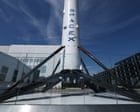
The air in Hawthorne, California, usually tastes of salt and jet fuel. It is the smell of ambition. For two decades, that ambition belonged to a private circle of believers, a closed-door club of engineers and visionaries who traded the stability of traditional aerospace for a chance to build a cathedral among the stars. They worked for a man who famously said he wanted to die on Mars, just not on impact. But now, the cathedral doors are being unbolted.
SpaceX has reportedly filed the paperwork.
According to reports circulating through the financial veins of Manhattan and the tech hubs of Silicon Valley, the most valuable private company in America is preparing to go public. This isn't just another IPO. It is a tectonic shift. For years, Elon Musk treated the public markets like a toxic swamp, preferring the agility of private capital to the quarterly demands of short-sighted shareholders. To see SpaceX—the crown jewel of the New Space Age—confidientially file for an initial public offering suggests that the mission has outgrown the man. Or perhaps, the mission finally needs more money than any one person can provide.
The Ghost in the Machine
Think of a hypothetical engineer named Sarah. She joined SpaceX in 2012, back when the Falcon 9 was still a nervous experiment and the idea of landing a rocket on a drone ship sounded like a fever dream from a 1950s pulp novel. Sarah didn't take a high salary. She took equity. She took a piece of the future. For twelve years, that equity has been "paper wealth"—digits on a screen that she couldn't use to buy a house or fund a retirement. She was wealthy in theory, but cash-poor in reality.
Thousands of "Sarahs" are currently walking the halls of the Hawthorne headquarters. To them, this IPO isn't just about the stock market; it’s about the "liquidity event." It is the moment their years of eighty-hour work weeks and missed birthdays transform into the ability to pay off a mortgage. When a company of this scale goes public, it creates a sudden, massive influx of millionaires. That wealth doesn't stay in a bank account. It flows into the local economy, into new startups, and into the hands of people who have spent their lives thinking about how to solve the impossible.
But there is a shadow side to this. Public companies have masters. They have analysts who care more about a three-cent miss on earnings than the colonization of the red planet. Musk has long feared that if SpaceX went public, the pressure to deliver "predictable" profits would kill the experimental spirit that allowed them to fail—and then succeed—so spectacularly.
The $200 Billion Question
The valuation being whispered in the corridors of power is staggering. We are talking about a figure north of $200 billion. To put that in perspective, that is more than the market cap of Boeing, Lockheed Martin, and Northrop Grumman combined.
Why? Because SpaceX isn't just a rocket company anymore. It is a telecommunications giant.
Starlink is the secret engine driving this IPO. While the big, shiny Starship rockets grab the headlines, the thousands of small satellites orbiting the Earth are the ones actually printing money. Starlink has turned the sky into a global internet provider, bringing high-speed access to the Amazon rainforest, the middle of the Pacific Ocean, and the frontlines of global conflicts. This recurring revenue stream is what Wall Street craves. They don't know how to value a colony on Mars, but they certainly know how to value a monthly subscription service with millions of users.
Consider the shift in the global hierarchy. For sixty years, the stars were the playground of nation-states. Only governments had the treasury to punch through the atmosphere. Now, a single corporation is on the verge of becoming a public entity that rivals the GDP of mid-sized nations. We are entering an era where the gatekeeper to the heavens is a ticker symbol on the New York Stock Exchange.
The Invisible Stakes
There is an inherent tension in this move. SpaceX operates on a philosophy of "rapid iterative development." In plain English, that means they blow things up to see why they broke. They embrace the explosion. They celebrate the "Rapid Unscheduled Disassembly."
The public market, however, hates explosions.
If Starship—the largest flying object ever built—suffers a catastrophic failure on a Tuesday, the stock price could crater on Wednesday. How does a company maintain its soul when its every move is scrutinized by retail investors on Reddit and institutional titans at BlackRock? The confidential filing suggests that the leadership is trying to thread a needle. By keeping the initial stages quiet, they are buying time to structure the deal in a way that might preserve Musk’s control, perhaps through a multi-class stock structure similar to what Google or Meta uses.
This is about the democratization of the vacuum. For the first time, a regular person with an E-Trade account can own a piece of the bridge to Mars. That is a powerful narrative. It turns the exploration of the solar system from a tax-funded government program into a voluntary investment. You aren't just paying for a satellite; you are buying a ticket for humanity’s survival. Or at least, that is the story they will tell.
The Cost of the Stars
Wait.
We must look at the human cost of this scale. The reports of the IPO come at a time when the workforce is stretched thin. The pressure to launch, to deploy Starlink, and to keep the Starship timeline on track is immense. When a company goes public, the "Sarahs" of the world might get their payout, but the culture often shifts. The "mission-first" zealotry can easily be replaced by "stock-price-first" caution.
If you have ever been to a launch, you know the feeling in your chest when the engines ignite. It is a physical vibration that reminds you how small you are. It is a moment of pure, unadulterated awe. But as the financial world prepares to dissect the SpaceX balance sheet, that awe will be translated into spreadsheets. The fire of the Merlin engines will be measured in fuel costs and payload efficiencies.
Is something lost in that translation?
The Great Unlocking
The true significance of this filing lies in what comes next. The capital raised from an IPO wouldn't just sit in a vault. It would be poured into the base at Starbase, Texas. It would fund the fleet of Starships required to build a permanent presence on the Moon. It would accelerate the timeline for the first human footprints in Martian dust.
We are watching the transition of space travel from a miracle to a commodity.
It is a strange, bittersweet moment. The "private" nature of SpaceX gave it a certain mystique—a rebel band of geniuses working in the dark to save the light of consciousness. By stepping into the public light, they are inviting the world in. They are admitting that to build a multi-planetary civilization, you need more than just one man’s vision and a few billion dollars. You need the collective might of the global financial system.
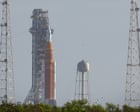
The paperwork is filed. The numbers are being crunched. The lawyers are proofreading the fine print. But behind all the legalese and the financial jargon, there is still a rocket sitting on a pad in the Texas scrubland, waiting for the command to defy gravity.
The ticker symbol will soon be on the screen. The price will flicker up and down. But the trajectory of the species is what is actually on the line. As the "Sarahs" of Hawthorne look at their screens and see their lives change overnight, they will also be looking out the windows, past the smog of Los Angeles, toward a red dot in the night sky that just got a little bit closer.
The red giant has woken up, and it is hungry for the market.