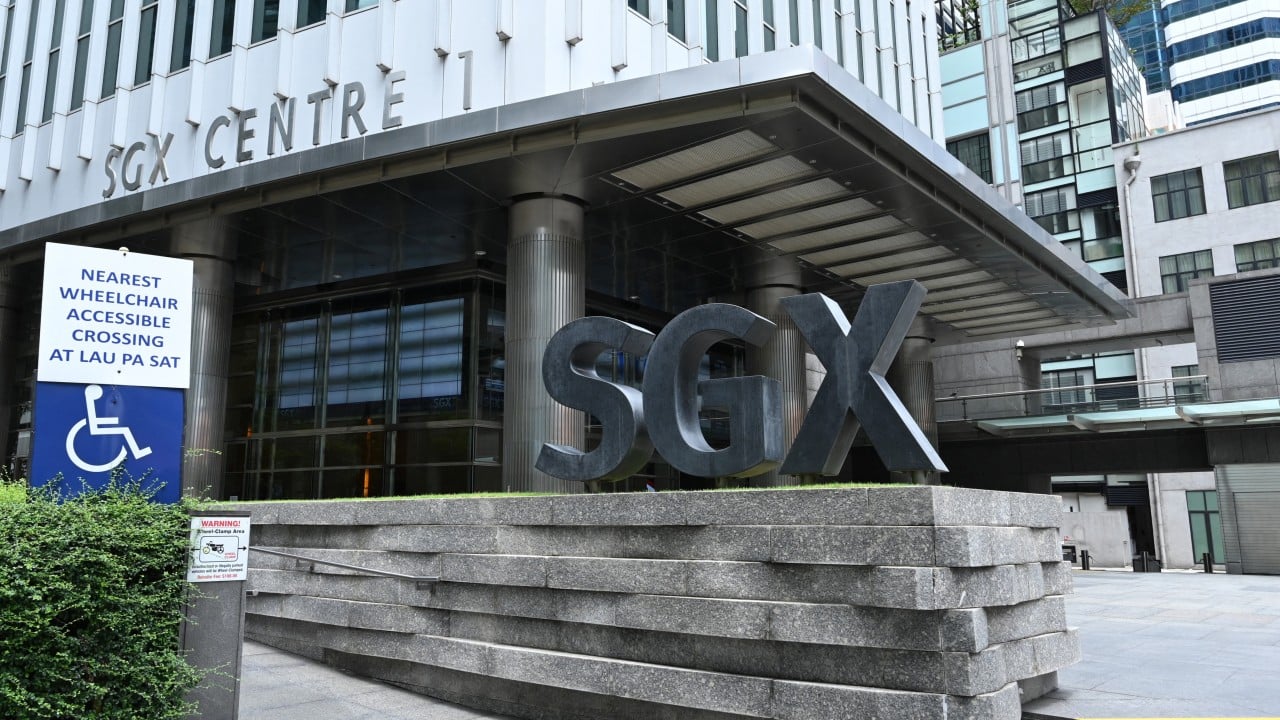
National economic scale does not guarantee equity market dominance. The divergence between systemic economic output and public equity valuation is starkly visible in Southeast Asia, where Singapore has displaced Indonesia as the region’s largest stock market by aggregate capitalization.
Singapore’s equity market capitalization rose to $645 billion, while Indonesia’s aggregate public equity value contracted by more than 30% from its January peak, dropping to $618 billion. This reversal occurred despite a fundamental structural mismatch in underlying economic scales: Indonesia possesses a $1.5 trillion economy, while Singapore’s gross domestic product sits at approximately $660 billion.
To evaluate why a domestic economy less than half the size of its neighbor can command a larger public equity market, institutional investors must analyze three structural variables: currency stability functions, regulatory indexing mechanics, and the asymmetric distribution of macroeconomic risk.
The Capital Inversion Model: Macro Scale vs. Market Capitalization
The relationship between domestic product and equity market capitalization is governed by corporate listing velocity, governance premiums, and currency denomination mechanics. Indonesia’s equity market contraction represents a systemic repricing driven by clear fundamental catalysts.
A critical component of this decline is a $360 billion contraction in equity value, accelerating capital flight. Foreign institutional investors pulled more than $2 billion from emerging Southeast Asian equities in the first half of the year, with Indonesian outfluxes accounting for over 50% of the regional total.
This capital migration can be broken down into three distinct operational pressures:
- Index Deletion and Passive Outflows: MSCI’s removal of large-cap domestic equities, including Barito Renewables Energy and Dian Swastatika Sentosa, triggered a cascade of forced algorithmic selling. Passive investment mandates dictated an immediate rebalancing, resulting in an estimated $2 billion in direct, non-discretionary capital outflows.
- Credit Rating Deceleration: Concurrently, Fitch Ratings and Moody's Ratings shifted Indonesia’s sovereign credit outlook to negative. This modification raised the sovereign risk premium, automatically elevating the hurdle rate for corporate equity valuations and compressing price-to-earnings multiples across the Jakarta Composite Index.
- Currency Depreciating Feedback Loops: The Indonesian rupiah reached historic lows against the U.S. dollar. For foreign dollar-denominated funds, a depreciating local currency erodes absolute returns even if the asset price remains static in local terms. This mechanism triggers preemptive liquidations, further depressing asset values and accelerating currency weakness.
The Safe Haven Premium: Singapore’s Influx Mechanics
Conversely, Singapore’s ascent to a $645 billion market capitalization demonstrates how institutional capital behaves during periods of heightened geopolitical and macroeconomic volatility. Rather than relying on domestic industrial expansion, Singapore’s equity market functions as an international capital aggregator.
The city-state’s market architecture relies heavily on its banking and financial sector, which acts as a direct beneficiary of regional capital reallocation. The mechanism driving this growth is defined by specific balance sheet expansions. Foreign non-bank deposits in Singaporean financial institutions reached an unprecedented $659 billion, providing an expanded capital base for asset management allocation and local equity support.
Geopolitical disruptions, specifically escalated regional tensions in the Middle East, have heightened defensive asset positioning globally. The Singapore dollar’s structural peg and relative resilience compared to peer currencies in emerging markets have turned the Straits Times Index into a proxy for capital preservation. The financial sector’s earnings growth is directly tied to this wealth accumulation asset class, creating a self-reinforcing valuation premium.
Index Reclassification and Liquidity Bottlenecks
The most critical operational risk facing Indonesian capital markets is the pending MSCI review regarding a potential downgrade from Emerging Market to Frontier Market status. This categorization threshold defines the mandate limitations for global pension, sovereign wealth, and mutual funds.
A market's inclusion status is dictated by precise structural criteria, which can be expressed through a comparative liquidity framework:
Market Viability Index = f(Free Float Velocity, Currency Convertibility, Settlement Finality)
Indonesia’s capital market authorities have initiated defensive regulatory adjustments to prevent a frontier reclassification. The core mechanism is a structural mandate doubling the required minimum free float to 15%, allowing for a maximum phase-in period of three years for eligible corporate entities.
While increasing the minimum free float enhances long-term market depth and reduces asset vulnerability to concentrated manipulation, it creates short-term operational bottlenecks. Forcing companies to dilute equity ownership during a broader market rout risks depressing share prices further due to an immediate supply-demand mismatch in public shares.
Sovereign Policy Execution Risks
The structural divergence between these two markets highlights the execution risks associated with fiscal expansion under new political administrations. Indonesia's economic management faces headwinds as President Prabowo Subianto attempts to reconcile ambitious domestic growth targets with capital market stability.
Aggressive state-directed infrastructure budgets or consumer spending initiatives create structural fiscal deficits that require foreign capital inflows to balance. When international investors observe widening fiscal targets alongside a weakening currency and escalating global energy import costs, the risk premium on national debt increases. Higher energy costs inflate import bills, weaken trade balances, and put structural downward pressure on the currency, creating a challenging loop for equity valuations.
Singapore's market performance highlights the value of regulatory predictability over raw industrial scale. Government-driven capital market reforms, including multibillion-dollar liquidity injection programs aimed at co-investing in local enterprises, have successfully created a floor for equity valuations. Capital allocation decisions prioritize structural certainty when global monetary policy remains unpredictable.
The reallocation of capital away from Jakarta toward Singapore underscores a foundational reality of international finance: corporate equity valuation depends heavily on the strength of the underlying currency and the predictability of the legal jurisdiction. Indonesia's 15% free float reform and index preservation strategies are directionally sound, but their efficacy depends entirely on stabilizing the rupiah and maintaining its status within global emerging market benchmarks. Until currency depreciation matches historical baseline standard deviations, institutional capital allocation models will continue to favor Singapore's defensive, dollarized equity environment.