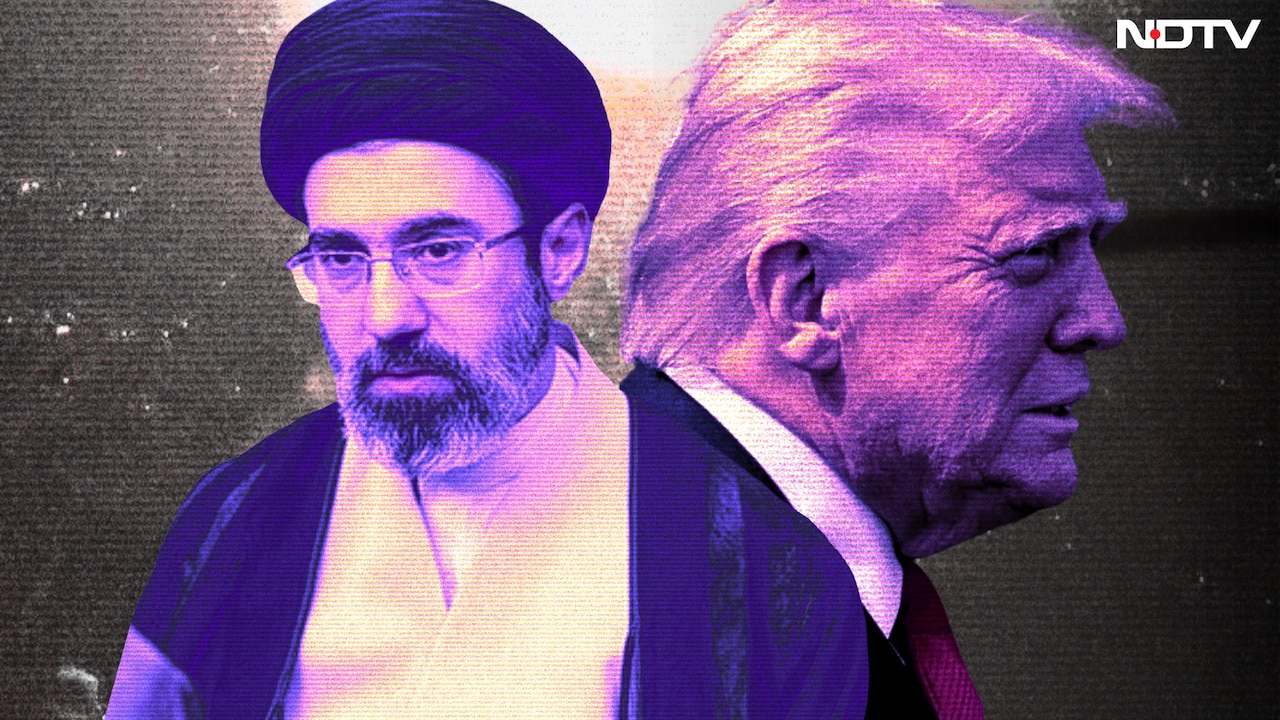
Donald Trump wants a face-to-face sit-down with Mojtaba Khamenei, the newly elevated and deeply reclusive Supreme Leader of Iran, because the American president believes the shattered remnants of the Islamic Republic are ready to capitulate on his terms. By declaring he would be "honored" to meet the 56-year-old cleric, Trump is signaling to both Tehran and a skeptical American electorate that his high-stakes military gamble has brought the enemy to the negotiating table. The overture is a classic transactional gambit designed to bypass the traditional diplomatic apparatus and secure a comprehensive deal that forces Iran to permanently abandon its nuclear ambitions.
Behind the sudden burst of White House optimism lies a far darker, more chaotic reality. This is not a standard diplomatic dance between sovereign equals. It is an volatile endgame played out across a Middle East scarred by three months of devastating warfare.
The conflict erupted on February 28, when a devastating joint US-Israeli airstrike decapitated the Iranian regime, killing the long-standing Supreme Leader Ayatollah Ali Khamenei. In the immediate, blood-soaked aftermath, the regime bypassed traditional institutional consensus to hastily appoint his son, Mojtaba, to the state's highest office.
The transition has been anything but smooth. The younger Khamenei has not been seen in public since inheriting the mantle. Rumors, openly repeated by Trump on his "Pod Force One" podcast, suggest the new leader was severely disfigured or critically wounded in the very strikes that claimed his father's life.
"I’m not hearing he’s doing great," Trump remarked with his trademark bluntness. "If you believe the stories, he’s missing a lot of different parts."
Yet despite the physical toll and the forced isolation, US intelligence indicates that Mojtaba Khamenei remains the ultimate arbiter of power in Tehran. He is the one signing off on the fragile, frequently violated ceasefire agreements.
The American president's sudden willingness to sit down with a man whose father he recently liquidated reveals the core philosophy of his second-term foreign policy. Trump views geopolitics through the lens of a corporate takeover. He believes the Iranian military is decisively defeated, its economy is in freefall, and its leadership is cornered. To Trump, a personal summit is the final step needed to extract a total surrender disguised as a peace treaty.
The Friction in the Alliance
The push for a direct American deal with Tehran has created severe, explosive fractures within the Washington-Tel Aviv axis. Israeli Prime Minister Benjamin Netanyahu views the conflict as a historic, generational opportunity to permanently dismantle not just Iran's nuclear infrastructure, but its regional proxy network entirely. Israel’s widening military campaign in southern Lebanon against Hezbollah is designed to accomplish exactly that.
Trump wants the shooting to stop. The economic fallout of the war has sent global energy markets into a tailspin, pushing crude oil prices up and threatening domestic inflation just months before the critical US midterm elections.
The disagreement between the two leaders recently boiled over into a ferocious, profanity-laced telephone confrontation. Diplomatic insiders revealed that Trump lost his temper over Netanyahu's insistence on expanding the war into Lebanon, shouting directly at the Israeli Prime Minister.
"Bibi, we gotta stop this," Trump recalled telling Netanyahu during the heated exchange, confirming he used intense language to convey his irritation. "I was a little bit perturbed at his constantly fighting with Lebanon."
This raw behind-the-scenes friction exposes the fundamental mismatch in goals between the allies. Israel seeks a total, structural transformation of the Middle East security landscape. Trump seeks a fast, dramatic diplomatic victory that reopens the blockaded Strait of Hormuz, lowers the price of gasoline at American pumps, and allows him to claim he ended a war before voters head to the ballot box.
Tehran Mask of Defiance
In Iran, the reaction to Trump's public overtures has been a mix of bureaucratic dismissal and continued kinetic aggression on the ground. Iranian Foreign Minister Abbas Araghchi quickly brushed aside the talk of a summit, urging observers to look at the situation "in the real world." Araghchi maintained that state security agencies have strictly advised against the new Supreme Leader making public appearances due to ongoing targeted assassination threats.
The regime is desperate to project an image of seamless continuity. They claim that the same level of absolute obedience that existed toward the elder Khamenei has transferred entirely to his son.
But actions on the water and in the skies tell a different story. The Islamic Revolutionary Guard Corps (IRGC) is fighting for its institutional survival and is actively trying to disrupt the peace talks.
Just hours after Trump aired his willingness to meet, an Iranian-built drone slammed into a passenger building at Kuwait International Airport, killing an Indian national and wounding several others. The IRGC claimed direct responsibility, framing the strike as legitimate retaliation for American naval operations against an Iranian oil tanker.
Concurrently, the strategic Strait of Hormuz remains a treacherous, heavily mined chokepoint. While the White House claims advanced US underwater minesweeping capabilities have largely cleared the shipping lanes, the reality is that the maritime corridor—which once handled a fifth of the world's liquefied natural gas and oil—is virtually paralyzed. Every fresh drone strike or naval skirmish sends a jolt through global markets, undermining the very stability Trump is desperate to establish.
The Art of the Autocratic Deal
For Trump, the model for a potential meeting with Mojtaba Khamenei isn't found in traditional statecraft, but in his previous summits with North Korea's Kim Jong Un. He believes that by offering the leader of a pariah state personal legitimacy and a guarantee of regime survival, he can bypass ideological roadblocks.
The proposed memorandum of understanding currently being hammered out behind closed doors requires Iran to permanently forfeit its nuclear program. In exchange, Washington is offering a lifting of the crippling wartime blockade and potentially massive financial compensation for damage sustained during the initial February strikes.
It is a high-risk, low-trust strategy. Critics within Washington point out that Mojtaba Khamenei, a lifelong hardliner who operated for decades in the shadows controlling the regime's security apparatus, is highly unlikely to genuinely embrace a pro-Western alignment.
The Iranian leadership has historically proven far more resilient to economic pain and military degradation than Western analysts predict. While the American political class must constantly answer to an unstable electorate and shifting polling numbers ahead of midterms, the clerical regime in Tehran measures its survival in decades. They are entirely willing to tolerate immense societal suffering if it means preserving the core tenets of the Islamic Revolution.
Trump’s assertion that Iran has "already agreed they're not going to have a nuclear weapon" is an attempt to lock in a narrative of victory before the ink is even dry on a preliminary draft. If the negotiations collapse, the administration has quietly signaled it will unleash a secondary wave of devastating military strikes. But for now, the White House is betting everything on the theater of the personal summit. Trump believes that a broken, hidden leader, ruling over a battered nation from an undisclosed bunker, will ultimately choose survival over martyrdom when offered a face-saving exit by the American president.
For a deeper dive into the geopolitical shifts shaking the region, you can watch this analysis on the US-Iran peace talks which breaks down the fragile ceasefire negotiations and the sudden diplomatic pivot from the White House.