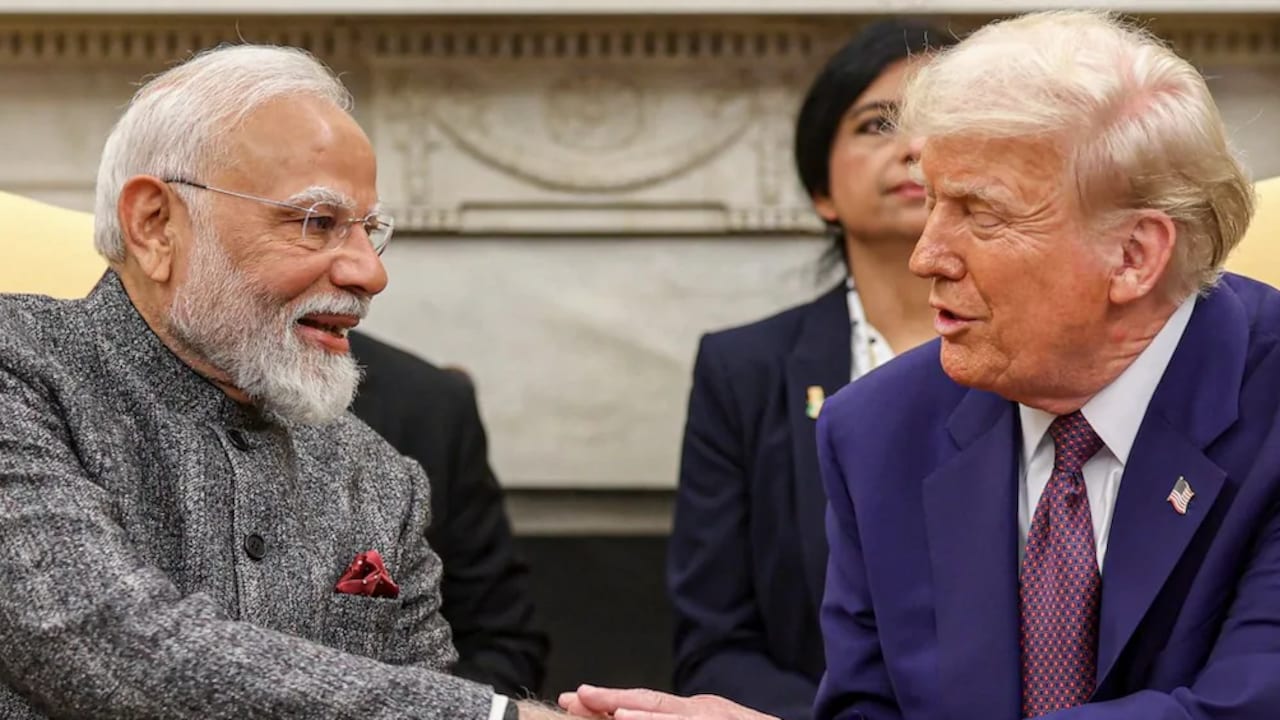
United States Ambassador to India Sergio Gor announced in Mumbai that a long-awaited interim trade agreement between Washington and New Delhi is 99 percent finalized. Speaking at the Citi 2026 India Conference, the 39-year-old Trump confidant and former White House personnel chief projected absolute certainty, declaring that negotiators are merely hammering out the final one percent. He framed the looming deal as a direct translation of the personal friendship between President Donald Trump and Prime Minister Narendra Modi into concrete economic policy. But behind the diplomatic sales pitch lies a far more transactional reality. Washington is not rushing to finalize this deal out of pure goodwill; it is doing so because the administration is scrambling to insulate American supply chains from China through aggressive new initiatives like Pax Silica and the TRUST framework.
The optimistic rhetoric coming out of the embassy masks a high-stakes race against time. For all the talk of a "transformational phase" in bilateral ties, the final one percent of any trade negotiation is notoriously the hardest to close. By publicly claiming the finish line is in sight, Gor is attempting to force the momentum, using his direct line to Mar-a-Lago as leverage to compel Indian bureaucrats into concessions on remaining market access friction points.
The Friction Behind the Ninety Nine Percent
Diplomatic declarations of near-total agreement are frequently used to apply public pressure on stubborn negotiating partners. A U.S. trade delegation led by chief negotiator Brendan Lynch has been holed up in New Delhi conducting intense, three-day rounds of talks with an Indian team led by Commerce Ministry Additional Secretary Darpan Jain. If the agreement were truly a settled matter, these high-level, closed-door huddles would not require the urgent, multi-day intervention of top trade lawyers.
The sticking points rest in the details of market access and digital trade rules. While Gor has taken pains to clarify that recent sweeping U.S. tariff measures are part of a global trade review rather than a specific attack on India, New Delhi remains deeply defensive about its domestic manufacturing sectors. India’s historical approach to trade is fiercely protective, often clashing with Washington’s demands for lower agricultural tariffs and relaxed data localization laws.
To bypass these traditional hurdles, the Trump administration is shifting the goalposts away from standard free trade agreements toward targeted technological alignment. This is where initiatives like TRUST—Transforming the Relationship Utilising Strategic Technologies—come into play. By focusing on critical minerals, artificial intelligence, and semiconductor supply chains, the U.S. is offering India a privileged position inside a walled garden of Western-aligned economies, provided New Delhi plays by Washington's regulatory rules.
Pax Silica and the Corporate Migration
The true anchor of this diplomatic push is Pax Silica, Washington's strategic framework designed to systematically detach critical technology infrastructure from Chinese influence. Gor revealed that within two weeks of Pax Silica's formal announcement, 60 countries expressed interest in joining. India was deliberately placed within the top ten.
This inclusion is not a favor. It is a structural necessity for American corporate survival in a fractured global market. Major U.S. technology firms are currently committing massive investment capital into Indian cloud computing, digital infrastructure, and artificial intelligence frameworks. The math driving this corporate migration is straightforward.
- Pharmaceutical Dependency: Over 40 percent of the generic medicines consumed in the United States are sourced directly from manufacturing plants in India.
- Tech Talent and Infrastructure: American tech giants require massive, secure alternate hubs for data processing and software engineering outside of East Asia.
- Critical Mineral Processing: The U.S. is desperate to break the near-monopoly on the mining and refining of rare earth elements required for defense and consumer electronics.
This interdependence explains why the U.S. is willing to overlook India's continued strategic autonomy in other geopolitical arenas, such as its energy trade with Russia. The administration has calculated that securing the tech sector is vastly more important than enforcing absolute geopolitical conformity.
From White House Enforcer to New Delhi Diplomat
To understand the aggressive, fast-moving pace of current U.S.-India diplomacy, one must look at the unorthodox background of the ambassador himself. Sergio Gor is not a career foreign service officer molded by State Department protocols. He is a political operator who built his reputation running the White House Presidential Personnel Office, where he oversaw the vetting and installation of thousands of administration loyalists.
Gor approaches diplomacy with the same transactional efficiency he used to manage political appointments in Washington. Career diplomats traditionally spend years parsing commas in draft agreements. Gor, by contrast, operates on a mandate of rapid, measurable outcomes designed to deliver quick wins for the president's domestic political audience.
This operational style was on display during Secretary of State Marco Rubio’s recent substantive visit to New Delhi, which focused heavily on operationalizing defense production and expanding joint aerospace missions like the NASA-ISRO NISAR project. Gor’s role is to act as the closer, using his perceived proximity to Trump to signal to the Indian leadership that agreements made now will be backed by the highest levels of American executive power.
The Fragility of Friendship as Policy
The core vulnerability of a bilateral relationship built on top-level personal chemistry is that it lacks deep institutional roots. The narrative that the U.S.-India bond is secure simply because Trump and Modi are personal friends ignores the structural economic tensions that always threaten to surface.
While Gor paints a picture of limitless potential, Indian policymakers remain acutely aware that Washington’s current protectionist stance could easily pivot toward New Delhi if trade deficits widen uncomfortably. The administration’s focus on bringing manufacturing back to American soil sits in direct ideological opposition to Modi's "Make in India" campaign, which seeks to turn the subcontinent into a global manufacturing powerhouse.
For now, the mutual fear of economic encirclement by Beijing is holding these opposing forces in check. The interim trade deal will likely be signed in the coming months, precisely as Gor predicts. But it will be signed because both capitals realize that in a fragmenting global economy, a flawed partnership with a trusted market is infinitely better than facing the alternative alone.


