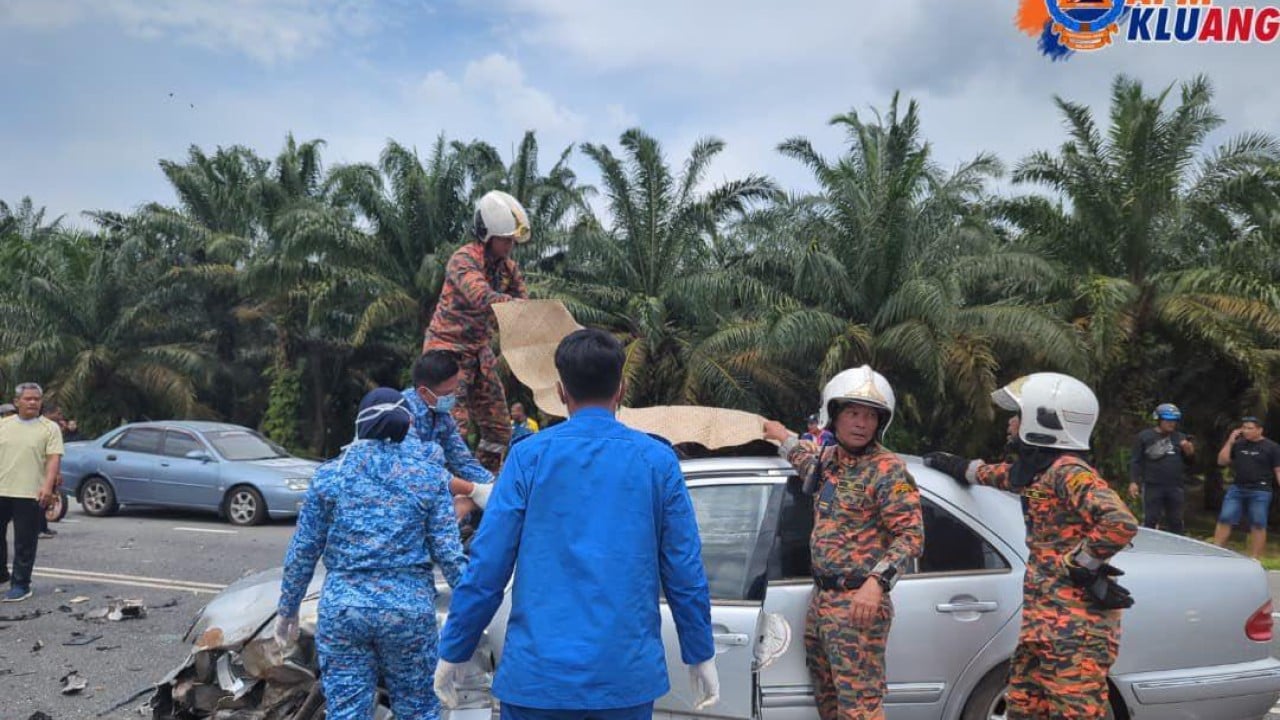
A horrific five-vehicle collision on June 1, 2026, along Jalan Renggam–Simpang Renggam in Johor, Malaysia, left five people dead, including a 10-year-old girl and an entire family traveling in a Toyota Vios. The disaster unmasked an escalating crisis that regular traffic enforcement cannot stop: wealthy, young drivers treating public thoroughfares as private racetracks.
Initial police investigations revealed that a 22-year-old driving a BMW 530e was racing his 19-year-old brother, who was behind the wheel of a Mercedes-Benz A250. The BMW driver lost control at high speed, crossed into oncoming traffic, and obliterated multiple vehicles before plunging into a ravine. The BMW driver died during transport to the hospital, while his younger brother, a student at a university in Singapore, survived to face reckless driving charges.
The tragedy highlights a structural failure in the nation's traffic enforcement framework. Despite periodic crackdowns, the combination of high-performance vehicles, lenient legal penalties, and systemic gaps in cross-border driver accountability ensures that public roads remain highly dangerous.
Beyond the Mat Rempit Syndrome
For decades, the public conversation surrounding illegal street racing in Malaysia focused almost exclusively on Mat Rempit culture. This group consists predominantly of working-class youth riding modified underbone motorcycles, known locally as kapcai.
Government interventions historically targeted these low-income bikers through aggressive roadblocks, bike impoundments, and heavily publicized police raids. This narrow focus, however, ignored a much more lethal threat on the asphalt: high-performance, luxury sports cars operated by affluent individuals who possess the financial capital to absorb fines without altering their behavior.
A modern premium vehicle like the BMW 530e involved in the Johor crash can easily accelerate from 0 to 100 kilometers per hour in under six seconds. When heavy, sophisticated machines lose traction at extreme speeds, the kinetic energy transferred during an impact guarantees catastrophic destruction.
By treating street racing primarily as a low-income subculture problem, policymakers failed to track or counter organized luxury car rallies and impromptu highway sprints that occur on weekend afternoons.
The Financial Imbalance of Traffic Penalties
The core of the problem lies in the structural inadequacy of the Road Transport Act 1987. While recent revisions sought to toughen the consequences for dangerous driving, the legal and economic penalties fail to act as a deterrent for wealthy offenders.
The surviving 19-year-old Mercedes-Benz driver faces prosecution under Section 42(1) of the Act for reckless and dangerous driving. The statutory penalty includes a maximum prison term of five years and a fine topped out at RM15,000 (approximately S$4,800).
For a family capable of purchasing premium European sedans and funding elite university educations abroad, a five-figure ringgit fine represents an insignificant line-item expense. It is a minor transaction cost rather than a punitive deterrent.
+------------------------------+----------------------------------+-----------------------------+
| Vehicle Class                | Common Demographic Profile       | Primary Legal Exposure      |
+------------------------------+----------------------------------+-----------------------------+
| Underbone Bikes (Kapcai)     | Working-class youth (Mat Rempit) | Immediate asset forfeiture  |
| Premium European Sedans     | Affluent, foreign-educated elite | Manageable financial fines  |
+------------------------------+----------------------------------+-----------------------------+
The stark economic reality means that the law operates with a regressive impact. While an impounded motorcycle or a heavy fine can ruin a low-income driver financially, the same legal mechanism fails to influence the behavior of those driving luxury vehicles. Without progressive, income-indexed fines or immediate, permanent vehicle forfeiture laws for high-speed reckless driving, the wealthy will continue to view public highways as open tracks.
The Cross Border Enforcement Gap
The Johor crash also exposes a major jurisdictional vulnerability between Malaysia and Singapore. The surviving teenage suspect is a Malaysian citizen enrolled at a university in Singapore. The daily, fluid migration of students, professionals, and wealth across the Johor–Singapore Causeway creates a unique regulatory headache.
Drivers frequently exploit the lack of a unified, real-time digital traffic demerit system between the two countries. Foreign-registered luxury vehicles or local drivers holding dual ties regularly rack up multiple speeding summonses on Malaysian expressways without facing immediate license suspension or vehicle impoundment at the border checkpoints.
Summonses simply accumulate as unpaid paper tickets in government databases. This dynamic creates a dangerous sense of impunity for drivers who know they can slip back across the border before the wheels of local bureaucracy can turn.
Engineering Flaws and Speed Vulnerabilities
While driver behavior deserves the blame for these fatalities, Malaysia's infrastructure design magnifies the human cost. Jalan Renggam, where the five victims died, is a trunk road rather than a controlled-access expressway.
Trunk roads across rural and suburban Johor lack physical center dividers or concrete barriers to separate opposing traffic flows. Instead, drivers traveling at high velocities are separated by nothing more than painted lines on the asphalt.
When a high-speed vehicle loses control due to a mechanical failure, aquaplaning, or human error, it instantly veers into oncoming traffic. The lack of infrastructure safeguards transforms standard driving errors or reckless maneuvers into fatal head-on collisions.
Compounding this design flaw is the vast disparity in vehicle safety standards across the country. The family of four killed in the crash was traveling in a Perodua Alza, a mass-market domestic vehicle designed for affordability. While modern luxury cars come equipped with reinforced crumple zones, side-curtain airbags, and advanced stability control, older or lower-cost domestic models offer significantly less structural protection during a high-speed impact with a heavy luxury vehicle.
The Missing Reform Agenda
Halting these preventable highway deaths requires a complete overhaul of the enforcement strategy. Sweeping underbone motorcycles off the streets satisfies political optics but leaves the most destructive speed offenders completely unchecked.
First, Malaysia must transition away from flat-rate traffic fines. Introducing an income-indexed or asset-tied fine structure ensures that wealthy speeders face real financial pain.
Second, the Road Transport Department must establish an integrated database link with Singaporean transport authorities. Any driver caught exceeding speed limits by more than 40 kilometers per hour should face an immediate, automatic border-crossing hold and vehicle seizure, regardless of their residency status or university enrollment.
Finally, the Ministry of Works must prioritize the installation of physical median barriers on high-volume trunk roads. Relying on drivers to voluntarily stay in their lanes on undivided, high-speed routes is a proven policy failure. Until the state addresses the class imbalance in traffic laws and seals its cross-border enforcement gaps, families traveling on ordinary commutes will continue to pay with their lives.