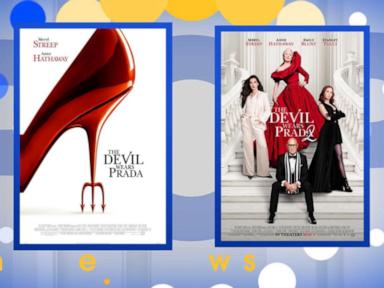
The theatrical economy just received an aggressive reminder that mid-budget counterprogramming is not dead. It was simply abandoned. This week, Disney and 20th Century Studios watched The Devil Wears Prada cross the $1 billion cumulative mark at the global box office. Driven almost entirely by its newly minted sequel, which has racked up a staggering $676 million worldwide in just seven weeks of release, the fashion-dramedy franchise achieved what modern studio executives routinely dismiss as impossible for non-superhero, adult-oriented intellectual property.
The immediate industry reaction has been predictable. Studios are scrambled, hunting through their library basements for any dormant comedy or mid-2000s literary adaptation they can resurrect. But the industry is pulling the wrong lever. The lesson here is not that audiences crave more decades-late sequels. The lesson is that Hollywood has completely systematically broken its pipeline for generating sustainable, mid-budget hits that built this baseline of loyalty in the first place.
The Mathematical Miracle of Miranda Priestly
The raw numbers from the box office reports tell a story of immense consumer demand that went completely undetected by traditional market tracking. The sequel opened on May 1 to a massive $233.6 million worldwide debut, including $76.7 million domestically. Within nine days, the film eclipsed the $124.7 million entire domestic lifetime run of the 2006 original.
What makes this performance an outlier in the current theatrical climate is the efficiency of the capital involved.
| Film Performance Metric | The Devil Wears Prada (2006) | The Devil Wears Prada 2 (2026) |
|---|---|---|
| Production Budget | $40,000,000 | $100,000,000 |
| Opening Weekend (Domestic) | $27,537,244 | $76,747,075 |
| Global Box Office Total | $326,500,000 | $676,700,954 |
| Return on Investment Multiple | 8.1x | 6.7x |
Compare these return multiples to the bloated balance sheets of modern tentpole cinema. A standard superhero feature or sci-fi epic routinely commands a $250 million production budget, paired with a matching $150 million global marketing spend. To merely break even after theater chains take their 50 percent cut of ticket receipts, those films must drag themselves past the $800 million mark. The sequel achieved immediate profitability inside its opening weekend because its infrastructure was scaled to its story, not its special effects.
The Organic Signal That Marketing Units Missed
Studio executives love to believe that a massive marketing apparatus can manufacture a hit from thin air. The performance of this franchise points to an entirely different reality. Long before the first trailer debuted in February, a quiet signal was flashing in the consumer data. Nielsen streaming data reveals that domestic viewership for the original 2006 film spiked by 428% between March and April.
That is not the result of a corporate promotional campaign. It is evidence of an audience actively preparing itself for a narrative continuation.
The production team did something that contemporary franchise managers find fundamentally terrifying. They made the film for the exact same people who loved the first one. Rather than implementing the standard corporate playbook—recasting the lead roles with teenage internet personalities, pivoting the tone to capture a younger demographic, or hyper-inflating the narrative stakes to threaten the fate of the world—they kept the scope intensely personal. Screenwriter Aline Brosh McKenna and director David Frankel returned to trace the realistic evolution of corporate power dynamics. Miranda Priestly faces a late-career decline, forcing her into direct conflict with Emily, who now commands the advertising budget of a massive luxury conglomerate.
It turns out that adult audiences are entirely willing to buy a movie ticket if you provide them with recognizable human behavior, elevated dialogue, and a script that respects their intelligence.
The Death of the Mid Budget Incubation Engine
The core issue facing theatrical distribution is that you cannot have a massive legacy sequel twenty years later if you do not build the original movie today. In 2006, Fox 2000 greenlit the original film for $40 million. It was part of a robust ecosystem of studio divisions dedicated explicitly to target-demographic dramas, comedies, and literary adaptations. These films served as the connective tissue of the theatrical ecosystem, keeping multiplexes profitable during the slow periods between summer blockbusters and holiday releases.
Today, that mid-budget space has been completely hollowed out. Studios have split into a binary strategy of low-budget horror or massive $200 million spectacle, leaving everything else to die on streaming platforms. When a mid-budget film is shifted directly to a streaming service, its cultural footprint is flattened. It becomes content to be scrolled past, lacking the communal urgency, critical scrutiny, and cultural staying power that only a dedicated theatrical release provides.
Why Streaming Data Is an Unreliable Predictor
The industry’s over-reliance on internal streaming algorithms has created an insular echo chamber. Algorithms measure passive consumption—what people put on in the background while folding laundry or scrolling through their phones. They do not measure active emotional investment. A subscriber might watch a generic romantic comedy on a Friday night because it requires zero effort, but that does not mean they will pay $15 to see a sequel in a theater.
The theatrical longevity of this property stems from its specific, highly rewatchable nature. Every frame of the original film carried distinct creative choices, from the curation of the costuming to the precise rhythm of the editing. By treating movies as mere filler for a digital pipeline, studios have stopped creating the exact type of cultural artifacts that can generate a billion-dollar legacy payoff two decades down the line.
The financial triumph of this run is a clear warning shot to studio boards. The audience for character-driven, beautifully executed mid-budget cinema never actually left the theater. They were simply starved of options. If Hollywood wants to secure its financial future, it must stop mining the past for temporary nostalgia hits and start reinvesting in the creative architecture required to build new ones.