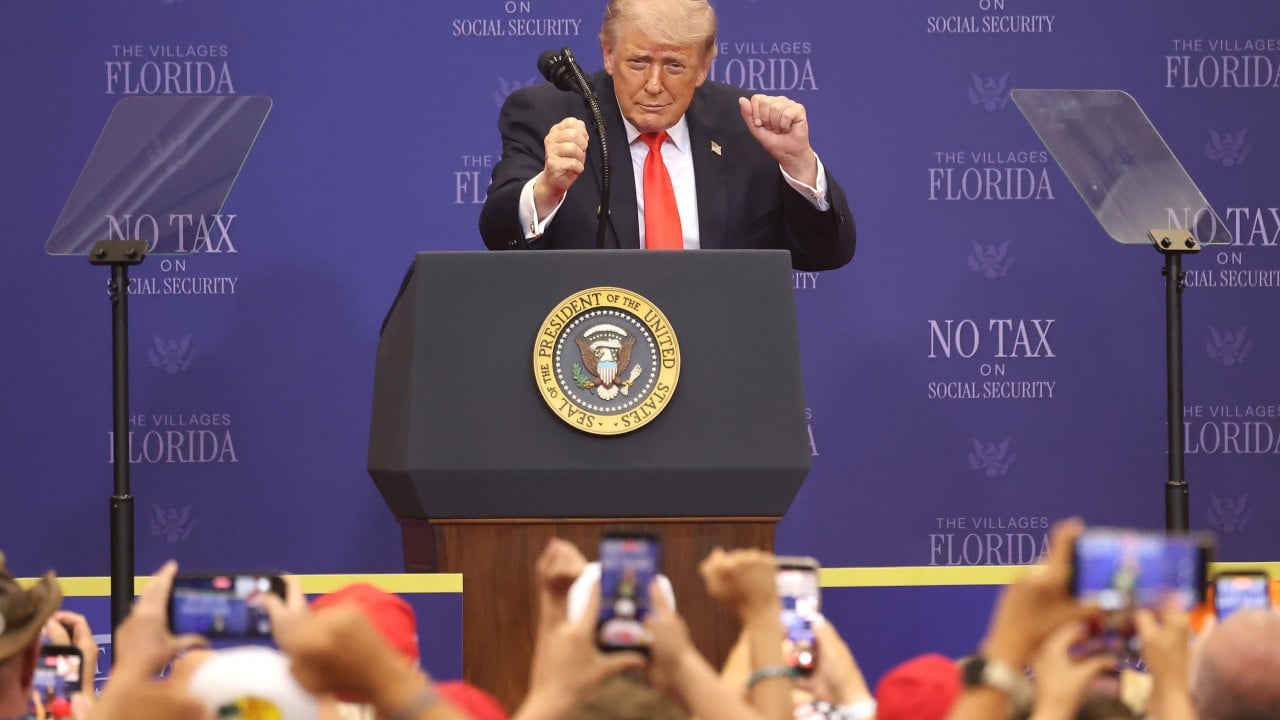
The traditional midterm playbook for the political party occupying the White House is a clinical exercise in damage control. Historically, the president’s main job during these cycles is to raise money, project unity, and minimize the inevitable losses that voters inflict on the governing regime.
Donald Trump is currently executing a completely different strategy.
By aggressively targeting incumbent Republican lawmakers who have crossed him, the president is diverting critical campaign resources away from vulnerable general election battlegrounds and funneling them into bitter internal primary feuds. This systematic campaign of political retribution is fracturing state party structures, burning through millions of dollars in conservative donor capital, and elevating untested, highly ideologized challengers. Far from securing the MAGA movement's absolute control over the legislature, this vengeful approach risks handing competitive congressional seats directly to the Democrats this November.
The immediate financial and structural toll of this strategy became starkly visible during recent primary elections in Indiana and California, revealing a deep institutional rift that cannot easily be mended before the general election.
The Financial Drain of Self Inflicted Primary Wars
Political campaigns run on cash, and every dollar spent defending a safe Republican seat in May is a dollar that cannot be used to attack a vulnerable Democrat in October. The ongoing proxy wars between Trump-endorsed insurgents and establishment incumbents are forcing national Republican fundraising committees to make agonizing choices.
In Indiana, Trump allies successfully targeted seven sitting Republican state lawmakers who had pushed back on specific redistricting and policy initiatives. While the challengers unseated five of those incumbents, the victory came at a staggering financial cost. Local and national political action committees were forced to pour millions into advertising markets that should have been ignored, effectively burning cash in deep-red districts where a Republican victory in November was already guaranteed.
The dynamic is even more pronounced in competitive states. National organizations like the National Republican Congressional Committee find themselves in the awkward position of having to quietly shield reliable conservative incumbents from challenges backed by their own party’s standard-bearer. This creates a dual-track spending ecosystem where conservative donors are actively financing both sides of an ideological civil war.
The Subversion of Local Party Control
Beyond the raw financial metrics, the push for ideological purity is breaking the gears of local political machinery. State parties have historically functioned as autonomous fiefdoms, capable of reading the unique cultural and political terrain of their local electorates. The current wave of top-down presidential interventions is overriding that local expertise.
A clear example of this disconnect occurred at the California Republican Party convention in San Diego. Seeking to stamp his authority on the state's upcoming gubernatorial primary, Trump issued a high-profile endorsement of Steve Hilton, a businessman and former television host.
Instead of falling in line, the local party base revolted.
Delegates split their support, giving 49 percent of their votes to Riverside County Sheriff Chad Bianco and leaving Hilton with just 44 percent. Because neither candidate cleared the 60 percent threshold required for an official state party endorsement, the convention ended in a stalemate.
The local grassroots activists and donors openly expressed frustration with what they viewed as an tone-deaf intervention from Mar-a-Lago. Many attendees noted that forced endorsements ignore the complicated mechanics of California’s top-two primary system. By trying to consolidate the vote behind a single preferred candidate, the national intervention threatened to alienate moderate swing voters who are essential for any conservative candidate running statewide in a blue state.
Policy Fractures and Midterm Vulnerabilities
While the administration remains focused on purging dissenters, sitting congressional Republicans are left to handle major policy vulnerabilities that Democrats are already weaponizing for the midterms.
The legislative agenda in Washington has stalled on key consumer issues, leaving lawmakers with few concrete achievements to show voters back home. Internal polling has sparked widespread concern among Senate Republicans, who openly warn that the party is not doing enough to address the rising cost of living and household affordability before voters head to the polls.
Instead of focusing on pocketbook issues, Republican candidates are frequently forced to defend the administration’s highly controversial policy pivots.
- The Tariff Dilemma: Following a Supreme Court ruling that restricted executive taxation powers, the White House bypassed Congress to push a unilateral global import tax plan. This move split the congressional GOP, forcing free-trade traditionalists into public disagreements with a younger, populist wing of the party.
- Aggressive Redistricting: Driven by executive pressure, Southern states like South Carolina, Alabama, and Tennessee have pushed aggressive new congressional maps. These efforts have triggered intense legal battles and public protests over the redrawing of majority-Black districts, giving Democrats a powerful tool to mobilize their own base.
- The Spending Paradox: The White House’s massive $1.5 trillion defense budget request for FY2027 has created friction with fiscal hawks in Congress who are terrified of entering the midterms without a clear message on deficit reduction and inflation.
The General Election Trap
The fundamental flaw in a vengeance-driven primary strategy is that primary voters and general election voters want entirely different things. A candidate who wins a low-turnout, highly partisan primary by running on absolute loyalty to the president is often poorly equipped to survive a grueling general election in a moderate suburban swing district.
By clearing out seasoned moderate incumbents, the primary purges are systematically removing the exact type of politicians who know how to win ticket-splitting voters. In their place are inexperienced candidates who enter the general election bruised, financially depleted, and carrying significant ideological baggage.
Democrats are already capitalizng on this strategic blunder. Democratic strategists are choosing not to spend heavily in deep-red areas, instead reserving their massive fundraising hauls for suburban districts where Trump-backed primary winners have successfully ousted more moderate, business-friendly Republicans. The playbook is simple: tie the insurgent nominee directly to the administration's most polarizing policies, from sweeping global tariffs to interventionist economic mandates.
Control of both chambers of Congress currently hangs by a thread. The historical drag of the midterms is already a steep hill for the governing party to climb. By treating the upcoming elections as a personal loyalty test rather than a coordinated effort to build a durable legislative majority, the current strategy is actively dismantling the institutional advantages Republicans need to win. If the party loses the House or Senate this November, the post-election post-mortem will point directly to the millions of dollars and precious months wasted fighting against itself.