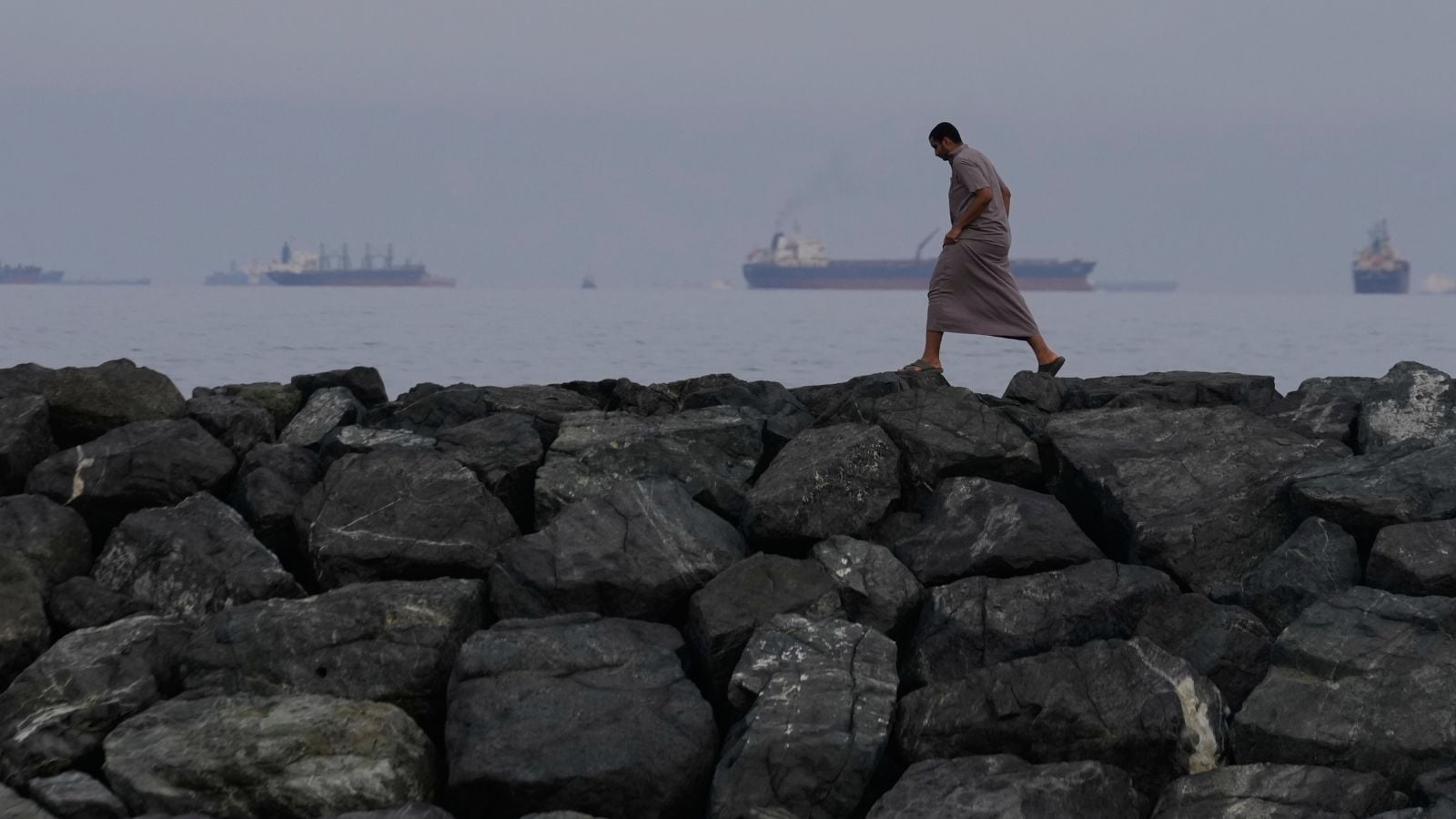
The global shipping industry is currently playing a high-stakes game of chicken with geography. Every day, roughly 20 percent of the world’s liquid petroleum passes through a thirty-mile-wide choke point between Oman and Iran. For ship owners, the Strait of Hormuz is no longer just a transit route; it is a calculation of acceptable loss. While surface-level analysis suggests that firms simply want more "security," the reality is far more cynical. Shipping giants are not waiting for a total cessation of hostilities—they are waiting for a shift in the insurance burden and a concrete commitment to naval intervention that the West is currently hesitant to provide.
The math of a transit is brutal. When a VLCC (Very Large Crude Carrier) enters the Persian Gulf, it carries a cargo often valued north of $100 million. If that vessel is seized or struck by a drone, the financial ripple effects extend far beyond the physical hull. We are seeing a breakdown in the traditional "freedom of navigation" doctrine, replaced by a pay-to-play model where only those with state-backed guarantees or private mercenary escorts feel truly insulated.
The Illusion of Naval Protection
For decades, the presence of the U.S. Fifth Fleet was enough to keep the lanes open. That psychological shield has cracked. Modern maritime security is now a fractured mess of overlapping task forces like Operation Prosperity Guardian and various European-led missions that often lack a unified command structure.
Shipping firms look at these patrols and see a reactive force, not a preemptive one. A destroyer twenty miles away cannot stop a fast-attack craft from boarding a tanker in a matter of minutes. Owners are demanding "kinetic assurance." This means more than just a visible grey hull on the horizon; it means rules of engagement that allow naval assets to disable threats before they reach the ship.
There is also the problem of "flag fatigue." Vessels flying flags of convenience—like those of Panama or the Marshall Islands—often find themselves at the bottom of the priority list when a crisis breaks out. If you aren't flying the Stars and Stripes or the Union Jack, you cannot guarantee a state navy will come to your rescue. This has created a two-tiered system in the Strait, where "premium" vessels get the attention while the rest of the fleet is left to fend for itself.
The Insurance Deadlock
Behind every captain’s decision to enter the Strait is an underwriter in London or Singapore. War risk premiums are the real barometer of stability, and right now, they are screaming. These costs are not static; they fluctuate based on the news cycle, often spiking by 100 percent or more within hours of an incident.
The Breach of the JWC Hull War Areas
The Joint War Committee (JWC) maintains a list of areas where additional premiums apply. The entire Persian Gulf and the Gulf of Oman are permanently on that list. However, firms are now facing a "refusal to cover" scenario for certain high-risk assets. When insurers pull back, the shipping company has to self-insure—a move that is essentially betting the company’s future on a single voyage.
To return to a state of normalcy, the industry needs a "Sovereign Guarantee" mechanism. This would involve governments stepping in to act as the insurer of last resort, much like they do for terrorism risks in other sectors. Without this, the cost of transit will eventually eclipse the profit margin of the cargo, leading to a permanent rerouting that adds weeks to global supply chains.
The Technology Gap in Maritime Defense
We are witnessing a mismatch in hardware. A $2 billion destroyer is using million-dollar missiles to swat down "suicide" drones that cost less than a used sedan. This is an asymmetrical war that the shipping industry is losing.
- Electronic Warfare (EW) Bubbles: Firms are looking for localized jamming technology that can be temporarily installed on tankers.
- Hard-Kill Systems: There is a growing, albeit controversial, demand for private security teams to carry more than just small arms.
- Transparency and AIS: The practice of "going dark"—turning off Automatic Identification Systems—has become a double-edged sword. It hides a ship from some threats but makes it a target for others who view the lack of a signal as a sign of illicit activity.
The industry needs a standardized, real-time intelligence feed. Currently, data is siloed between various naval commands and private intelligence firms. A captain in the Strait needs a single, verified "Common Operational Picture" (COP) that tells them exactly where the threats are, not a series of conflicting emails from a corporate office thousands of miles away.
Iran’s Tactical Evolution
The threat is no longer just a rogue mine or a stray missile. It is a sophisticated, tiered strategy of "gray zone" warfare. This involves using non-state actors, cyberattacks on port infrastructure, and legalistic seizures based on manufactured maritime disputes.
When a ship is seized under the guise of a "legal violation," naval escorts are often powerless to intervene without starting a formal war. Shipping firms need a legal framework that protects them from these "judicial hijackings." This requires a level of diplomatic pressure that many nations are currently unwilling to exert, fearing a total shutdown of the Strait.
The Cost of the Alternate Route
If the reassurances don't come, the alternative is the Cape of Good Hope. This isn't just a minor detour. It adds roughly 3,500 nautical miles to a journey from the Gulf to Europe.
| Metric | Strait of Hormuz Route | Cape of Good Hope Route |
|---|---|---|
| Transit Time | ~20 Days | ~32-35 Days |
| Fuel Cost | Standard | +$400,000 to $600,000 |
| Carbon Footprint | Baseline | ~30% Increase |
| Market Volatility | High | Low |
The "Cape Surcharge" is already being felt in global markets. However, for many boardrooms, a $600,000 fuel bill is a bargain compared to a $100 million loss and a hostage crisis. This is the existential threat to the Strait: it is becoming a secondary option.
The Missing Link is Political Will
The shipping industry is tired of platitudes about "keeping the lanes open." They want to see a clear, unified response to every single provocation. The current policy of "strategic patience" is viewed by the industry as a polite way of saying "you're on your own."
True reassurance will only come when a multi-national coalition establishes a permanent, escorted convoy system—similar to Operation Earnest Will in the 1980s. This requires a level of commitment that involves putting boots on decks and being willing to fire back. Until the pain of the status quo for world leaders outweighs the risk of escalation, the Strait of Hormuz will remain a graveyard for the "freedom of the seas" ideal.
The burden of proof is now on the governments. They must prove that the international order is more than just a collection of unenforceable treaties. If they can't, the world’s most important waterway will continue to be governed by the law of the jungle, and the global economy will pay the toll in every gallon of fuel and every ton of freight.
Stop looking at the maps and start looking at the insurance ledgers. That is where the real war is being lost.