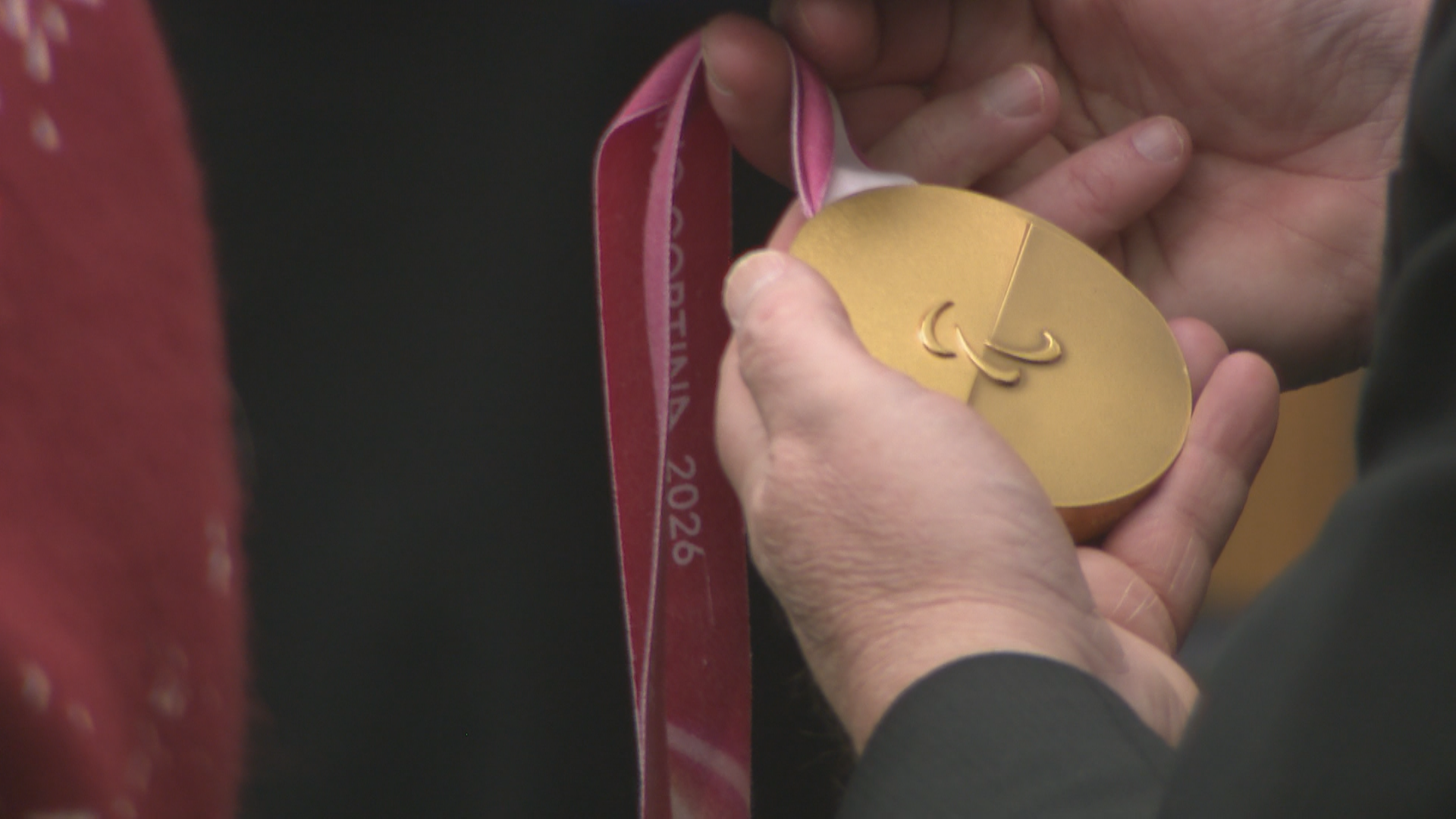
Shelby Newkirk stood beneath the ornate rotunda of the Saskatchewan Legislative Building, the weight of a Paralympic gold medal resting against her chest. The cameras clicked in a rhythmic, mechanical chorus. Politicians who likely couldn’t name a single one of her split times three months ago now jockeyed for position within the frame. It was a scene of curated triumph, a classic "hometown hero" beat that local news outlets digest and regurgitate with predictable warmth. But beneath the surface of the applause and the framed certificates lies a more complex reality regarding how Canada supports—or fails to support—the athletes it uses for its feel-good press releases.
The celebration of Newkirk’s victory in the 100-meter backstroke S6 is more than a sports story. It is a moment of political capital. For a province like Saskatchewan, which often fights for its share of the national spotlight, an elite athlete is a rare and precious asset. Yet, the gap between the public celebration and the private struggle of a Para athlete remains a chasm that a few minutes of floor time in the Legislature cannot bridge.
The Calculated Mechanics of Recognition
When an athlete wins, the machinery of the state moves with surprising speed. The invitation to the provincial capital wasn't just a gesture of kindness; it was a demonstration of the "halo effect." Politicians realize that standing next to a gold medalist provides a temporary shield against the grinding gears of daily partisan bickering. For an afternoon, everyone is on the same team.
Newkirk, who has lived with generalized dystonia since she was a teenager, represents the kind of grit that makes for excellent political speeches. Her journey from a competitive swimmer to a world-record-holding Paralympian is a narrative of individual will. However, this focus on the individual often obscures the systemic hurdles. While the Legislature celebrates the gold, they rarely discuss the funding models that keep these athletes just above the poverty line during the four-year cycles between Games.
In Canada, high-performance athletes are supported through the Athlete Assistance Program (AAP), colloquially known as "carding." For a top-tier athlete, this amounts to roughly $1,765 a month. That is the "living allowance" for someone expected to perform at a world-class level. When you factor in the specialized equipment, physiotherapy, and the specific nutritional requirements of a Para athlete, that check is spent before the ink is dry. The ceremony in Regina didn't mention that.
Beyond the Podium and the Press Release
The reality of Para sports is one of high costs and low visibility. Unlike their Olympic counterparts, who might land a lucrative partnership with a major bank or a national telecom provider, Paralympic athletes often find the sponsorship market cold. The "inspirational" tag only goes so far in a boardroom focused on return on investment.
Newkirk has been vocal about the need for more than just cheers. She has become an accidental advocate for accessibility and support systems that exist outside the pool. To reach the level of a gold medal, she needed more than just a lane to swim in; she needed a province that provided the infrastructure for her to live, train, and travel with a disability. Saskatchewan’s record on this front is a mix of genuine progress and stubborn stagnation.
The Infrastructure Gap
While the provincial government took turns praising Newkirk’s "Saskatchewan spirit," the actual physical landscape of the province remains a challenge for many with similar conditions.
- Transportation: Access to specialized transit remains a point of contention in major hubs like Saskatoon and Regina.
- Facility Access: Not all training facilities are created equal, and many regional rinks and pools lack the modern lifts and changing rooms required for high-level Para training.
- Rural Isolation: Athletes outside the main urban centers face a complete lack of coaching expertise tailored to Para-specific disciplines.
Newkirk’s success happened despite these obstacles, not because they were absent. Her gold medal is a testament to her family’s support and her own relentless drive, which often had to fill the holes left by public policy.
The Narrative of the Supercrip
There is a dangerous trope in sports journalism often referred to as the "Supercrip" narrative. It frames the disabled athlete as a figure of pity who has "overcome" their disability to achieve greatness. This framing is a disservice. Newkirk didn't "overcome" dystonia to win gold; she trained like a professional athlete with a specific set of physical parameters.
The celebration at the Legislature leaned heavily into this trope. By focusing on the "inspiration" factor, the government avoids talking about the "integration" factor. If the province is so proud of a Para athlete’s success, the logical next step is to ensure that the next generation of kids with disabilities has a clear, funded path to the same podium. Instead, the funding for grassroots Para sports often feels like an afterthought, a rounding error in the provincial budget.
Funding the Future vs. Celebrating the Past
There is a stark difference between a one-time ceremony and a long-term investment. If we look at the numbers, the provincial investment in amateur sport has seen fluctuations that don't always track with the rising costs of international competition.
- Travel Costs: Airfare and specialized equipment transport have surged by nearly 40% in the last three years.
- Coaching Salaries: To keep world-class coaches in Saskatchewan, the province must compete with national programs and international offers.
- Parity: There remains a significant gap in the media rights and broadcast revenue between Olympic and Paralympic events, which trickles down to the individual athlete’s ability to earn a living.
The Disconnect in the Room
As the MLAs stood to applaud, one had to wonder how many of them had recently voted on legislation that directly impacted disability benefits or healthcare access. The optics of the day were perfect, but the irony was thick. You cannot celebrate a Paralympian on Tuesday and ignore the accessibility barriers in provincial housing on Wednesday without being a hypocrite.
Newkirk’s grace in these situations is part of the job. Top-tier athletes are expected to be diplomats. They smile, they wear the medal, and they thank the sponsors. But the conversation needs to shift. We should be asking why it takes a gold medal for an individual with a disability to get an audience with the leaders of the province.
The True Value of Newkirk’s Gold
The gold medal Shelby Newkirk brought back to Saskatchewan is made of silver and plated in at least six grams of pure gold. Its real value, however, is as a mirror. It reflects the best of the province’s competitive drive, but it also reflects the shadows of the systems that are supposed to support its citizens.
If this ceremony was the end of the story, it would be a failure. The recognition should be the start of a legislative audit. How many other Shelbys are sitting in Saskatchewan classrooms right now without the specialized equipment they need to even enter a pool? How many are being told that their dreams are too expensive or too complicated for the current system to accommodate?
Moving the Goalposts
The province has a choice. It can continue to treat these wins as occasional PR victories, or it can use Newkirk’s success as a blueprint. A blueprint for how to integrate Para sports into the DNA of the Saskatchewan Roughrider-obsessed culture. This means more than just a shout-out on the floor of the House; it means dedicated, non-discretionary funding for Para-athlete development.
It means ensuring that when an athlete like Newkirk travels to Paris or Los Angeles, they aren't worried about how they will pay their rent when they get home. It means recognizing that a gold medal is a result of a thousand small, funded decisions made years in advance.
The applause in the Legislature has since died down. The MLAs have moved on to the next item on the agenda—likely a debate over land use or tax codes. Shelby Newkirk will go back to the pool. She will continue to fight the clock, her own muscles, and the inherent difficulties of an elite sporting life. She has done her part. She brought home the gold. Now the people in that room need to prove they are worthy of the reflected glow. They can start by looking at the budget for the 2027 fiscal year and deciding if they value the athlete as much as they value the photo op.