The fluorescent lights of aisle four always hum a low, irritating B-flat. Elena stands beneath them, holding a plastic gallon of whole milk. She stares at the digital price tag clipped to the wire shelf. It reads six dollars and forty-two cents. Two weeks ago, it was five-eighty. Last year, she didn't even look at the price; she just threw it in the cart.
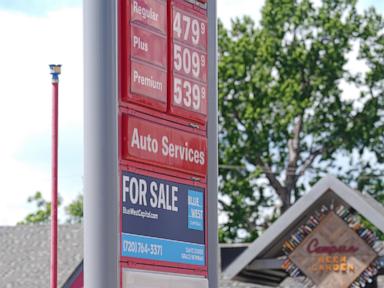
Now, she calculates. She calculates the milk against the loaf of sourdough, against the three apples her son demands for his school lunches, against the increasingly terrifying digits spinning on the gas pump outside.
Elena is a hypothetical composite of three million parents currently navigating the American suburbs, but her math is entirely real. Her anxiety is the true anchor of macroeconomic policy. While analysts on television speak in the sanitized language of basis points and fiscal tightening, Elena experiences the economy as a series of quiet, micro-defeats at the cash register.
The numbers released this morning confirm what Elena already knew from the knot in her stomach. Inflation has climbed to a grueling three-year high.
We are told this is a story about numbers. It isn't. It is a story about distance, friction, and the fragile threads that connect a missile strike in the Middle East to the breakfast tables of Ohio.
The Long Fuse
To understand why Elena is paying more for breakfast, we have to look thousands of miles away, to a narrow strip of water known as the Strait of Hormuz.
Imagine a massive, invisible pipeline stretching across the globe. Liquid energy flows through it constantly, keeping the lights on in Chicago, the factories moving in Munich, and the delivery trucks rolling through Atlanta. When geopolitics erupts into open conflict—as we have witnessed with the sudden escalation of the Iran war—it is as if a giant boot has stepped squarely on that pipe.
Supply drops. Panic rises.
Crude oil is the baseline DNA of modern existence. It is not just the fluid we pump into our sedans. It is the diesel in the semi-trucks that hauled Elena’s milk from the dairy farm to the processing plant, and then to the distribution hub, and finally to the grocery store. It is the petroleum used to manufacture the plastic jug holding the milk. It is the fertilizer used to grow the grain that fed the cows.
When the price of oil spikes, everything gets heavier. Everything costs more to move.
The raw statistics are stark. Crude oil prices jumped twenty-two percent in a matter of days following the initial strikes. For the average consumer, that translated almost instantly to a forty-cent surge at the pump. But the secondary shockwaves take longer to arrive, working their way stealthily through the supply chain until they land with a thud on the grocery bill.
The Mechanics of Pain
Economists call this cost-push inflation. It sounds clinical. It sounds manageable.
In reality, it is a cascading failure of affordability. Consider what happens next: a regional trucking company faces a ten thousand dollar increase in its monthly fuel budget. They cannot simply absorb that cost; their margins are already razor-thin. So, they raise their freight rates. The dairy cooperative pays the higher rate to move the milk. The cooperative raises its wholesale price to the supermarket chain. The supermarket chain, facing its own rising electricity and labor costs, passes the buck to Elena.
Everyone is defending their own ledger. No one is explicitly trying to gouge the consumer. Yet, the person at the very end of the line bears the cumulative weight of every single increase along the chain.
This three-year high is particularly cruel because it arrives just as we thought we were finding our footing. For eighteen months, the narrative was one of recovery. Inflation was cooling. The central banks were hinting at relief. We were told the fever had broken.
Then came the spark in the oil fields.
It reveals a uncomfortable truth about our interconnected world: our domestic stability is hostage to global volatility. We like to believe our financial well-being is determined by our hard work, our budgets, and our local economies. But a drone strike on a refinery half a world away can rewrite the value of the dollar in your pocket before you finish your morning coffee.
The Psychology of Scarcity
There is a hidden cost to inflation that never shows up in the consumer price index reports. It is the psychological tax.
When money loses its predictability, life loses its structure. In stable times, money is an invisible utility. You work, you receive digits in your bank account, you exchange those digits for goods and services. The friction is minimal.
When inflation takes hold, money becomes highly visible. It demands constant attention. You find yourself standing in the supermarket aisle, doing mental algebra, feeling a bizarre sense of guilt for wanting blueberries out of season. You start budgeting for things that used to be background noise—the streaming service subscription, the oil change, the school pictures.
This constant vigilance is exhausting. It breeds a subtle, pervasive resentment. People feel like they are running on a treadmill that keeps accelerating, working harder just to maintain a standard of living that used to feel effortless.
The official reports will tell you that core inflation, which strips out volatile food and energy prices, is rising at a more moderate pace. They use this metric because it helps policymakers see the long-term trend without the noise of sudden geopolitical shocks.
But humans do not live in the "core" economy.
Humans live in the volatile world. We eat food. We burn gasoline. You cannot tell a commuter that their economic outlook is stable because core inflation is flat, while they are staring at a hundred-dollar receipt from the gas station. It feels gaslighting. It creates a profound disconnect between official economic triumphalism and lived reality.
The Narrow Path Forward
The institutions tasked with fixing this find themselves trapped in a corner. The primary tool available to curb inflation is the manipulation of interest rates. By making borrowing more expensive, central banks try to cool down demand.
If people buy fewer houses, fewer cars, and fewer luxury items, companies will eventually lower prices to entice them back.
But interest rates are a blunt instrument. They cannot drill more oil. They cannot broker peace treaties in the Middle East. Raising rates right now is like trying to perform surgery with a sledgehammer. If they raise them too high to combat the energy shock, they risk stalling the entire economy, leading to layoffs and recession. If they do nothing, inflation embeds itself into the psychology of the market, leading workers to demand higher wages, which causes companies to raise prices further, creating a self-fulfilling spiral.
We are entering a period of prolonged uncertainty. The assumptions that governed the last decade—cheap energy, seamless global trade, predictable prices—are dissolving.
Elena puts the milk in her cart. She will buy it because her son needs it, but she will skip the premium coffee she likes. She will drive straight home, skipping the detour to the garden center. Millions of choices just like hers, made in millions of stores across the country, will collectively dictate the trajectory of the global economy over the next six months.
Outside, the sky is a bruised gray, heavy with the threat of rain. The numbers on the gas station sign across the street flicker, changing again, an unsettling reminder that the world is small, interconnected, and entirely indifferent to the balance of our checking accounts.