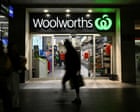
The Australian supermarket duopoly is currently under a legal microscope that threatens to peel back the veneer of "value" pricing. At the center of this storm is Woolworths, whose executives recently stood before a court to justify a pricing strategy that the Australian Competition and Consumer Commission (ACCC) alleges was built on a foundation of deception. The core of the dispute involves the "Prices Dropped" program—a marketing staple that consumers have long associated with genuine relief at the checkout. However, the ACCC argues these were not discounts but calculated maneuvers where prices were hiked briefly before being "dropped" to a price still higher than the original floor.
Woolworths’ defense rests on a fascinating, if cynical, premise. The company claims these internal rules were not designed to trick shoppers, but rather to prevent "gaming" of their promotional systems. It is an argument that turns the standard consumer-retailer relationship on its head. In this version of reality, the supermarket is the one protecting the integrity of the price tag against the complexities of its own supply chain and promotional cycles.
The Mechanics of the Spike and Drop
To understand why the ACCC is seeking hundreds of millions in penalties, one must look at the specific rhythm of the alleged price manipulation. The regulator points to hundreds of products where Woolworths allegedly hiked the price for a short window—often just a few weeks—before slapping a red "Prices Dropped" tag on the shelf.
The math is simple and brutal. If a tin of coffee sits at $8.00 for six months, jumps to $10.00 for 22 days, and then "drops" to $9.00 with a celebratory promotional badge, the consumer believes they are saving a dollar. In reality, they are paying $1.00 more than the long-term average price. Woolworths contends that these price increases were driven by genuine cost-of-doing-business pressures, such as rising supplier costs or logistical overheads. They argue that once these costs were settled, they "dropped" the price as low as they could, and the red tag was merely a factual statement that the price was now lower than it was the week before.
This defense relies on a very literal interpretation of the word "dropped." It ignores the psychological weight that "Prices Dropped" carries in a country facing a cost-of-living crisis. For the average shopper, that red tag is a signal of a bargain, not a temporary reprieve from a recent, artificial peak.
The Gaming Defense Explained
In testimony that has raised eyebrows across the retail sector, Woolworths executives suggested that their internal pricing "guardrails" were meant to prevent promotional "gaming." This refers to a scenario where products might bounce between various discount tiers—"Specials," "Members Only," and "Prices Dropped"—in a way that creates pricing instability or confuses the internal inventory systems.
By implementing strict rules about how long a price must stay at a certain level before it can be moved into a promotional category, Woolworths claims it was trying to maintain a "steady state" for the consumer. The irony is thick. The very rules intended to ensure "honesty" in the system are the ones the ACCC claims were used to facilitate a bait-and-switch.
The Role of Supplier Requests
Supermarkets do not operate in a vacuum. A significant portion of price movement is dictated by the "Big Food" suppliers—the multinationals that provide the cereals, detergents, and canned goods that line the aisles. Woolworths argued in court that many of the price hikes preceding the "drops" were the result of suppliers demanding higher wholesale prices.
When a supplier raises the cost of a pallet of goods, the supermarket has three choices:
- Absorb the cost and take a hit to the margin.
- Raise the shelf price immediately.
- Negotiate a temporary hike followed by a "promotional" period to maintain volume.
The ACCC’s investigation suggests that the third option became a standardized tool. By aligning these "cost-justified" hikes with subsequent marketing campaigns, the supermarkets could protect their margins while appearing to be the consumer’s champion. It is a sophisticated form of optics management that requires precise timing.
The Erosion of Consumer Trust
For decades, the "Big Two"—Woolworths and Coles—have enjoyed a level of market dominance that is almost unique in the developed world. This dominance was built on the promise of reliability. You might not get the cheapest price every single time, but you wouldn't be gouged.
That social contract is currently on life support. The "gaming" defense feels particularly tone-deaf to a public that has seen grocery bills outpace wage growth for years. When a retailer talks about "gaming the system," they are usually referring to savvy shoppers using coupons or arbitrage. To hear an executive use it to describe their own internal pricing safeguards suggests a corporate culture that views the price tag as a strategic variable rather than a transparent reflection of value.
Regulatory Teeth and the 2026 Landscape
This court case is not happening in isolation. The Australian government has signaled that the era of "light-touch" regulation for supermarkets is over. We are seeing a shift toward a mandatory Food and Grocery Code of Conduct, which would carry significant financial penalties for breaches.
The ACCC is no longer just looking for clerical errors. They are hunting for "unconscionable conduct." This is a high legal bar, but the evidence presented—spreadsheets showing the exact dates of hikes and the subsequent "drop" campaigns—paints a picture of a system that was functioning exactly as intended. If the court finds that Woolworths deliberately manipulated the timing of price increases to create the illusion of a discount, the "gaming" defense will be remembered as one of the great strategic blunders in Australian corporate history.
The Myth of the Accidental Discount
Woolworths maintains that the "Prices Dropped" program is distinct from "Specials." In their internal logic, a "Special" is temporary, while a "Price Drop" is meant to be a long-term reduction. However, the data shows that many of these "long-term" drops lasted only as long as it took for the next price hike to be scheduled.
The sophistication of modern retail software allows for "dynamic pricing" that would make a stockbroker blush. Algorithms can predict exactly how much a price can rise before a consumer switches to a house brand or a competitor. By layering these algorithms with promotional "rules," supermarkets can create a perpetual motion machine of perceived value.
What This Means for the Future of Retail
If the ACCC wins, the ripple effects will go far beyond Woolworths. Every major retailer in the country will have to audit their promotional logic. The days of the "high-low" pricing strategy—where prices are kept high only to be discounted frequently—may be numbered.
We are likely moving toward a "Everyday Low Price" (EDLP) model, similar to what Costco or Aldi utilizes. This model is less exciting for marketers because it doesn't allow for the dopamine hit of a "50% OFF" sticker, but it is infinitely more transparent. For Woolworths, the transition will be painful. Their entire infrastructure is geared toward the "Prices Dropped" theater.
The "gaming" defense is a window into a mindset where the consumer is a participant in a complex simulation rather than a customer in a store. When the rules of that simulation are written by the house, the house always wins. Until, of course, the regulator decides to change the rules of the game itself.
Practical Steps for the Skeptical Shopper
While the courts deliberate, the burden of truth remains with the individual. The "gaming" defense proves that the price on the shelf is often a narrative, not a fact.
- Ignore the Badge: The color of the tag (red, yellow, or blue) is a psychological trigger. Look only at the unit price—the cost per 100g or per liter.
- Track the Cycle: Most "Specials" in the Australian grocery sector run on a 4-to-8-week cycle. If your preferred coffee is $12 today, it will almost certainly be $8 again within a month.
- Question the "New" Price: If a product has a "Prices Dropped" tag, ask yourself what it cost two months ago. If you can't remember, the marketing has already won.
Retailers will continue to argue that their systems are too complex for the average person to understand. They will talk about "supply chain volatility" and "promotional guardrails." But at the end of the day, a discount that leaves you paying more than you did last year is not a discount. It is a price hike with a better publicist.
Stop looking at the tags and start looking at the totals. The supermarket isn't being "gamed" by its own rules; it is using those rules to define the boundaries of your reality. The only way to win a rigged game is to stop believing in the illusion of the "drop" and start demanding the transparency of the floor. Overhaul your loyalty. If the red tag doesn't represent a true historical low, it represents a breach of trust. Don't wait for the court's verdict to decide that your wallet deserves better than a strategically timed spike.