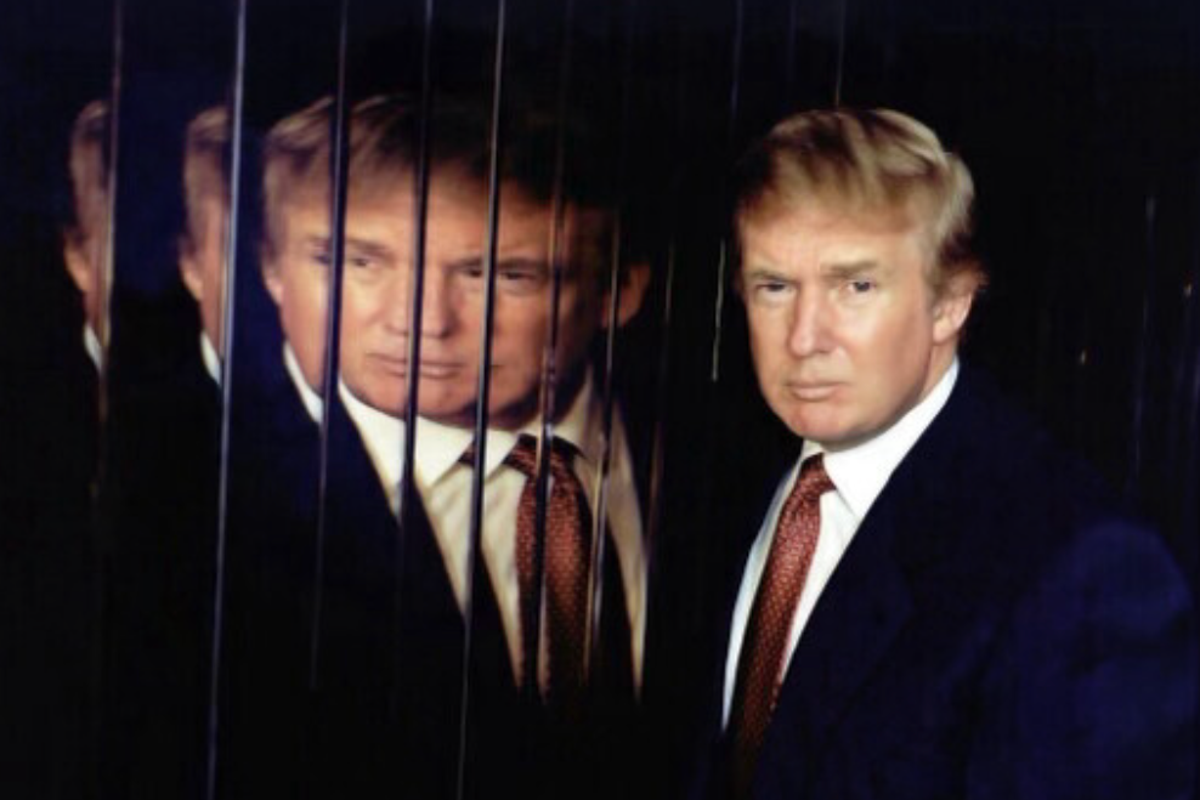
Donald Trump photoshopped himself as James Bond.
The media immediately threw a collective tantrum, treating a blatant piece of digital theater as either a terrifying authoritarian manifesto or a bizarre delusion of grandeur. Commentators rushed to point out the absurdity, detailing how the former president declared himself "the greatest attraction" while wrapping himself in the iconography of MI6’s premier asset.
They completely missed the point.
The lazy consensus among political journalists is that these memes are mere ego trips or clumsy attempts at autocrat branding. This analysis is fundamentally broken. It treats modern political communication like a 20th-century policy paper when it actually operates on the mechanics of internet attention economics.
Trump pasting his face onto Daniel Craig’s body isn’t a misunderstanding of the James Bond mythos. It is a highly calculated, post-modern appropriation designed to exploit the exact media outrage it generated.
The Flawed Premise of the "Serious" Political Analysis
Mainstream political reporting still operates under the delusion that voters evaluate leaders based on a rigid matrix of dignity, policy coherence, and traditional optics. When a figure like Trump shares a heavily edited image of himself in a tuxedo holding a Walther PPK, the standard critique follows a predictable script: "This is unpresidential. This violates the dignity of the office. James Bond is a British civil servant, not an American populist."
This literal interpretation is laughably naive.
In a fragmented media ecosystem, political power belongs to whoever controls the narrative velocity. The Bond image was never meant to be a literal claim to espionage expertise. It was a bait car left in the middle of the digital highway, and the media jumped in and drove it exactly where it was supposed to go.
By analyzing the meme with straight-faced solemnity, critics validate its reach. They transform a two-minute Photoshop job into a national news cycle, ensuring that the image reaches millions of eyeballs that would have otherwise scrolled past it. The media didn't cover the spectacle; the media became the spectacle.
The Attention Economy and Narrative Hijacking
To understand why this works, you have to look at the underlying mechanics of modern digital platforms. Media organizations are trapped in an engagement death spiral. Outrage drives clicks, clicks drive revenue, and nothing generates outrage faster than a deliberate subversion of establishment norms.
When a political figure bypasses traditional gatekeepers to drop a hyper-macho piece of pop-culture propaganda, they are hijacking the algorithm.
- The Outrage Cycle: The image is posted. Critics express mock horror or mockery.
- The Amplification Phase: Algorithms detect the sudden spike in engagement and push the content to wider audiences.
- The Counter-Reaction: Supporters view the media's hyper-fixation as proof of establishment bias, reinforcing their loyalty.
I have spent years analyzing digital media strategies, and I have watched political campaigns waste tens of millions of dollars on polished, focus-grouped television ads that voters instantly tune out. Meanwhile, a single, provocative meme can dominate the cable news cycle for 48 hours for zero dollars in ad spend.
This isn't a breakdown of political strategy; it is political strategy optimized for the internet age.
The Subversion of Hero Archetypes
The choice of James Bond is not accidental, but the nuance lies in how the archetype is inverted. The traditional James Bond is an agent of the state. He represents institutional power, secrecy, and the defense of the status quo. He obeys M, works within a massive bureaucracy, and protects the global order.
The populist appropriation of Bond completely flips this script.
In the populist narrative, the agent is no longer serving the deep state; he is replacing it. The tuxedo and the weapon become symbols of individual authority rather than institutional mandate. The message isn't "I am a loyal servant of the government." The message is "I possess the singular capability to handle threats outside the standard rules."
Traditional Bond: Agent -> Serves Institution -> Protects Status Quo
Populist Bond: Individual -> Overrides Institution -> Disrupts Status Quo
By merging the aesthetics of elite cinematic competence with populist rhetoric, the image creates a cognitive shortcut. It bypasses logical policy debate and appeals directly to a desire for strongman efficacy. It says, "The system is broken, but I can navigate it with style and force."
Why Fact-Checking a Meme is a Fool's Errand
One of the most exhausting aspects of modern journalism is the rise of the literalist fact-check applied to obvious satire or hyperbole. When pundits dissect a meme to explain why the individual in question is not, in fact, a fictional secret agent, they commit a massive category error.
You cannot debunk an aesthetic.
You cannot use a spreadsheet to fight a feeling.
When Trump calls himself "the greatest attraction," he is operating as an entertainer-politician. He understands that in a crowded attention marketplace, boredom is the only fatal sin. The media's insistence on treating every piece of digital performance art as a literal policy position only alienates the public further, making the journalists look out of touch and humorless.
The Real Danger of the Spectacle
The true risk here is not that voters will suddenly believe a politician is a licensed killer for the British government. The danger is the total erosion of substantive political discourse.
When the entire political arena is reduced to a series of escalating memes and counter-memes, complex structural issues get completely buried. We stop debating fiscal policy, foreign relations, or systemic reform because we are too busy arguing about a photoshopped tuxedo.
This strategy has clear downsides for the practitioner as well. Over-reliance on shock value creates an inflation of expectation. To maintain the same level of media capture, the imagery must become progressively more absurd, more aggressive, and more polarizing. Eventually, the audience develops a tolerance, and the shock machine runs out of fuel.
But until that saturation point is reached, the media will continue to fall for the trap every single time. They cannot help themselves. The hunger for traffic ensures that they will always prioritize the shiny object over the boring reality.
Stop looking at the photo. Stop analyzing the caption. Stop writing 800-word articles explaining why a politician isn't actually 007. Every second spent dissecting the theater is a second stolen from the reality of governance.
Turn off the screen. Turn away from the spectacle. Demand policy, not performance.