Environmental temperature spikes create an immediate behavioral anomaly: a surge in unplanned, unacclimatized open-water immersion. When ambient air temperatures exceed seasonal norms, public health data consistently tracks a spike in immersion fatalities. The conventional narrative attributes these deaths to poor swimming ability or simple misadventure. The physiological reality is distinct. Fatalities during heatwaves are heavily driven by Cold Water Shock (CWS)—an involuntary, neurovascular cascade triggered by sudden thermal gradients, entirely independent of a person's swimming proficiency.
Understanding this phenomenon requires moving past vague safety warnings and dissecting the precise physiological mechanisms that fail when a overheated body enters cold water. You might also find this connected article interesting: Why Border Closures Cannot Stop the Congolese Ebola Surge.
The Tri-Phasic Mortality Framework of Cold Water Immersion
Immersion mortality operates across three distinct time horizons. Each phase presents unique physiological challenges and failure points.
[Sudden Cold Water Immersion]
       │
       ▼
┌────────────────────────────────────────────────────────┐
│ PHASE 1: Immediate Reflex Response (0 - 3 Minutes)     │
│ ∙ Involuntary Gasp Reflex & Hyperventilation           │
│ ∙ Vagal-Sympathetic Conflict (Autonomic Conflict)       │
│ ∙ Peripheral Vasoconstriction & Acute Hypertension    │
└───────────────────────┬────────────────────────────────┘
                        │ (If survived)
                        ▼
┌────────────────────────────────────────────────────────┐
│ PHASE 2: Short-Term Functional Failure (3 - 30 Minutes) │
│ ∙ Deep Muscle Cooling                                  │
│ ∙ Loss of Fine Motor Control & Coordination             │
│ ∙ Swim Failure (Inability to maintain airway)          │
└───────────────────────┬────────────────────────────────┘
                        │ (If survived)
                        ▼
┌────────────────────────────────────────────────────────┐
│ PHASE 3: Long-Term Thermal Depletion (30+ Minutes)     │
│ ∙ Hypothermia Core Temperature Drop                   │
│ ∙ Loss of Consciousness                                │
└────────────────────────────────────────────────────────┘
Phase 1: The Immediate Reflex Response (0 to 3 Minutes)
This initial window is the most lethal during heatwaves. The primary driver of mortality here is not hypothermia—which requires prolonged exposure to deplete core thermal energy—but rather the immediate neural reaction to rapid skin cooling. As discussed in latest coverage by CDC, the implications are significant.
When skin temperature drops abruptly, peripheral thermal receptors trigger a massive, involuntary discharge of the sympathetic nervous system. This results in two immediate physical crises:
- The Involuntary Gasp Reflex and Hyperventilation: The sudden thermal shock forces an immediate, uncontrollable inspiratory gasp. If the individual’s airway is submerged during this exact moment, they draw water directly into the lungs. Even a small volume of aspirated water ($~2$ to $3$ milliliters per kilogram of body weight) induces severe laryngospasm and rapid asphyxiation. If the head remains above water, the gasp gives way to hyperventilation, rapidly driving down blood carbon dioxide levels ($PCO_2$). This hypocapnia causes cerebral vasoconstriction, leading to disorientation, panic, and an inability to execute self-rescue protocols.
- The Autonomic Conflict Network: Simultaneously, cold water contact initiates peripheral vasoconstriction, shunting blood away from limbs to protect the core. This drastically elevates systemic vascular resistance, causing an acute spike in blood pressure. If the individual submerges their face, the distinct "diving response" is activated via the vagus nerve, which acts to slow the heart rate (bradycardia). This simultaneous demand on the heart—the sympathetic nervous system demanding an increased heart rate to fight shock, and the parasympathetic system demanding a slower rate due to facial immersion—creates an autonomic conflict. This cardiac arrhythmia can trigger sudden myocardial infarction or ventricular fibrillation, even in individuals with no prior history of cardiovascular disease.
Phase 2: Short-Term Functional Failure (3 to 30 Minutes)
Those who survive the initial three-minute reflex window enter the functional failure phase. The critical variable shifts from neurological shock to localized muscular cooling.
As peripheral blood flow remains restricted, heat is conducted away from the skeletal muscles of the arms and legs. Cold water conducts heat roughly 20 to 25 times faster than air of the same temperature. As muscle temperature drops below 27°C, peripheral nerve conduction velocity slows dramatically, and neuromuscular junction efficiency degrades.
The practical consequence is swim failure. The individual loses the fine motor control required to keep their mouth and nose clear of the water’s surface. Unlike fit swimmers practicing controlled immersion, an unacclimatized individual experiences a rapid decay in stroke efficiency. The angle of their body in the water becomes increasingly vertical, requiring more energy to maintain buoyancy until exhaustion forces submersion.
Phase 3: Long-Term Thermal Depletion (30+ Minutes and Beyond)
Hypothermia is the final phase of the timeline. It requires significant time for the core body temperature to drop from its baseline of 37°C to below 35°C.
While public attention often focuses on hypothermia as the primary danger of cold water, it is statistically less prevalent in summer heatwave drownings because most victims succumb to Phase 1 or Phase 2 mechanics long before core hypothermia can develop.
Thermal Asymmetry: The Ambient Air Fallacy
The core catalyst for summer drowning clusters is a cognitive error known as thermal asymmetry. During a heatwave, ambient air temperatures may register at 30°C or higher. This leads individuals to assume that natural water bodies have warmed proportionally.
Water possesses a high specific heat capacity, meaning it requires vast amounts of thermal energy to alter its temperature. Inland reservoirs, lakes, coastal waters, and deep rivers retain winter cooling well into the summer months. In temperate climates, open water temperatures in early to mid-summer frequently hover between 10°C and 15°C.
This creates a dangerous thermal delta:
$$\Delta T = T_{\text{body/air}} - T_{\text{water}}$$
When an individual with a skin temperature elevated by a 30°C environment enters 12°C water, the magnitude of the thermal gradient ($\Delta T \approx 18^\circ\text{C}$) maximizes the neurological shock. The severity of the initial gasp reflex is directly proportional to the speed and magnitude of this skin temperature drop.
Deconstructing Traditional Rescue Paradigms
Standard emergency responses frequently fail because they do not account for the physiological realities of Phase 1 immersion. Telling an individual experiencing an involuntary gasp reflex to "just swim to safety" ignores the complete loss of volitional motor control caused by hyperventilation and panic.
The Strategic Counter-Intuition: Float to Live
To survive the critical zero-to-three-minute window, an individual must execute a counter-intuitive physical protocol designed to manage the sympathetic nervous system's response. The priority is not movement; it is airway protection.
- Regulate the Respiratory Axis: Upon entering the water, ignore the impulse to swim vigorously. Aggressive swimming accelerates heart rates, exacerbates the autonomic conflict, and increases the likelihood of water aspiration during hyperventilation.
- Maximize Surface Area Exposure: Lean back, extend the arms and legs, and gently tilt the head back to keep the airway clear of the water. The objective is to utilize the body’s natural buoyancy, aided by air trapped in clothing, to remain stationary.
- Acknowledge and Endure the Reflex: The hyperventilation reflex peaks within 60 to 90 seconds and naturally subsides as the peripheral thermal receptors adapt to the new baseline temperature. Physical exertion must be entirely suppressed until breathing is controlled.
- Transition to Propulsion Only After Stabilization: Once respiratory control is re-established (typically after 2 to 3 minutes), the individual can assess their position and initiate targeted, low-energy swimming toward an exit point or prepare to signal for assistance.
[Entry into Cold Water]
         │
         ▼
[Suppress Swim Impulse] ──► [Tilt Head Back, Extend Limbs] ──► [Control Breathing (60-90s)] ──► [Assess & Swim]
Limitations of the Protocol
While the floatation strategy mitigates Phase 1 risk, it has structural limitations. In highly turbulent waters, such as rapid rivers or heavy coastal surf, maintaining a stable, face-up floating position without a personal flotation device is exceptionally difficult. Waves can wash over the airway, forcing water aspiration despite controlled breathing. Furthermore, if the water temperature is low enough to accelerate Phase 2 functional failure within minutes, the window available to transition from floating to active self-rescue is remarkably narrow.
Operational Risk Mitigation for Water Infrastructure Managers
Relying solely on public education campaigns is insufficient to alter the mortality curves associated with heatwave-induced drowning. Managing this risk requires structural and systemic interventions at high-risk sites.
Strategic Asset Deployment
Water management authorities, municipal councils, and park systems must transition from passive signage to active intervention tools.
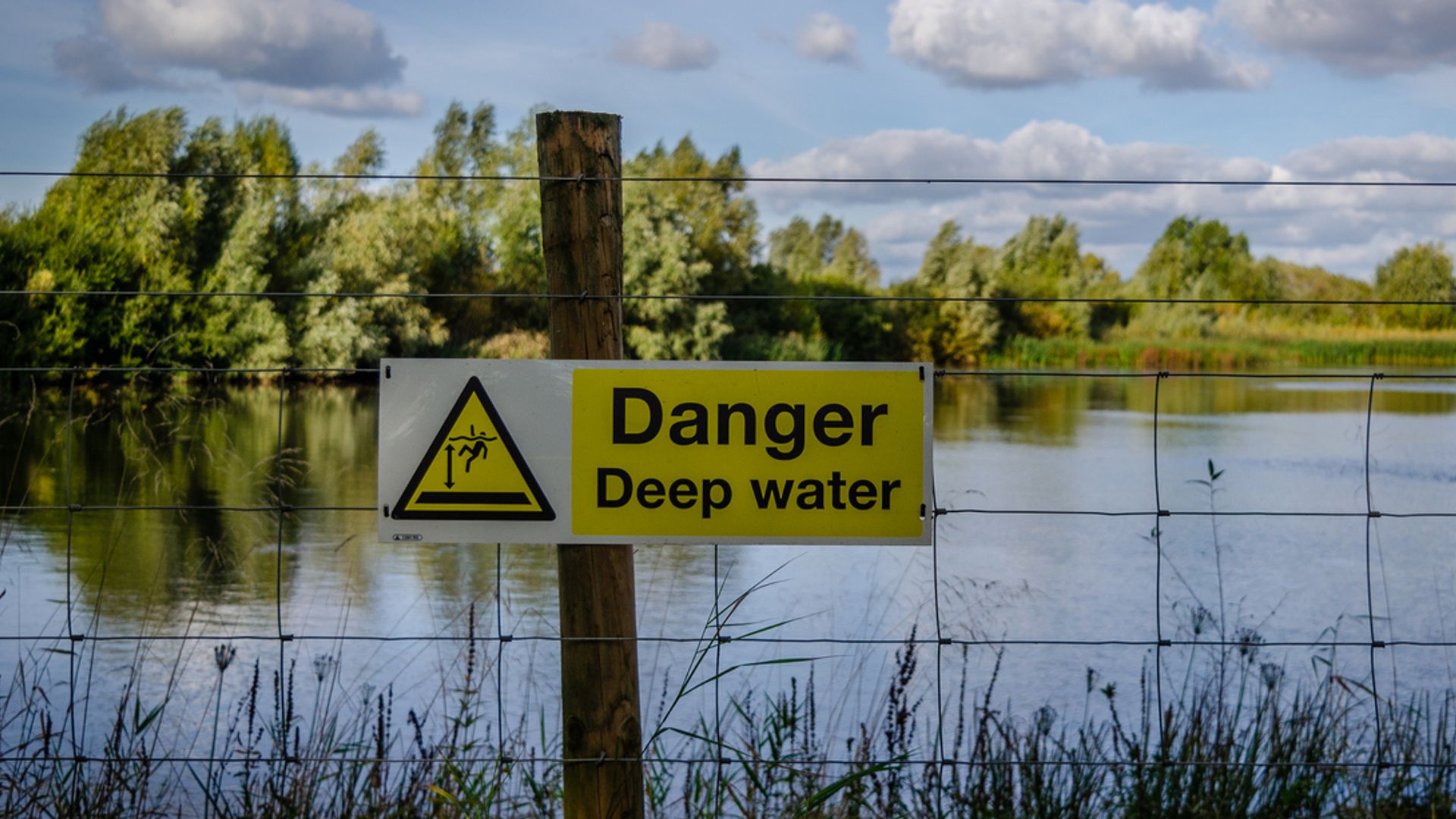
- Thermal Gradient Signage: Standard warning signs stating "Danger: Deep Water" are largely ignored because they lack contextual data. Signs should display the current real-time temperature differential between the air and the water to counter the thermal asymmetry illusion.
- Flotation Station Proximity: Throw bags and life rings must be positioned based on the calculated transit times of Phase 2 failure. If a person loses motor function within 5 to 10 minutes, rescue equipment must be close enough for immediate deployment by bystanders.
- Physical Egress Points: Natural reservoirs and steep-sided urban waterways often lack exit points. Installing low-profile ladders or textured escape ramps ensures that individuals who survive Phase 1 and maintain minimal motor function can exit the water without needing the significant upper-body strength required to scale a wet barrier.
The management of open-water safety during extreme weather anomalies requires treating the problem as a predictable physiological crisis rather than an unpredictable series of accidents. Public safety messaging must focus on teaching people how to manage the body's natural shock response during the first three minutes of immersion. Survival depends entirely on controlling the initial respiratory surge before attempting physical self-rescue.