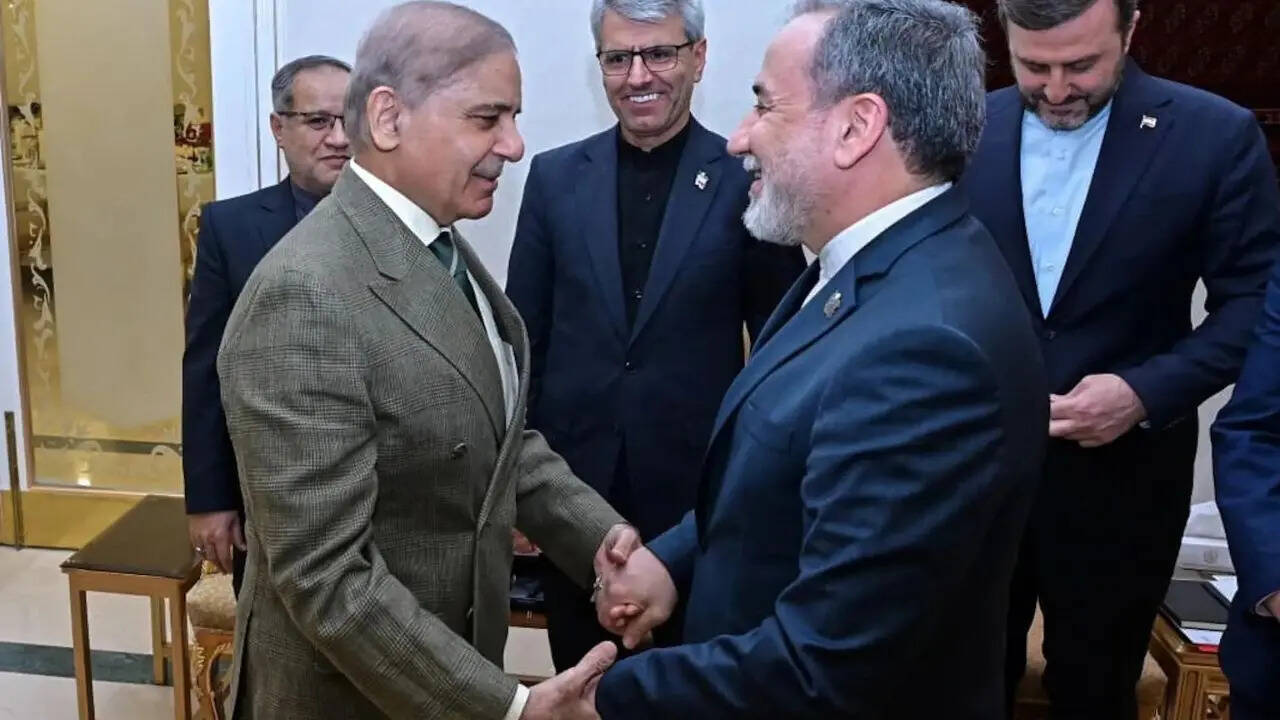
Diplomacy in the Middle East usually moves at a snail's pace, but the recent collapse of talks in Islamabad happened with a sudden, violent thud. For a brief moment, it looked like Pakistan had pulled off the impossible. Prime Minister Shehbaz Sharif stood at the center of a geopolitical whirlwind, trying to bridge the gap between a combative Donald Trump and an Iranian leadership backed into a corner. But the "Islamabad Accord" didn't happen. Instead, the world watched as Iranian Foreign Minister Abbas Araghchi flew out of the capital just as Trump pulled his own envoys from the flight manifest.
The failure isn't just about bad timing. It's about a fundamental clash of styles and a list of demands that neither side is ready to swallow. You've got a US President who views diplomacy as a high-stakes business deal and an Iranian regime that sees "zero enrichment" as a demand for total surrender. Pakistan tried to be the honest broker, but they found out quickly that being the middleman is a thankless, dangerous job when neither party actually trusts the floor they’re standing on.
The 30 hour marathon that went nowhere
Earlier this month, the energy in Islamabad was electric. We saw something truly historic: Vice President JD Vance and Iranian Parliament Speaker Mohammad Bagher Ghalibaf were actually in the same city. Reports indicate they spent 21 hours in actual negotiations. If you count the coffee breaks and the shuffling of delegations, it was a 30-hour sprint.
For a few days, the vibes were surprisingly positive. A two-week ceasefire was announced on April 8, and for a second, the world breathed. But the "Islamabad talks" hit a snag that no amount of Pakistani hospitality could fix. The sticking point? The nuclear issue. Trump wants Iran to hand over its enriched material and shut down its program entirely. Iran, meanwhile, is looking for an "off-ramp" that doesn't look like a white flag.
The reality is that while Pakistan worked "25-7" to make this happen, the gaps are just too wide. Trump tweeted that the nuclear point was the only one that mattered, calling Iran "unyielding." On the flip side, Tehran accused Islamabad of basically just carrying Trump's water instead of being a neutral party.
Why the mediator role is backfiring on Islamabad
Pakistan’s motivation here wasn't purely altruistic. They’re dealing with a crumbling economy and a neighbor (Iran) that has been hitting targets across the Gulf, which messes with energy prices and regional stability. By positioning itself as the peacemaker, Islamabad hoped to score some major points with Washington—maybe even some financial relief.
But being a "perfect mediator" is a double-edged sword. When the talks fail, everyone looks at the host.
- The Trust Gap: Iran doesn't believe Pakistan can stay neutral when it's so dependent on US and Saudi support.
- The Trump Factor: Dealing with the current White House means dealing with social media diplomacy. One post can blow up months of quiet back-channel work.
- Internal Pressures: The IRGC in Iran has gained massive influence during this recent conflict. They aren't in the mood to compromise on "national prestige."
Honestly, Pakistan might have overplayed its hand. Trying to mediate between two powers that are actively blockading ports and trading missile strikes is a massive gamble. Tehran now claims they were "deceived" by the process, suggesting the US used the talks as a distraction to move military assets. That’s a heavy accusation that leaves Islamabad looking more like a pawn than a power player.
The deal breakers that killed the momentum
If you look at the fine print, the failure was written on the wall. The US isn't just asking for a pause; they're asking for a total reset of Iran's ballistic and nuclear capabilities. Trump’s "zero enrichment" policy is a non-starter for the current leadership in Tehran. They see their nuclear program as their only real leverage against a military that just proved it can hit their infrastructure with precision.
Then there’s the Israel factor. You can't talk about US-Iran relations without mentioning the "elephant in the room." Israeli influence on Washington’s decision-making is a hard reality that Iran uses to justify its "unyielding" stance. When Trump tells his envoys—like Steve Witkoff and Jared Kushner—to stay home because the talks are a "waste of time," it sends a clear message. The US isn't interested in a slow-burn diplomatic thaw. They want a "real agreement" now, or they'll just keep the pressure on.
What happens when the ceasefire expires
We're approaching a dangerous deadline. The two-week ceasefire is a fragile band-aid on a massive wound. With Araghchi leaving Islamabad and Trump calling off his team, the "off-ramp" is looking more like a cliff. Pakistan’s Foreign Office is still trying to sound optimistic, talking about "meaningful negotiations," but the body language from both DC and Tehran says otherwise.
Expect the rhetoric to get louder. Trump has already mentioned that he's "not thrilled" with how things are going, and his military commanders are already reviewing strike plans. Iran, for its part, is tightening its grip on the Strait of Hormuz. If you're looking for a "Peace Talks 2.0," don't hold your breath. The Islamabad experiment showed that while you can bring both sides to the same city, you can't force them to see the same reality.
For now, the best move is to watch the movement of US naval units in the region. If the diplomats are packing their bags, the generals are likely opening their maps. Pakistan did what it could, but some fires are just too big for one neighbor to put out.