The smoke rising over Tehran this March is not the result of a sudden diplomatic breakdown, despite what the podium-talk in Washington suggests. While the official line has drifted from "preventing nuclear breakout" to "defending Israel" and, finally, to the blunt admission of "regime change," the reality is far more clinical. The United States is at war with Iran because the era of containment died in the silos of 2024. For two decades, a fragile equilibrium of proxy battles and shadow strikes kept a lid on the Persian Gulf. That lid didn't just pop; it was incinerated by a calculated decision to end the Iranian problem rather than manage it.
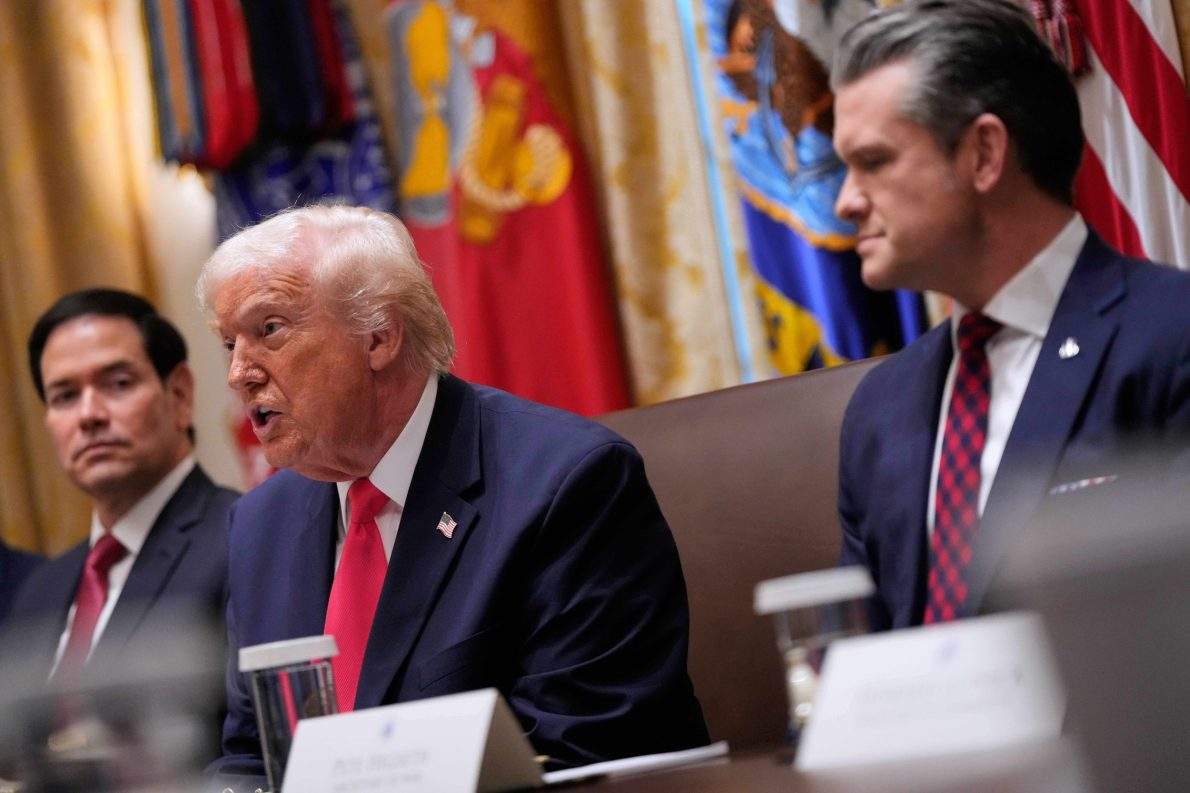
If you are looking for a single, coherent explanation from the White House, you won't find one. On Saturday, it was about a "dire threat" to American citizens. By Monday, it was a "proactive defensive" strike to preempt an Israeli-Iranian exchange that would have sucked in U.S. bases regardless. Today, it is "Operation Epic Fury," a decapitation strike that has already claimed the life of Supreme Leader Ayatollah Ali Khamenei and his top military brass. The shifting rhetoric isn't a sign of confusion; it is the hallmark of an administration that views the "why" as secondary to the "done."
The Decapitation Doctrine
On February 28, 2026, the military reality of the Middle East changed in a few minutes of high-altitude precision. This wasn't the slow-rolling buildup of the 2003 Iraq invasion. There were no months of "shock and awe" propaganda. Instead, two U.S. aircraft carrier strike groups and the Israeli Air Force used long-range munitions—including Tomahawks and air-launched ballistic missiles—to strike a leadership meeting in Tehran.
The objective was total: the removal of Khamenei, the defense minister, and the commander of the IRGC in one fell swoop. This "Venezuellan solution"—referring to the administration’s previous success in forcing leadership changes through overwhelming pressure—is being applied to a much larger, much more dangerous theater. By killing the head of the state at the outset, Washington and Jerusalem have bypassed the traditional stages of escalation. They have moved directly to the endgame, betting that a headless IRGC will fracture into manageable pieces.
Why the Old Rules Failed
For years, the U.S. relied on "Maximum Pressure"—a cocktail of economic sanctions and occasional drone strikes. The logic was that the regime would eventually be forced to the table to save its own skin. But 2025 proved that theory wrong. Despite losing their nuclear facilities to Israeli and U.S. strikes last June, the Iranian leadership doubled down. They didn't just rebuild; they accelerated.
- Nuclear Defiance: After the June 2025 raids, Iran announced a third enrichment facility, moving beyond the reach of conventional bunker-busters.
- The Russian Connection: Iran became a critical node in Russia’s military industrial complex, providing the drone technology that sustained the war in Ukraine.
- Internal Rot: Massive protests in January 2026, sparked by a collapsing economy and infrastructure failure, signaled to Washington that the regime was at its weakest point in forty years.
The decision to strike now was driven by a grim calculation: if the U.S. didn't act, it would be forced to defend an Israeli preemptive strike anyway, but on Iran’s terms. By taking the lead, the Trump administration chose to dictate the timing, the targets, and the casualties.
The Scorched Earth Response
Iran’s retaliation was as predictable as it was ferocious. Within forty-eight hours, the IRGC launched hundreds of drones and missiles. They didn't just target military bases; they went for the jugular of the global economy. Civilian airports in the UAE, oil depots in Saudi Arabia, and hotels in Qatar were hit.
The strategy is clear: if the Islamic Republic falls, it intends to take the region’s prosperity with it.
The Gulf Cooperation Council (GCC) states, which have spent years trying to hedge their bets between Washington and Tehran, now find themselves in the crossfire. Even the fierce rivalry between Riyadh and Abu Dhabi has been shelved as they scramble to man Patriot batteries and defend their "business hub" reputations. The Strait of Hormuz—the world’s most vital energy artery—is effectively a combat zone. While U.S. Central Command claims that no Iranian ships are currently underway, the threat of "ghost" mines and shore-based anti-ship missiles has pushed oil prices toward $100 a barrel.
The Intelligence Gap
There is a glaring hole in the official narrative: what happens if the regime doesn't collapse? History is littered with "decapitation" strikes that only served to radicalize the survivors. While Khamenei is gone, an interim leadership under Ali Larijani is already coalescing. The IRGC has not laid down its arms; it has transitioned into a decentralized insurgent force.
The administration’s gamble relies on the Iranian people taking the "only chance for generations" to overthrow the remaining clerical structure. But a population under bombardment often rallies around the flag, even a flag they were burning in the streets just weeks prior. The U.S. is currently operating with air supremacy, but air supremacy does not equal territorial control.
A Market in Denial
Wall Street is currently treating this as a "contained risk-premium event." Gold has spiked to over $5,000 an ounce, and the dollar is strengthening as a safe haven, but the broader markets are betting on a short war. This optimism is based on the 2025 "12 Days of War" model—a quick, surgical strike followed by a return to the status quo.
That is a dangerous assumption. This isn't 2025. The stated goal is no longer just "degradation" of nuclear sites; it is the total dismantling of the Iranian navy, the razing of their missile industry, and the installation of a new government. This is a structural shock to the global order. If the Strait of Hormuz remains closed for months rather than days, the "buoyant" 2026 economic outlook will evaporate, replaced by a global supply chain crisis that makes the pandemic-era disruptions look like a dress rehearsal.
The Silent Players
Russia and China have remained uncharacteristically quiet, limiting their response to predictable condemnations of "international law violations." Their silence is not consent; it is an assessment of raw power. Moscow, however, stands to benefit. Every dollar oil rises is a dollar that funds the Kremlin’s interests elsewhere. China, conversely, faces an existential threat to its energy security. If Beijing decides that the U.S. is permanently disrupting its oil supply, the conflict could expand far beyond the Persian Gulf.
The U.S. is at war with Iran because it decided the cost of waiting was higher than the cost of acting. It is a brutal, high-stakes play to consolidate power and eliminate a decades-old adversary. Whether it results in a "New Middle East" or a decade of regional chaos depends on whether the Iranian people see the U.S. as a liberator or just another invader.
Would you like me to analyze the specific economic impact on GCC sovereign wealth funds as this conflict enters its second week?