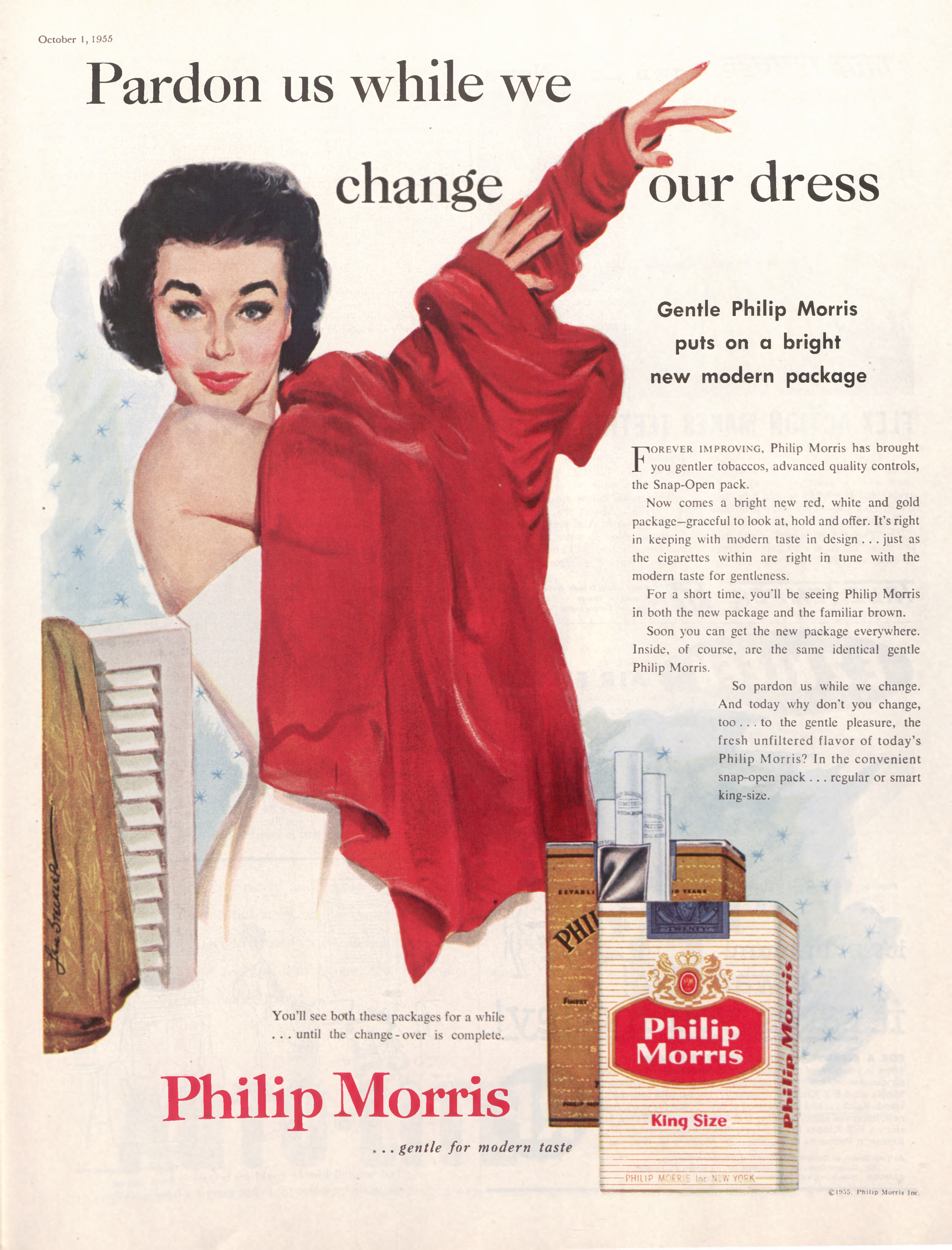
You’ve seen the images. A doctor in a white coat, stethoscope draped around his neck, looking right at the camera and telling you that more physicians smoke Camels than any other cigarette. It’s a classic. Honestly, it’s also one of the most misunderstood pieces of media history ever printed. When we look back at old ads for cigarettes, we usually do it with a sort of smug, "how could they be so stupid?" attitude. We think they were tricked. We assume people in the 1940s and 50s just didn't know that inhaling smoke was bad for your lungs.
That's not exactly true.
People knew. They called them "coffin nails" as far back as the late 1800s. The industry knew too, and that's why these advertisements are so fascinating. They weren't just selling a product; they were a massive, multi-decade masterclass in psychological redirection. They were an answer to a growing public fear that was already deeply rooted long before the Surgeon General’s report in 1964.
The "Doctor" Strategy was a Defensive Move
It’s easy to think the "More Doctors Smoke Camels" campaign was just a weird quirk of the 1940s. It wasn't. It was a calculated response to a specific problem: smokers were starting to develop "smoker’s cough," and they were getting nervous.
R.J. Reynolds, the company behind Camels, didn't just stumble into the doctor angle. They actually created a "Medical Relations Division." They sent representatives to medical conventions, gave away free cartons of cigarettes to doctors, and then surveyed those same doctors about what brand they had in their pockets. Because the company had just handed them free Camels, the "survey" results were predictably skewed.
Boom. Marketing gold.
The goal wasn't to prove cigarettes were healthy. It was to provide "permission." If the smartest guy in the room—the doctor—is doing it, then it can’t be that bad, right? This is a nuance often missed when we browse through vintage archives. These ads weren't aimed at people who thought smoking was a vitamin supplement. They were aimed at the person who was already worried. They were meant to soothe the conscience.
Why 20,679 Physicians Prefer Luckies
American Tobacco took a slightly different route with Lucky Strike. They claimed "20,679 Physicians say Luckies are less irritating." This is a weirdly specific number. In the world of old ads for cigarettes, specificity equaled authority. If you say "most doctors," it sounds like a lie. If you say exactly 20,679, people assume someone actually sat down and counted the ballots.
They leaned hard into the "Toasted" process. The copy usually went something like this: "It’s Toasted. Your Throat Protection against irritation—against cough." By focusing on the manufacturing process (toasting the tobacco), they distracted the consumer from the inherent nature of the tobacco itself. It’s a classic "feature vs. benefit" marketing tactic, except the benefit was "not coughing as much as you would with our competitors."
The Gender Pivot and the "Torches of Freedom"
Cigarette marketing didn't just stay in the doctor's office. It went to the streets. Specifically, it went to the women’s rights movement.
In 1929, Edward Bernays—the man often called the "father of public relations"—was hired by George Washington Hill of the American Tobacco Company. Hill wanted to break the social taboo against women smoking in public. At the time, it was seen as "unladylike" or even a sign of loose morals.
Bernays was a genius. He didn't run an ad saying "Hey women, smoke Luckies." Instead, he organized a "protest" during the Easter Sunday Parade in New York. He had a group of debutantes hide cigarettes under their clothes and, at a signal, light them up in front of the press. He told the newspapers that these women were lighting "Torches of Freedom" to protest gender inequality.
It worked.
Suddenly, smoking wasn't just a habit. It was a political statement. It was about liberation. This is why you see such a shift in old ads for cigarettes in the 1930s. The imagery changed from rugged men to glamorous, sophisticated women. The ads started focusing on "slenderness" and "grace." One Lucky Strike campaign even told women to "Reach for a Lucky instead of a sweet." It was the first time a tobacco company explicitly marketed a cigarette as a weight-loss tool.
The Flintstones and the Cartoon Era
If you grew up in the 1960s, you might remember Fred Flintstone and Barney Rubble sitting down at the end of a hard day at the quarry to light up a Winston. It seems insane now. A cartoon for children used to sell tobacco?
But back then, The Flintstones was actually a prime-time show for adults, similar to how The Simpsons or Family Guy functions today. Winston was the primary sponsor. This led to some of the most surreal old ads for cigarettes ever produced. Seeing a 2D animated character talk about the "richer flavor" and "easy draw" of a filter cigarette is a jarring reminder of how deeply integrated tobacco was in the domestic fabric of life.
The filter itself was another marketing "fix." When the 1950s rolled around and the link between lung cancer and smoking became harder to ignore, the industry didn't panic. They pivoted to filters.
Kent cigarettes introduced the "Micronite" filter in 1952. They claimed it offered "the greatest health protection in cigarette history." What they didn't mention—and what wouldn't be widely known for years—was that the Micronite filter was made of crocidolite asbestos.
Yeah. Asbestos.
They were trying to filter out "impurities" using a substance that was arguably just as dangerous. This illustrates the desperate arms race of the era: companies were racing to solve a health problem with "science" that was often just another layer of the problem.
The Cowboy Who Changed Everything
You can't talk about this topic without the Marlboro Man. Before 1954, Marlboro was marketed as a "mild" cigarette for women, complete with a greaseproof red tip so lipstick marks wouldn't show. It was a niche product. It was "girly."
Philip Morris wanted to change that. They hired Leo Burnett, a legendary ad man, who decided that if filters were seen as "feminine," they needed the most masculine symbol imaginable to sell them to men.
The Cowboy.
The Marlboro Man wasn't just a character; he was an environment. "Marlboro Country" wasn't a place on a map; it was a state of mind. It was rugged, independent, and silent. By the 1970s, Marlboro went from a 1% market share to the most popular cigarette brand in the world. The ads stopped using long-winded copy about doctors or toasting. They didn't need to. They just showed a man, a horse, and a sunset. The cigarette was just part of the costume.
How to Analyze Vintage Ads Like an Expert
If you’re looking at these old images for research, decor, or historical interest, don’t just look at the brand. Look at the subtext.
- The Authority Figure: Is there a doctor, a scientist, or a pilot? This is "appealing to authority" to mask safety concerns.
- The Social Status: Are people in tuxedos? Is there a yacht? This is "aspirational marketing," meant to distance the product from its dirty reality.
- The Health Claim (The "Weasel Words"): Look for words like "mild," "smooth," or "fresh." These are subjective terms that feel like health claims but aren't legally actionable. "Fresh" sounds like a vegetable, but in a cigarette ad, it just means menthol.
- The Target Demographic: Is the ad focusing on weight loss (women), ruggedness (men), or "youthful spirit" (college students)?
What We Can Learn From the Smoke
The era of unrestricted tobacco advertising ended in the U.S. in 1971 when TV and radio ads were banned. But the legacy of these old ads for cigarettes lives on in how we market everything from social media apps to fast food today. The tactics haven't changed; only the products have.
If you are a collector or a student of media, the best way to interact with these materials is through a lens of "deconstruction." Don't just see a pretty vintage poster. See the psychological levers being pulled.
Actionable Next Steps for Further Research
- Visit the Stanford Research into the Impact of Tobacco Advertising (SRITA) database. It’s the gold standard for viewing thousands of high-resolution scans of these ads with historical context.
- Compare the 1940s "Doctor" ads with 1990s "Light" and "Ultra-Light" packaging. You will see the exact same linguistic patterns being used to imply safety without actually promising it.
- Look for "T-Zone" ads. This was a specific Camel campaign (T for Taste and T for Throat) that tried to turn a physical sensation into a pseudo-scientific metric.
- Check out the "Great American Smokeout" archives to see how anti-smoking groups eventually used the industry's own imagery against them to flip the script on public perception.
Understanding these ads isn't just about nostalgia. It's about recognizing how a billion-dollar industry can spend decades convincing the public to ignore their own eyes, ears, and lungs. It’s a lesson in the power of a good story—even when that story is a total fabrication.
---