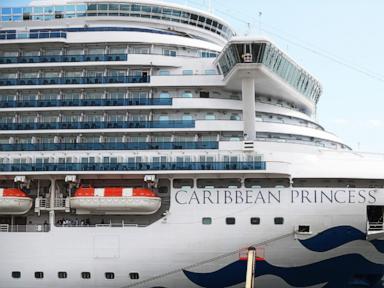
The headlines are predictable, alarmist, and fundamentally intellectually lazy. "115 People Sickened on Luxury Liner." "Floating Petri Dish Strikes Again." You’ve seen the script. The CDC releases a Vessel Sanitation Program report, the media treats it like the onset of a global plague, and a thousand keyboard warriors vow never to set foot on a ship again.
It’s a masterclass in availability bias.
We fixate on cruise ship outbreaks because they are contained, tracked, and public. Unlike your local Chipotle or the office breakroom, cruises are legally mandated to report every single case of diarrhea to a federal agency. If you want to find the real norovirus "hotspots," stop looking at the ocean and start looking at your kid's elementary school or the nursing home down the street.
The industry isn't failing. Your perception of risk is just broken.
The Reporting Trap
The CDC requires cruise ships to report when as little as 2% or 3% of the total population on board—including crew—falls ill with gastrointestinal symptoms. Think about that threshold. In a city of 100,000 people, that would be roughly 2,000 people. Does your local health department issue a national press release when 2,000 people in your county have a stomach bug?
Of course not.
Because we track cruises with microscopic precision, we assume they are uniquely dangerous. In reality, according to CDC data, the vast majority of norovirus outbreaks happen in long-term care facilities (60%+) and restaurants (20%+). Cruise ships account for a statistically insignificant fraction—usually less than 1%—of total reported cases.
I have spent two decades analyzing travel logistics and safety protocols. I have walked through the galleys of ships that make five-star hospital wings look like a basement workshop. The irony is that you are probably safer eating at a buffet on the high seas than you are at a suburban wedding. On a ship, the crew is literally paid to enforce hygiene. At your local bistro, the guy making your salad probably hasn't had a paid sick day in three years.
The Myth of the "Floating Petri Dish"
The "Petri dish" trope is the ultimate low-hanging fruit for travel critics. It suggests that the ship itself generates the virus.
Viruses don't manifest out of thin air or salt water. They are brought on board by passengers.
Norovirus is an incredibly hardy pathogen. It can survive on surfaces for weeks. It resists many common disinfectants. It takes as few as 18 viral particles to infect a human. For context, a single gram of infected feces can contain five billion particles.
When an outbreak happens, it isn't a failure of the ship’s scrubbers or the captain’s negligence. It is a failure of the passenger in Cabin 402 who decided that their "mild nausea" wasn't going to ruin their $3,000 vacation, so they hit the buffet anyway.
Cruise lines spend millions on industrial-grade electrolyzed water systems and UV-C light sterilization. They have shifted to served buffets where you don't even touch the tongs. Short of bubble-wrapping every guest, the industry has reached the limit of what infrastructure can do. The remaining risk isn't "the ship." It's your fellow traveler.
Why We Love to Hate Cruises
Psychologically, we crave a villain. It’s easier to blame a multi-billion dollar corporation for a "sanitation failure" than to admit that human density plus a highly contagious virus equals occasional, inevitable illness.
There is a specific kind of elitism at play here, too. Critics love to paint cruising as a low-brow, crowded endeavor for the "unwashed masses." By framing ships as inherently dirty, they validate their own preference for boutique hotels or private rentals—places where, incidentally, there is zero mandatory reporting and zero transparency regarding how many guests barfed in the lobby last Tuesday.
If you are terrified of norovirus, you shouldn't just avoid ships. You should avoid:
- Subways
- Movie theaters
- Concerts
- Airports
- Basically any place where humans breathe the same air for more than twenty minutes.
The Economics of Hyper-Cleanliness
Let's talk about the "battle scars" of the industry. I've seen cruise lines burn through their entire quarterly marketing budget just to recover from a single bad headline that was triggered by a 2.5% illness rate. Because the reputational stakes are so high, ships over-sanitize.
They use protocols that would be considered overkill in almost any other commercial setting. When a "Red Level" cleaning happens, crew members are literally scrubbing the grooves of elevator buttons with toothbrushes.
The downside? We are creating an environment that feels sterile and clinical, stripping away the very relaxation people paid for. We are also likely contributing to the "hygiene hypothesis" on a micro-scale. By obsessing over every surface, we’ve made the rare breakthrough infection seem like a catastrophic failure rather than a biological reality.
The Harsh Truth About "Prevention"
Most travel articles give you the same tired advice: "Wash your hands."
Here is the truth you don't want to hear: Hand sanitizer does almost nothing against norovirus.
Norovirus is a non-enveloped virus. Unlike the flu or the recent coronavirus, it doesn't have a fatty outer shell that alcohol can easily dissolve. If you are walking around a ship thinking your pocket-sized gel is a shield, you are delusional.
The only thing that works is vigorous scrubbing with soap and water for at least 20 seconds to physically lift the particles off your skin. But most people won't do that. They’ll hit the "Purell" station and then grab a sandwich.
If you want to actually stay healthy, stop worrying about the "sanitation level" of the ship and start worrying about your own behavior. Stop touching handrails. Use a paper towel to open the bathroom door. And for the love of everything holy, if you feel a "rumble" in your stomach, stay in your cabin. The ship isn't the problem. The "I paid for this and I'm going to enjoy it" mentality is.
Statistics vs. Sensationalism
Let’s look at the math for a standard 3,000-passenger vessel.
If 100 people get sick, the news cycle treats it like a disaster.
That means 2,900 people—96.7% of the ship—stayed perfectly healthy.
In what other context is a 96.7% success rate considered a national scandal? If 96.7% of flights landed on time, we’d call it a golden age of aviation. If 96.7% of students passed a rigorous exam, we’d celebrate the school. But on a cruise ship, 3% illness is a "crisis."
The reality is that norovirus is the price of admission for living in a globalized, social society. You can stay home in a sterilized room, or you can accept that occasionally, someone in a group of 3,000 people is going to have a virus.
The CDC’s Vessel Sanitation Program doesn't exist because ships are exceptionally dirty; it exists because they are exceptionally easy to monitor. We are punishing the industry for its transparency.
If every hotel chain in Las Vegas had to report their daily GI illness rates to a public federal database, nobody would ever go to Nevada again. The "outbreak" isn't a cruise problem. It’s a data-visibility problem.
Stop reading the headlines and start looking at the denominators.
If you're still scared, stay off the boat. More room at the buffet for the rest of us. We'll be the ones washing our hands with soap while you fruitlessly rub alcohol gel into your palms and wonder why you still got sick.
Go wash your hands.