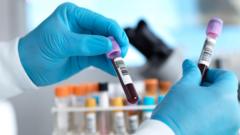
The fluorescent lights of a containment ward don’t hum. They buzz. It is a low, aggressive frequency that vibrates in the back of your teeth when the rest of the hospital goes quiet.
For thirty-six hours inside a specialized isolation unit in Brazil, that buzz was the only sound separating a handful of exhausted medical professionals from a reality they had spent their entire careers training to avoid. Outside, the tropical night was thick and indifferent. Inside, every breath was measured through the constricting layers of a positive-pressure respirator.
We live in an age of hyper-connectivity, where a virus can leap across an ocean in the time it takes to watch a movie trilogy on an inflight entertainment screen. When word slipped out that two patients were being tested for Ebola on Brazilian soil, the collective intake of breath was audible across the continent.
It didn’t matter that the odds were statistically low. Panic doesn’t care about decimals.
The Weight of the Plastic Suit
To understand what happens inside a suspected hemorrhagic fever outbreak, you have to understand the suit.
It turns you into an astronaut in your own city. The rubber boots are heavy. The double-gloving robs your fingers of the tactile intuition you rely on to find a vein or check a pulse. Sweat pools in the small of your back within ten minutes, but you cannot scratch. You cannot wipe your brow. Every movement must be deliberate, slow, and calculated.
Imagine a hypothetical patient. Let's call him Thiago. He arrived from a region flagged by international health monitors, his skin burning with a fever that defied standard antipyretics. Then came the vomiting. Then the profound fatigue.
In a standard emergency room, these symptoms point to a dozen common tropical ailments. Dengue. Malaria. Severe influenza. But when the travel history aligns with a known outbreak zone, a silent, invisible tripwire is crossed.
The protocol is immediate and unforgiving. The patient is moved. The doors are sealed. The authorities are notified.
Protocol for Viral Hemorrhagic Fever Suspected Cases:
1. Immediate isolation in a negative-pressure environment.
2. Deployment of Category 4 Personal Protective Equipment (PPE).
3. Notification of national epidemiological surveillance.
4. Double-contained sample transport to reference laboratories.
The wait for laboratory confirmation is a psychological endurance test. You watch the monitors. You check the IV lines. Every time the patient coughs, a spike of adrenaline hits your bloodstream, regardless of how many layers of polymer stand between you and the air they breathe. You find yourself thinking about the chain of custody for a single vial of blood. If a technician slips, if a seal is imperfect, the containment perimeter expands from a single room to an entire metropolitan area.
The Mathematics of Fear
Human beings are notoriously bad at calculating risk during a crisis. We overemphasize the dramatic and understate the mundane.
When the news broke that Brazil was investigating two potential cases, public anxiety spiked exponentially. People started avoiding public transit in major hubs. Searches for symptom checkers overwhelmed local health portals.
But look at the cold, hard epidemiology. The transmission dynamics of the Ebola virus require direct contact with bodily fluids. It is not influenza; it does not drift invisibly through the air conditioning vents of a crowded shopping mall. Yet, the psychological contagion of a disease always outpaces its biological counterpart.
Consider what happens next in the laboratory. While the public speculates on social media, technicians at a reference lab are performing a molecular dance called Polymerase Chain Reaction (PCR). They are looking for a specific genetic sequence, a tiny ribbon of RNA belonging to a killer.
PCR Testing Phase:
- Sample Receipt -> Decontamination -> RNA Extraction -> Amplification -> Results
- Total elapsed time: 24 to 48 hours of absolute precision.
During those hours, the hospital becomes an island. The staff inside know that if the test comes back positive, their lives shift on their axes. They won't be going home to their families the next morning. They will become the frontline soldiers in a war of attrition against a pathogen that boasts a mortality rate that can hover around 50 percent, depending on the strain and the speed of intervention.
The Silence of the Negative Result
Then, the notification arrives.
It doesn't come with a siren or a celebratory announcement. It arrives as a secure text notification or a quiet phone call from the lab director to the chief epidemiologist.
Negative.
The relief is not explosive. It is a slow, deflating exhalation.
The two patients in Brazil did not have Ebola. They were suffering from far more conventional, treatable conditions that happened to mimic the early stages of a global nightmare. Within hours, the heavy plastic barriers began to come down. The specialized suits were cataloged for destruction or decontamination. The extra security details at the hospital gates melted back into the urban landscape.
The story faded from the news cycles almost instantly. A collective shrug from the public. Just a false alarm. Nothing to see here.
But dismiss it as a non-event misses the entire point of modern public health. A false alarm is not a failure of the system; it is proof that the system works. The fact that two patients with matching symptoms and travel histories were identified, isolated, and tested within a unified framework without triggering an actual outbreak is a triumph of logistics over chaos.
The Next Horizon
The invisible stakes remain long after the headlines change.
Every time a country successfully executes a containment protocol—even for a negative result—it maps the cracks in its own foundation. Did the communication chain hold? Was the PPE inventory sufficient? Did the laboratory receive the samples within the golden hour?
We survive the microbial world not because we are stronger than viruses, but because we can organize faster than they can mutate. The borders we draw on maps mean nothing to a microscopic strand of protein wrapped in a lipid membrane. A flight from an epicenter to a major global city takes less time than the incubation period of almost every major pathogen known to science.
The lights in the isolation ward are still buzzing. The suits are hanging on their racks, waiting. The true narrative of global health is not found in the outbreaks that devastate populations, but in the quiet, unremembered nights when the wall held, the tests came back negative, and the world went to sleep without ever knowing how close it came to the edge.
A nurse strips off her final layer of protective gear, her face marked with deep, red indentations from the mask she wore for twelve straight hours. She washes her hands. She walks out into the cool morning air of the parking lot, steps into her car, and starts the engine. The city is waking up, completely oblivious to the bullet it just dodged.