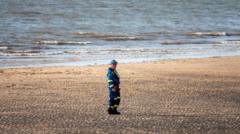
You are walking along the coastline, the breeze is sharp, and your dog is sprinting ahead, full of joy. Suddenly, a rogue wave sweeps them into the crashing surf. Your adrenaline spikes. Instinct screams at you to jump in after them. Your dog is family, right?
That exact scenario played out with devastating results at Thornton-Cleveleys, Lancashire, near the Fleetwood Beach Cafe. A couple in their 60s saw their pet get trapped in the water. Without a second thought, they went in. HM Coastguard managed to pull them out, but it was too late for the woman. She passed away at the hospital. The man remains in critical condition.
The most agonizing part? The dog was recovered perfectly fine, safe and well.
This isn't an isolated tragedy. It happens with terrifying frequency on beaches across the world. Dog owners routinely lose their lives attempting to rescue pets that, in many cases, would have made it back to shore on their own. It sounds cold, but if your dog gets stuck in the ocean, you must stay on dry land. Here is why the instinct to save your pet is a fatal trap, and what you actually need to do instead.
The Hydrodynamic Illusion That Kills
When a dog gets swept out, humans misjudge the water completely. We look at the ocean through a human lens, assuming that if our pet is struggling, the water must be instantly lethal to us too. Or worse, we think that because we are bigger and stronger, we can handle the current better than a four-legged animal.
Both assumptions are completely wrong.
Dogs are natural quadrupeds with a low center of gravity and an instinctive paddle. They don't panic about the concept of drowning the way humans do; they just keep moving. Their fur provides a degree of buoyancy, and their bodies handle cold shock far better than ours.
When you dive into cold water after them, your body undergoes an immediate physiological crisis called the cold shock response.
- Involuntary Gasping: The sudden drop in skin temperature triggers an uncontrollable gasp for air. If your head is underwater, you fill your lungs with brine instantly.
- Hyperventilation: Your breathing rhythm shatters, making it impossible to coordinate swimming strokes.
- Vasoconstriction: Your blood vessels constrict, forcing your heart to work twice as hard and causing rapid muscle fatigue.
The water that your dog is managing to bob around in will paralyze your muscles within minutes. The Royal National Lifeboat Institution (RNLI) repeatedly emphasizes that the majority of people who drown in these scenarios never intended to get wet. They were fully clothed, wearing heavy winter coats and boots that fill with water and act like concrete anchors.
The Tragic Irony of Canine Survival
Look at the data from emergency coastal rescues. In the vast majority of cases where an owner drowns trying to save a dog, the dog survives.
Dogs have a remarkable ability to ride out currents. They don't try to fight a rip tide head-on; they usually drift with it until they can scramble onto a sandbar or find a calmer break in the waves further down the beach. By jumping in, you aren't helping the dog. You are simply adding a second, much less capable casualty to the water.
When emergency services like the Coastguard arrive, their priority is human life. If rescuers have to spend vital minutes pulling an unconscious human out of the surf, they cannot focus on securing the area or locating the pet. Your rescue attempt actively hinders the professional operation.
What to Do When Your Dog Swept Away
It takes immense psychological strength to stand on a beach and watch your dog struggle. But standing still is exactly what will save both of your lives. If your dog gets caught in a strong current or swept off a pier, you need to follow a strict protocol.
Call 999 or 911 Immediately
Do not wait to see if the dog gets closer. Call the emergency services right away and ask for the Coastguard. Tell them your exact location. Use landmarks or apps like What3Words to give them a pinpoint coordinate.
Move Downwind and Call Them
Dogs will naturally try to swim toward the sound of your voice. If you stand right where they fell in, they might exhaust themselves trying to swim directly against a rip current to reach you. Move along the coast in the direction the current is flowing. Find a spot where the water breaks more gently or where there is a slipway. Stand there, whistle, and call their name cheerfully. Do not scream in panic; your dog can hear the terror in your voice, which will increase their distress.
Never Throw Extra Items into the Water
Do not throw heavy logs, balls, or leads into the water thinking they can latch onto them. You risk hitting the animal, or creating entanglement hazards that will drag them under.
Preventing the Nightmare Before It Happens
The best way to survive a coastal tragedy is to prevent the scenario entirely. Walking your dog near the sea requires a different set of rules than a walk in a suburban park.
Keep your dog on a lead if you are walking on piers, breakwaters, or cliff edges. Rough seas can produce sudden surges that wash over coastal paths without warning. Check the tide timetables before you set off. A beach that is wide and safe at 2 PM can turn into a churning trap against a sea wall by 4 PM.
If your dog loves the water, only let them off the lead in designated, calm areas like shallow estuaries or flat bays on calm days. If the red flags are flying on a beach, it means the undercurrents are lethal. Keep your pet out of the surf entirely.
Honestly, it feels counterintuitive to watch a loved pet drift away and do nothing with your hands. But your presence on the shore is their ultimate anchor. Stay dry, stay alive, and let the professionals do the heavy lifting.