The dry heat of the Mojave Desert has a way of stripping things down to their skeletal frame. If you stand just far enough outside the pulsing grid of the Las Vegas Strip, where the hum of commercial air conditioning dies out and the gravel begins, the neon glow looks less like entertainment and more like an artificial heart keeping a fragile body alive.
Nevada is a state built on the impossible. It thrives on water piped from hundreds of miles away and an economy reliant on the disposable income of tourists. But lately, the gamblers inside the casinos are not the only ones holding their breath.
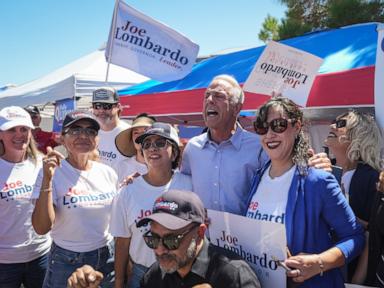
A different kind of high-stakes game has crystallized here. The state just wrapped up its primary elections, locking in a gubernatorial showdown between the incumbent Republican Governor, Joe Lombardo, and the Democratic Attorney General, Aaron Ford. To the coastal political operations sending staff and cash into the desert, this is a math problem. It is a data point on a spreadsheet meant to predict the 2028 presidential cycle.
But if you buy groceries in Reno or pay rent in East Las Vegas, it is not a data point. It is a matter of survival.
The Mirage of the Metric
Consider a hypothetical voter. Let us call her Maria. She represents thousands of real Nevadans currently navigating the tightrope of the state’s economy. Maria works a back-of-house hospitality job at a major resort on the Strip. She does not read national political journals. She does not know what a "bellwether" means in the context of Washington strategists.
What Maria does know is that the price of regular unleaded gasoline at her local station has hovered near some of the highest marks in the country. She knows her rent increased by double-digit percentages over the last few years, while the availability of homes she could actually afford shrank to nearly nothing.
When national commentators talk about Nevada as a crucial testing ground for the Republican platform, they are looking at numbers like Lombardo’s primary victory, where he secured over 91% of the Republican vote. They look at Donald Trump’s victory in the state during the 2024 presidential election—the first time a Republican presidential nominee carried Nevada since 2004. They deduce that the state is tilting right, hardening into a conservative fortress.
But look closer at the friction points.
The political identity of this state is not a monolith; it is a fault line. The state legislature remains firmly under Democratic control. The state's federal delegation features two Democratic senators. This creates a structural gridlock where the governor's mansion is the ultimate prize, a solitary levee holding back or letting through a flood of policy. In a state where the legislature meets for a mere four months every two years, the executive office possesses immense, concentrated authority. The man who sits in that office shapes the daily reality of Nevada’s working class through the quiet power of the pen and the veto.
The Top Cop Standoff
The upcoming November election features an unusual dynamic. It is a collision between two different philosophies of law, order, and governance, embodied by two men who have spent their lives working within the justice system.
Joe Lombardo built his public profile as the sheriff of Clark County, leading the largest police department in the state through some of its darkest moments, including the aftermath of the 1st October shooting. His political brand is anchored in an image of steady, institutional authority. To his supporters, he is a pragmatic executive who acts as a crucial check on progressive legislative overreach, vetoing bills that would increase state spending or alter election laws.
On the other side stands Aaron Ford. Having secured the Democratic nomination with roughly 64% of the primary vote, Ford is attempting a historic milestone to become Nevada's first Black governor. As the state’s Attorney General, he has leaned heavily into consumer protection, positioning himself as a shield for ordinary citizens against predatory economic forces.
The rhetoric has already turned sharp. Following his primary win, Ford publicly characterized the current economic climate as the "failed Lombardo-Trump economy," making a direct play for voters who feel left behind by regional inflation. Lombardo, conversely, frames his administration as a protector of economic stability, arguing that his policies prevent the state from slipping into the high-tax, heavy-regulation patterns of neighboring California.
This is the core tension that the standard political analysis misses. The battle between Lombardo and Ford is not just a proxy war for national parties aiming at 2028. It is an active debate over the definition of security. Is security found in the veto pen of a former sheriff who promises to keep government small and business unburdened? Or is it found in the regulatory power of an attorney general who promises to intervene directly in the marketplace to make life affordable?
The Invisible Stakes
To understand why this race matters far beyond the borders of Clark and Washoe counties, one must understand the unique volatility of the Nevadan electorate.
Unlike states with deep-seated partisan traditions, Nevada is heavily populated by nonpartisan voters. Independence is part of the local DNA. People move here to reinvent themselves, to escape the rigid social and economic structures of older states. They do not owe allegiance to a party alignment. They owe allegiance to their monthly budget.
This makes polling notoriously treacherous. Recent data from early 2026 indicates a razor-thin margin, with Lombardo holding a minor lead within the margin of error in several surveys, while other polls show a dead heat at around 41% or 42% each. The vast block of undecided and nonpartisan voters holds the keys to the kingdom.
Consider what happens next: as millions of dollars in out-of-state campaign donations pour into the Reno and Las Vegas media markets, the airwaves will fill with apocalyptic warnings. National groups will use Nevada as a laboratory to test which messages resonate with working-class Hispanic families, unionized culinary workers, and rural ranchers.
But the real problem lies elsewhere, far from the television screens.
The real problem is the exhaustion. When a state is treated as a perpetual battleground, its citizens begin to view politics not as a mechanism for improvement, but as an invasive species that arrives every two years to disrupt their lives with noise and anger. The winner of the November election will not be the candidate who raises the most money or crafts the sharpest attack ad. It will be the candidate who manages to convince a weary, skeptical public that their vote actually correlates to the price of groceries, the safety of their neighborhood, and the stability of their home.
The neon signs along the interstate will keep blinking, regardless of who wins. The slot machines will keep chiming. But underneath the glittering surface of the silver state, the tectonic plates are moving. What happens in Nevada this year will not just hint at the future of the American presidency. It will decide whether a transient, fast-growing state can find a way to build a sustainable reality for the people who call its deserts home.