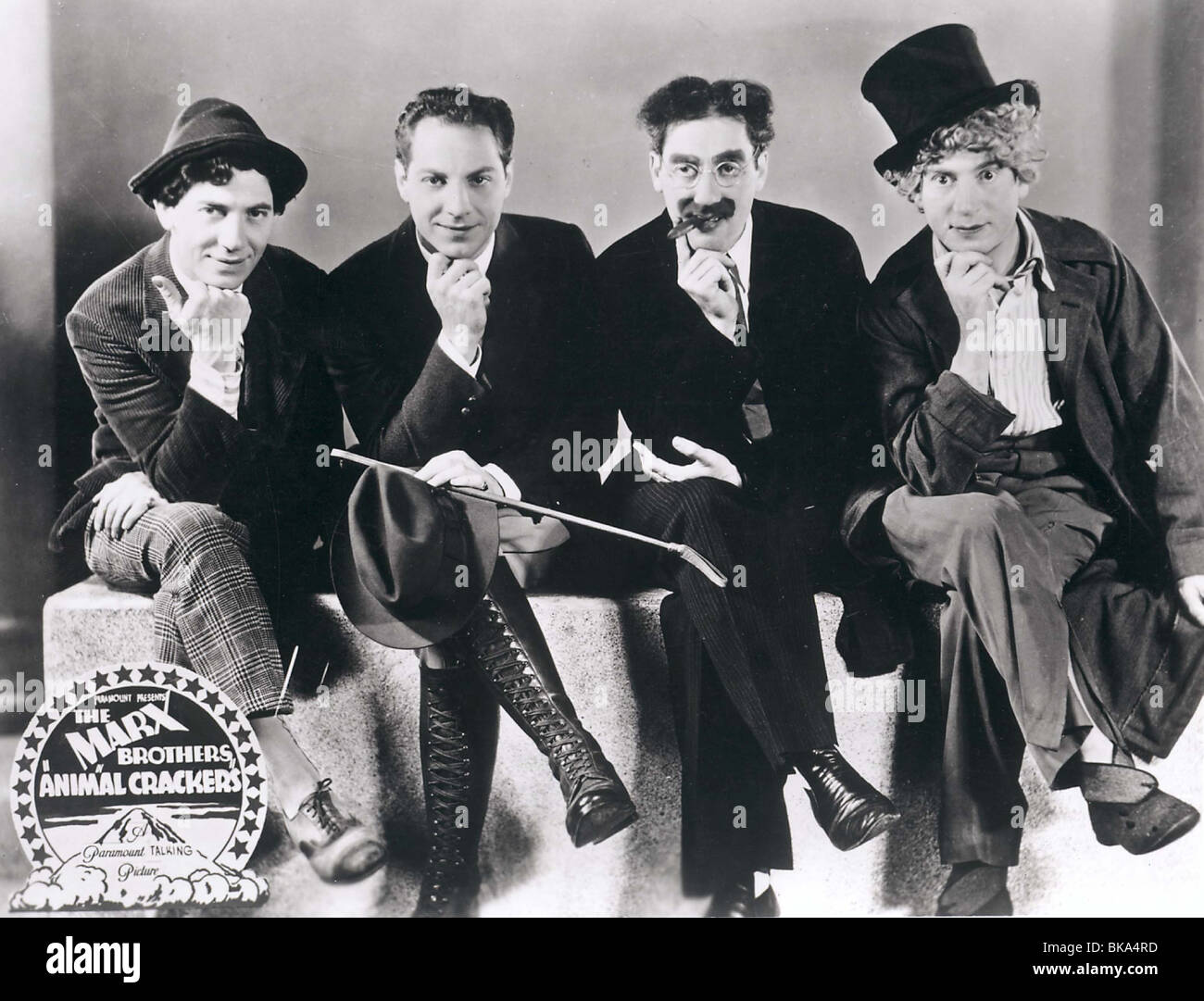
If you’ve ever sat down to watch Duck Soup or A Night at the Opera, you probably didn't think twice about the chaotic energy on screen. It’s just Groucho, Harpo, and Chico. Maybe Zeppo if it’s an early one. But the names of the Marx Brothers weren't always these snappy, O-ending stage names. In fact, if you’d met them in their early years in New York City, you would have been introduced to Julius, Adolph, Leonard, Milton, and Herbert.
They were the sons of Sam "Frenchie" Marx and Minnie Schoenberg Marx, Jewish immigrants trying to make it in a tough city. Minnie was the real engine. She was a stage mother before the term became a cliché, pushing her boys into vaudeville because she saw it as a ticket out of poverty. But let's be honest: "The Julius, Leonard, and Adolph Trio" doesn't exactly scream comedy gold. The transition from their birth names to their legendary personas is one of those weird bits of show business history where a single poker game changed everything.
The Poker Game That Changed Comedy
It happened in 1914. The brothers were on the Orpheum Circuit, playing a date in Galesburg, Illinois. They were backstage playing poker with a fellow performer named Art Fisher. Now, Art was a monologist, and he had a bit of a quirk—he liked to give people nicknames ending in "o." It was a popular trend at the time, inspired by a famous comic strip character named "Knocko the Monk."
Fisher looked around the table and started handing out identities like they were cards. Leonard was always chasing girls—"chickens" in the slang of the day—so he became Chico. Adolph was the one who played the harp, so Harpo was a no-brainer. Julius was the moody, cynical one, always carrying his money in a "grouch bag" around his neck, so he became Groucho. Milton was the quiet one who wore gumshoes, hence Gummo.
It sounds almost too simple to be true, doesn't it? But that's the thing about vaudeville. It was fast. It was messy. And those names stuck so hard that many people today don't even realize the brothers had "real" names at all.
Leonard was Chico (and No, It's Not Pronounced How You Think)
Let’s talk about Chico. First off, if you’re saying it like "Cheek-o," you’re technically doing it wrong, even though that’s how everyone says it now. Because it came from "chickens" (women), it was originally pronounced "Chick-o." Chico himself eventually gave up trying to correct people.
He was the eldest. He was also a degenerate gambler. Honestly, the stories of Chico’s debts are legendary in Hollywood. He’d lose his shirt at the track and then go play a piano concerto with his "finger-pointing" technique just to make enough to cover his markers. His stage persona—the Italian stereotype with the velvet hat—was a total fabrication, but his charm was real. He was the negotiator. When the brothers were struggling, it was Chico’s gambling connections and social lubrication that often landed them their biggest deals.
Julius was Groucho: The Mask and the Mind
Groucho is the one everyone remembers. The greasepaint mustache. The eyebrows. The cigar. He was the third son, Julius Henry Marx. While the others were more physical, Groucho was the wit.
He was also deeply insecure. If you read his correspondence or his autobiography, Groucho and Me, you see a man who was constantly worried about being "found out" as an uneducated kid from the streets. This anxiety translated into a razor-sharp tongue. He used language as a weapon.
His name, Groucho, was perfect. He was a grumbler. He was cynical about authority, which is why his characters (Rufus T. Firefly, Otis B. Driftwood) were always tearing down high society. He didn't just play a grouch; he was a guy who felt the world was a bit of a sham. Interestingly, he eventually legally changed his name to Groucho, fully embracing the persona that Art Fisher had tossed out during a card game in Illinois.
Adolph became Harpo: The Silent Poet
Harpo is a fascinating case of accidental genius. Born Adolph Marx, he later changed it to Arthur because he didn't want to be associated with Adolf Hitler as the 1930s rolled around.
Early in their career, Harpo actually had a speaking role. He wasn't very good at it. A critic once wrote that he was great until he opened his mouth. Minnie Marx and the brothers took the hint. They decided he should just stop talking on stage altogether. It was the best move they ever made. By becoming silent, Harpo tapped into a tradition of pantomime that made him the most "universal" Marx brother.
He was the heart of the act. While Groucho was insulting everyone, Harpo was the chaotic sprite, pulling a lit blowtorch or a dead fish out of his trench coat. But when he sat down at the harp? The comedy stopped. He was a self-taught virtuoso. He tuned the harp incorrectly, but he played it with such soul that professional musicians would come to shows just to watch his technique.
The Brothers Who Left: Gummo and Zeppo
When we discuss the names of the Marx Brothers, we usually focus on the "Big Three." But there were five.
Milton, or Gummo, was actually one of the original performers. He was in the act during the lean years of vaudeville. But Gummo hated the stage. He had stage fright and didn't find the life of a traveling performer particularly glamorous. When he was drafted into the Army during World War I, he left the group and never looked back. He became a successful fashion businessman and later a talent agent for his brothers. He was the "normal" one.
Then there’s Herbert, known as Zeppo.
Zeppo gets a bad rap. He’s often called the "boring" Marx Brother. He played the straight man, the romantic lead who had to stand there while Groucho insulted him. But if you talk to people who knew them, they’ll tell you Zeppo was actually the funniest brother in real life. He could understudy any of them. If Groucho was sick, Zeppo would put on the mustache and do the routine so perfectly that the audience couldn't tell the difference.
Why "Zeppo"? There are a few theories. Some say it was after the Zeppelins of WWI. Others say it was from a trained chimp named Mr. Zippo. Whatever the origin, Zeppo eventually got tired of playing second fiddle to his brothers' antics. He quit the act after Duck Soup and became a massive success in engineering. He actually owned a company that manufactured the clamps used to hold the atomic bombs on the planes during World War II. He was a mechanical genius who just happened to be a world-class comedian on the side.
The Sixth Brother and the Names That Didn't Make It
Most people don't know there was a first-born son named Manfred who died in infancy. This tragedy loomed over Minnie, and some biographers suggest her intense drive to make the other boys famous was partly a reaction to that loss.
There was also a brief period where they experimented with other names. Before the Art Fisher poker game, they were sometimes billed as "The Four Nightingales." They were a singing group first. It wasn't until they started heckling each other on stage—turning a serious musical act into a riotous comedy—that the world really took notice.
Why the Marx Brothers Names Still Resonate
The longevity of the names of the Marx Brothers comes down to the clarity of their archetypes.
- Chico: The schemer/hustler.
- Harpo: The innocent/anarchist.
- Groucho: The wit/intellectual.
- Zeppo: The Everyman.
By shedding their birth names, they became more than just five brothers from New York. They became icons. You can see their influence everywhere today, from the structure of Seinfeld to the absurdist humor of The Eric Andre Show. They taught us that you can be smart and stupid at the same time.
If you're looking to dive deeper into their history, don't just stick to the movies. Read Growing Up with Chico by his daughter, Maxine Marx, or Harpo’s wonderful memoir, Harpo Speaks!. These books peel back the curtain on the "official" names and show the gritty, hilarious, and often stressful reality of being part of the most famous family in comedy history.
Actionable Takeaways for Fans and Historians
If you want to truly appreciate the Marx Brothers, start with their transitional works. Don't just watch the hits.
- Watch "The Cocoanuts" (1929): This was their first film. You can still see the stage-heavy influence and the raw energy of their vaudeville roots. It's the best way to see the "names" being established in real-time.
- Compare the Paramount vs. MGM Eras: The names remained the same, but the characters changed. At Paramount (Monkey Business, Horse Feathers), they were pure anarchists. At MGM, they became "heroes" who helped young lovers. Seeing this shift helps you understand how their personas were molded by Hollywood.
- Listen to Groucho’s Radio Work: You Bet Your Life shows Julius Marx without the physical crutch of the greasepaint. It’s where his verbal genius truly shines, proving the name "Groucho" was more than just a costume.
The Marx Brothers weren't just a comedy team; they were a force of nature that redefined what was possible with the English language and physical slapstick. Their names are a shorthand for a specific kind of freedom—the freedom to be absolutely, unapologetically ridiculous.