The media is currently hyperventilating over reports of a historic mushroom poisoning outbreak in California. Sensational headlines scream about the "biggest-ever" spike in toxic ingestions, painting a terrifying picture of deadly fungi invading our suburbs and targeting innocent foragers. Local health departments are issuing blanket warnings, essentially telling the public to treat every wild mushroom like a loaded weapon.
This panic is not just overblown. It completely misdiagnoses the problem.
The lazy consensus among health commentators is that nature has suddenly become more dangerous, or that foraging has morphed into a reckless, hipster trend driven by social media. They want you to believe that the solution is more warning signs, more state-mandated bans, and a total retreat from the woods into the sterile safety of grocery store produce aisles.
They are dead wrong.
The real crisis isn’t a surge in toxic spores. It is an epidemic of ecological illiteracy. We don't have a mushroom problem; we have a profound ignorance problem. By treating the natural world as a biohazard zone rather than an ecosystem to be understood, public health officials are actually making the public more vulnerable, not less.
The Flawed Premise of the "Outbreak"
Let's dissect the numbers that the panic-mongers love to cite. When mainstream outlets report on a "record-breaking outbreak," they pool together every single call made to poison control centers. They fail to separate an actual, life-threatening ingestion of Amanita phalloides (the Death Cap) from a panicked parent calling because their toddler chewed on a common, non-toxic lawn mushroom.
True mushroom poisoning—the kind that destroys your liver and requires an emergency transplant—is incredibly rare. The Mycological Society of San Francisco and veteran toxicologists have noted for decades that the vast majority of severe cases occur within two distinct groups: immigrants who mistake local toxic species for edible ones from their homeland, and outright careless foragers who refuse to learn basic botanical anatomy.
To call this a generalized public health "outbreak" is like calling a spike in car accidents during a rainstorm a "vehicle virus." It shifts the blame from human behavior to the environment.
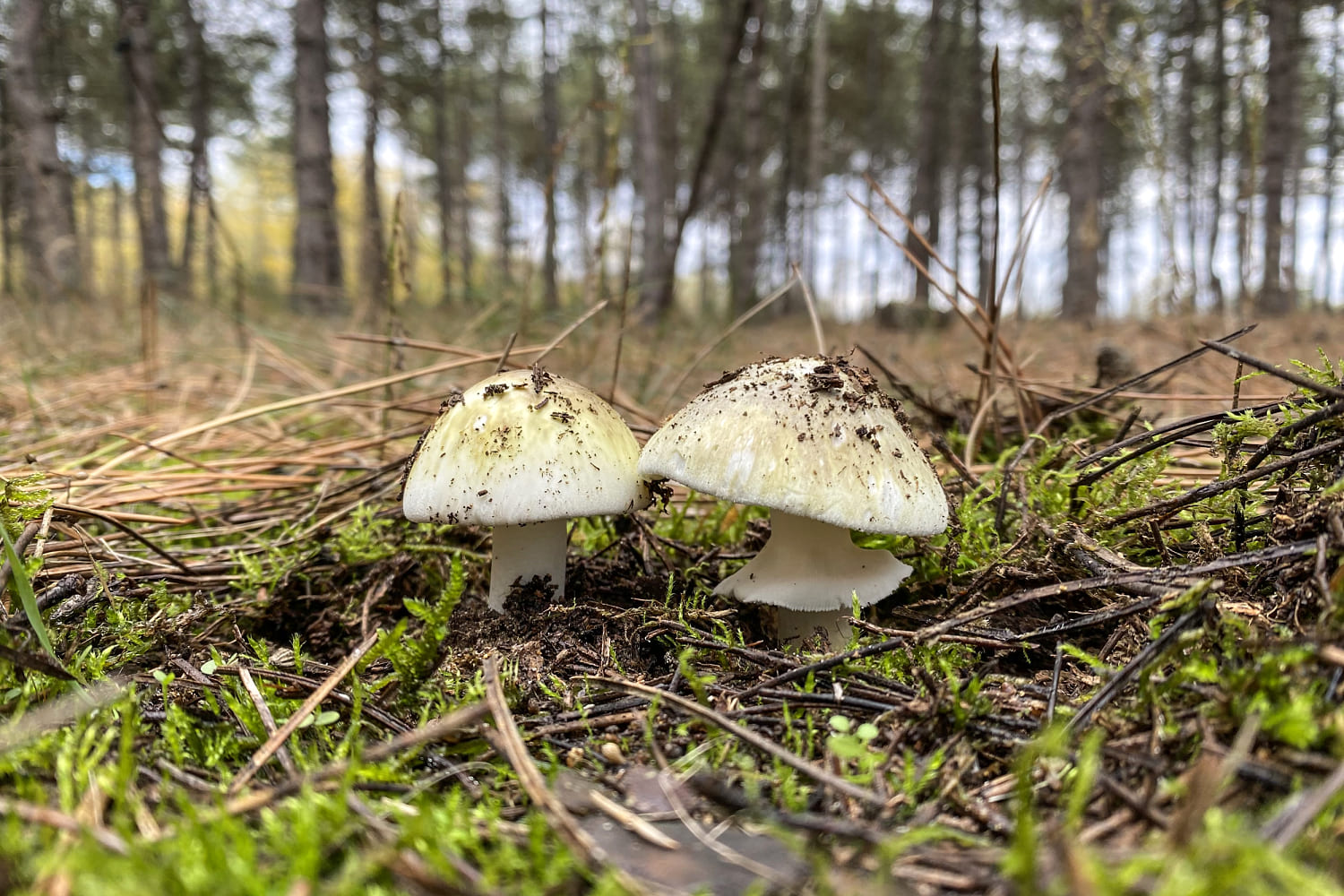
The Death Cap mushroom isn't aggressively hunting humans. It is doing what it has done for millennia: growing symbiotically underground with the roots of oak and pine trees, breaking down organic matter, and keeping the forest alive. The poison is a static chemical defense mechanism. The only variable that changed is human incompetence.
Why Blanket Warnings Backfire
When the state tells citizens to "avoid all wild mushrooms," it achieves the exact opposite of its intended goal.
Psychologists and safety experts have long understood the phenomenon of risk compensation and the failure of abstinence-only education. When you tell people that an entire category of the natural world is an undifferentiated zone of death, you strip them of the nuance required to navigate it safely.
Imagine a scenario where we taught driver's education by simply showing gory photos of car crashes and telling teenagers to never get behind the wheel. The moment those teenagers inevitably need to drive, they will do so without knowing how to brake, steer, or read a traffic sign.
By demonizing wild foraging instead of educating the public on how to identify specific species, health authorities ensure that amateur foragers remain amateurs. People still go into the woods. They still pick mushrooms because humans possess an innate, evolutionary drive to forage. But because they have been denied structured, accurate botanical education, they rely on flawed Google searches, unreliable smartphone apps, or old wives' tales.
The Lethal Myths Public Health Fails to Correct
Because institutional warnings focus on fear rather than facts, several highly dangerous myths continue to circulate unchecked:
- The Silver Spoon Myth: The belief that cooking a mushroom with a silver coin or spoon will cause the silver to tarnish if the fungus is toxic. This is completely false and has led to fatal poisonings.
- The Animal Mimicry Myth: The assumption that if squirrels or insects are eating a mushroom, it is safe for human consumption. Animals have vastly different digestive systems and liver enzymes. A rabbit can eat a Death Cap without missing a beat; a human cannot.
- The Peeling Myth: The idea that if the cap skin peels off easily, the mushroom is edible. Many deadly Amanita species peel perfectly.
If public health departments spent half the resources they use on alarmist press releases to debunk these specific misconceptions, hospitalizations would plummet.
The Tech Trap: Why Apps Are Part of the Problem
In our rush to outsource our brains to technology, we have created a new vector for poisoning: the mushroom identification app.
I have watched tech-savvy hikers walk into the state parks of Northern California, hold their smartphones over a deadly destroying angel (Amanita bisporigera), and confidently declare it safe because a machine-learning algorithm gave it an 82% match for a common meadow mushroom (Agaricus campestris).
This is a catastrophic failure of understanding how data works. Computer vision algorithms look at surface-level geometry and color pixels. They cannot smell the sweet, sickly odor of a maturing fungus. They cannot feel the chalky texture of the stem. They cannot see the microscopic spore shape or verify the presence of a volva—the underground, cup-like structure that is the hallmark of the deadliest genus on earth.
Relying on an app to tell you what mushroom to eat is the ecological equivalent of playing Russian roulette with a gun that has five loaded chambers. True expertise cannot be bypassed by an API. It requires dirt under your fingernails, physical field guides, and mentorship from experienced mycologists who have spent decades learning the subtle, shifting variations of local flora.
Reclaiming Our Relationship With the Earth
Stop treating the forest like a grocery store where everything is wrapped in plastic and labeled for your safety. Nature does not owe you a warning label.
If you want to stop mushroom poisonings, you must embrace the very thing the media tells you to fear: deep, disciplined foraging culture. We need to integrate basic mycology and botany into our school curriculums, especially in biodiverse regions like the Pacific Northwest and California.
Learning how to identify a Death Cap should be as fundamental a life skill for a Californian as knowing how to swim or swim away from a rip tide.
Buy a physical field guide by an authority like David Arora. Join a local mycological society. Go on guided walks with people who can show you the exact morphological differences between a delicious chanterelle and a toxic jack-o'-lantern. Learn to look at the gills, the spore print, the habitat, and the host tree.
The cure for panic is competence. The next time you see a headline warning you about the deadly fungal invasion, ignore the hysteria. The mushrooms aren't coming to get you. They are just waiting for you to grow up, open a book, and learn their names.