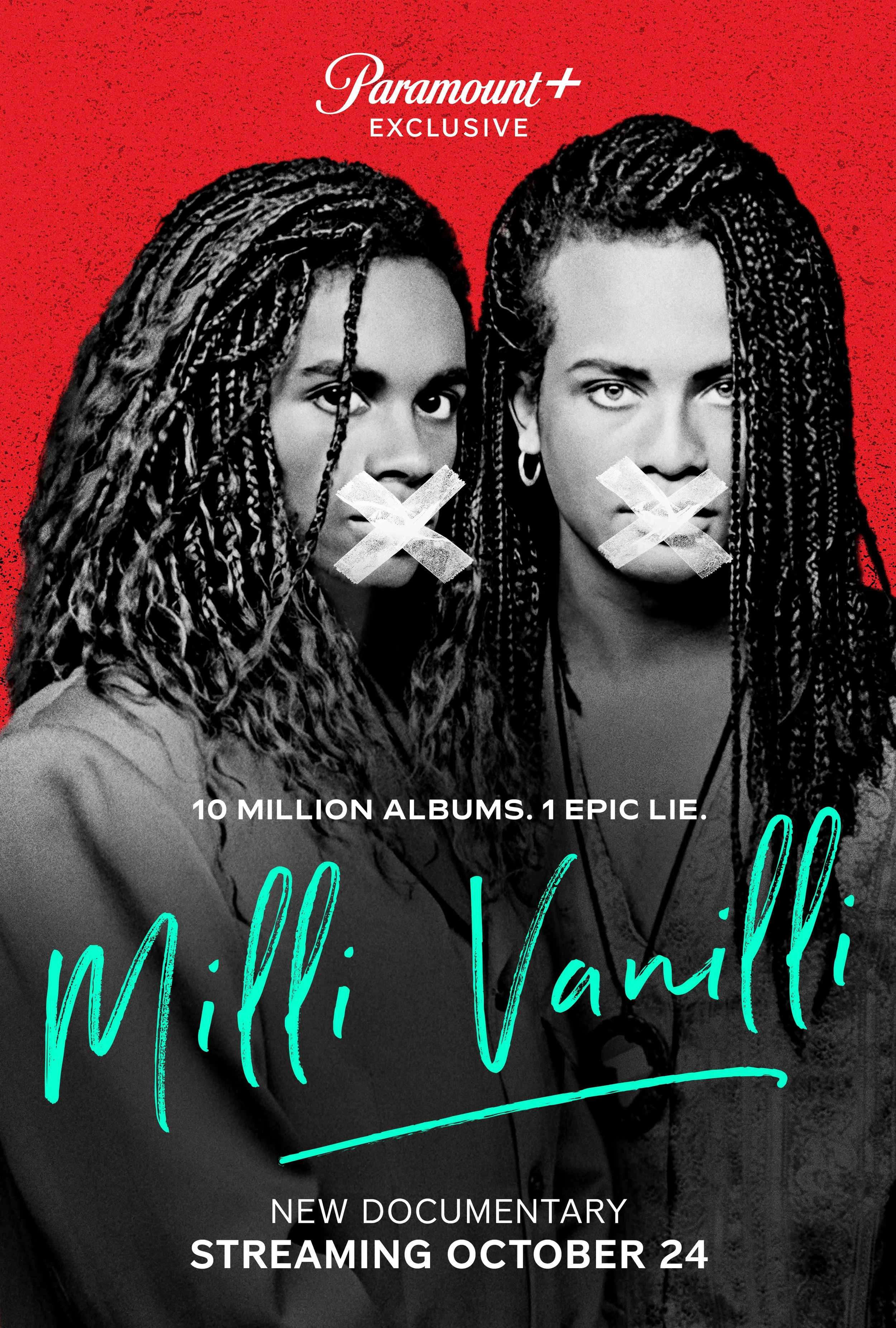
The music industry loves a "phoenix from the ashes" narrative almost as much as it loves a profitable fraud.
For decades, the standard retrospective on Fab Morvan has been a soft-focus lens on personal resilience. We are told he "mounted a comeback." We are told he "found his voice." We are told the 1990 Grammy scandal was a tragic byproduct of a predatory system that chewed up two naive European dancers.
That narrative is a comforting lie. It suggests the industry learned a lesson. It implies that by letting Morvan perform on stages today, we have somehow balanced the scales of justice.
The truth? Morvan didn't mount a comeback because the system changed; he’s allowed a seat at the table because the industry finally realized that "authenticity" is just another aesthetic you can skin, tan, and sell. If you think the Milli Vanilli saga was an anomaly of the analog age, you aren't paying attention to how your favorite tracks are built in the basement of a studio today.
The Myth of the Passive Victim
The "lazy consensus" dictates that Morvan and Rob Pilatus were mere puppets. The industry likes this version because it absolves everyone. If they were puppets, then Frank Farian was the sole villain, and the Grammys were just "fooled" by a lapse in oversight.
I have spent enough time around A&R departments and talent managers to know that nobody is that innocent. You don't sign a contract to front a global pop act without knowing where the sound is coming from.
Morvan wasn't a victim of a glitch in the Matrix; he was a willing participant in a high-stakes arbitrage. He traded his physical perfection for someone else’s vocal talent. It was a business transaction. To frame his later career as a "comeback" is to fundamentally misunderstand the nature of his original "failure." He didn't lose his career because he couldn't sing; he lost it because he got caught breaking the one rule of 1990s marketing: Don’t let the audience see the seams.
Today, we don't have seams. We have software.
The Pitch-Correction Hypocrisy
Critics claim Morvan’s solo work and live performances "prove" he had talent all along. That misses the point entirely. Whether or not Fab Morvan can carry a tune in a small club in 2024 is irrelevant to the structural rot of the 1989 pop machine.
Consider the technical mechanics of modern vocal production. In 1990, the gap between a "studio voice" and a "live voice" was a canyon. Today, it’s a choice.
- Auto-Tune (Real-time and Post): We have normalized the complete digital reconstruction of pitch.
- Vocal Comping: A single verse might be stitched together from fifty different takes, some as short as a single syllable.
- AI Voice Modeling: We are currently entering an era where a "singer" provides the likeness, while a model provides the timbre.
If Milli Vanilli launched today, they wouldn't be a scandal. They would be a "virtual artist" or a "multimedia project." The industry didn't forgive Morvan because he proved his worth; it forgave him because the industry caught up to his fraud. We are all listening to Milli Vanilli now. Every time you hear a perfectly gridded, pitch-perfect pop vocal that was "fixed in the mix," you are hearing the legacy of the 1990 scandal—except now, the Grammys give those engineers awards.
The False Currency of "Live" Performance
The "greatest comeback" articles point to Morvan’s live shows as evidence of his redemption. "Look," they say, "he’s actually singing!"
This is the classic "Authenticity Trap." It assumes that the act of singing live is the ultimate truth-telling mechanism in entertainment. It isn’t. Performing live is just another form of branding.
In the late 80s, the "talent" was the voice. In the 2020s, the "talent" is the Brand Equity. Morvan's current career isn't built on his vocal range; it’s built on the Nostalgia Economy. He is a walking, talking artifact of a time when we still believed that what we heard on the radio was a human being.
The irony is thick: Morvan is praised for being "real" today specifically because he was the face of the most "fake" moment in music history. His value isn't his voice—it's his proximity to the lie.
Why the Industry Loves the Redemption Arc
The media pushes the Morvan comeback story because it provides a "happy ending" to a story that should have ended in a total overhaul of artist rights and consumer transparency.
If we focus on Fab's personal journey, we don't have to talk about the millions of dollars that were never refunded to fans. We don't have to talk about how Frank Farian continued to work. We don't have to talk about how the "Real Milli Vanilli" (Brad Howell, Charles Shaw, and John Davis) were sidelined in their own story while the handsome faces got the documentaries and the redemptions.
The "Real" singers were:
- Older.
- Less "marketable" by MTV standards.
- The actual owners of the intellectual property of the sound.
By celebrating Morvan’s "return," we are once again prioritizing the "Face" over the "Voice." We are repeating the exact mistake of 1989, but we’re calling it "growth."
The Brutal Truth About Talent
Here is the perspective you won't find in a PR-cleansed retrospective: Talent is a commodity, but "Vibe" is a monopoly.
Morvan had Vibe. The session singers had Talent. In a fair world, the session singers would have been the stars. But we don't live in a fair world; we live in a visual one. The reason Morvan is the one with the "comeback" and not the session singers is because he still looks like a star.
We are still buying the packaging.
If you want to actually honor the history of music, stop asking if Fab Morvan can sing. Start asking why we still live in a culture that requires a front-man to sell a voice. Start asking why the people who actually created the sound of Girl You Know It’s True are footnotes, while the man who moved his lips to their labor is a "resilient survivor."
The Risk of This Stance
I realize this isn't the "nice" take. It's much easier to cheer for the guy who survived the press gauntlet and the loss of his friend. Personal survival is admirable. Being a decent human being is great.
But let’s not confuse personal survival with a "greatest comeback in history." A comeback implies you have returned to the pinnacle of your craft. Morvan hasn't. He has found a comfortable niche in the "Where Are They Now?" circuit.
The downside of my skepticism is that it ignores the human element—the fact that Morvan has clearly worked hard to improve his skills. But hard work doesn't change the foundational deception. You can polish a counterfeit coin until it shines, but you still can't spend it at the bank.
Stop Asking the Wrong Question
People ask: "Does Fab Morvan deserve a second chance?"
That is a flawed premise. He’s already had ten.
The real question is: "Why are we so desperate to believe that the music industry is a meritocracy?"
We want Morvan to have a comeback because if he doesn't, then the Milli Vanilli story is just a depressing tale of corporate greed and human vanity. If he succeeds, it becomes an "inspirational story."
Stop looking for inspiration in the fallout of a marketing scam. If you want to support "real music," go find the session musicians who are currently being replaced by AI models. Go find the backing vocalists who aren't being credited on the latest Top 40 hit.
The Milli Vanilli scandal didn't end in 1990. It just went into stealth mode.
Don’t celebrate the "comeback" of the face. Demand the presence of the voice. If you can’t tell the difference, you’re the target market, not the critic.
Stop reading the puff pieces. Listen to the isolated vocal tracks of the people who actually sang the songs. Then tell me who deserves the comeback.


