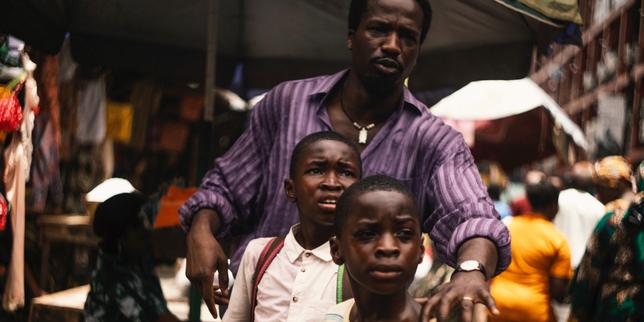
The stability of a nation-state is fundamentally mirrored in the micro-structures of its domestic units. In the context of Nigeria, the transition from a British colonial apparatus to a sovereign, albeit volatile, republic created a specific sociological archetype: the professional patriarch as a proxy for the state. When analyzing the narrative of childhood within this framework, the father is not merely a biological or emotional figure but a structural conduit through which the contradictions of the Nigerian project—wealth disparity, ethnic tension, and the erosion of institutional trust—are filtered and internalized by the next generation.
The Architecture of the Post-Colonial Domestic Unit
The Nigerian middle class of the late 20th century operated under a specific set of socio-economic pressures that redefined the paternal role. To understand the "intimate and political" chronicle of Nigeria, one must first categorize the domestic environment into three functional pillars:
- Institutional Continuity: The father often represented the link to the colonial civil service or the emerging military-bureaucrat class. His adherence to discipline, Western education, and professional hierarchy served as a defense mechanism against the surrounding political instability.
- The Sovereignty of the Household: In a state where public services (electricity, security, water) are inconsistent, the father assumes the role of a "mini-state," providing the infrastructure that the government fails to deliver. This creates a psychological dependency where the parent’s authority is absolute because their utility is total.
- Cultural Synthesis: The household becomes a laboratory where traditional ethnic identities (Igbo, Yoruba, Hausa) are forced to reconcile with the cosmopolitan requirements of a modernizing nation.
This structural arrangement means that a child’s perception of "Nigeria" is rarely formed through civics lessons; it is formed by observing the father’s negotiations with the outside world—his reaction to news of a coup, his management of extended family demands, and his navigational strategies through systemic corruption.
The Cost Function of Elite Upbringing
Growing up in the shadow of a prominent or highly disciplined Nigerian father involves a specific cost function. The "investment" in the child—often consisting of foreign education and social insulation—is balanced against the "debt" of carrying the family’s political or social legacy.
The mechanism of this relationship is defined by High-Expectation Pressure (HEP). In the Nigerian context, HEP is not merely about personal success; it is a survival strategy. In an environment with zero social safety nets, falling out of the professional class is not a setback—it is a catastrophic descent into poverty. Therefore, the paternal rigor often described in Nigerian memoirs is a rational response to a high-risk environment. The "intimacy" of the relationship is frequently subsumed by the "utility" of the training.
The Displacement of Political Agency
A critical missed observation in standard cultural chronicles is how the paternal figure serves as a shock absorber for political trauma. When the Nigerian state underwent successive military coups in the 1960s through the 1990s, the domestic sphere became a bunker.
- Information Asymmetry: The father filters the "political" for the child, deciding what level of national chaos is permissible for discussion. This creates a truncated understanding of the state, where the child views politics as an external, uncontrollable weather pattern rather than a system they can influence.
- The Bureaucratic Shadow: For children of the civil service elite, the state is experienced through the father’s career trajectory. A promotion is a sign of national health; a retirement or a "purge" (common in Nigerian administrative history) is a sign of national decay.
This creates a specific type of political consciousness: one that is deeply aware of the state's power to provide or strip away status, yet feels entirely alienated from the mechanisms of that power. The father is the last visible point of the hierarchy.
Quantifying the Generational Shift
The transition from the "Father's Nigeria" to the contemporary era can be mapped by the breakdown of the traditional professional hierarchy.
| Feature | The Paternal Era (1960-1990) | The Contemporary Era (Post-2000) |
|---|---|---|
| Primary Value | Institutional Stability | Individual Agility |
| Wealth Source | State/Corporate Tenure | Digital Economy/Global Remittance |
| Communication | Top-Down/Authoritarian | Decentralized/Networked |
| National Outlook | Reformist | Transnational/Japa (Migration) |
The friction in modern Nigerian discourse stems from this divergence. The father’s generation optimized for "Respectability Politics"—the idea that by being a perfect professional, one could force the state to function. The current generation, observing the failure of those institutions, has shifted toward "Disruption," viewing the father’s adherence to the old ways as a failed strategy.
The Cognitive Dissonance of "Home"
For the Nigerian diaspora or the Western-educated elite, the concept of "home" is a dual-layered construct. There is the Nigeria of the father—a place of memory, rigorous standards, and clear social roles—and the Nigeria of reality—a complex, often brutal landscape of 214 million people navigating inflation and insecurity.
This creates a Dissonance Loop:
- The individual attempts to apply the father’s "orderly" logic to a "disorderly" state.
- The state fails to respond to these traditional inputs (e.g., meritocracy, rule of law).
- The individual retreats into the paternal memory as a form of internal exile.
This explains why so much Nigerian literature and commentary focuses on the childhood home. It is the only version of Nigeria that ever "worked" according to a logical set of rules. The father was the guarantor of those rules. When he is gone, or when his influence wanes, the individual is forced to confront the raw, unbuffered state for the first time.
Strategic Implications for the Nigerian Identity
The "intimate and political" lens reveals that the Nigerian identity is currently undergoing a radical restructuring. The "Pillar of the Father" is being replaced by the "Power of the Peer." As decentralized movements (like EndSARS) and globalized digital labor become the new drivers of social status, the old model of the paternal proxy-state is collapsing.
To navigate this, one must move beyond the sentimentalized view of the Nigerian childhood and recognize it as a period of high-stakes political socialization. The lessons learned in those households—the art of negotiation, the necessity of multi-layered security, and the skepticism of official narratives—are the very tools being used to reshape the country today.
The path forward for the Nigerian state lies in transferring the loyalty once reserved for the patriarch to the institution itself. Until the citizen feels as protected by the law as they once did by the family head, the "mini-state" domestic model will remain the primary unit of survival.
Analyze the current trajectory of Nigerian civil society not through the lens of policy papers, but through the evolving power dynamics of the family unit. The decline of the monolithic paternal authority correlates directly with the rise of a more vocal, less deferential citizenry. This is the true political chronicle: the death of the "Big Man" at the dinner table precedes his disappearance from the presidential palace.