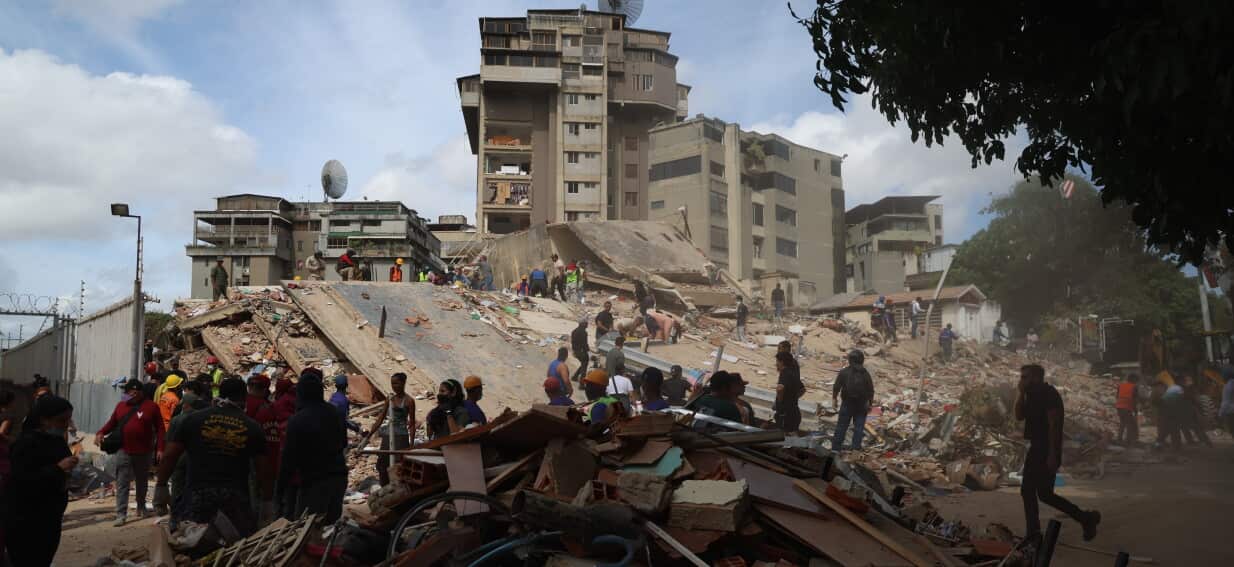
A 24-hour window yielding a magnitude 5.6 rupture in Northern California, a magnitude 6.9 event off the coast of Japan, and a catastrophic magnitude 7.2 and 7.5 doublet in Venezuela invariably triggers public speculation regarding a systemic, planetary failure mechanism. To the uninitiated, this tight temporal clustering implies a global chain reaction, a hidden macroscopic connection shifting the crust in unison. Seismological data and the physics of lithospheric stress transfer reveal a starker reality: these concurrent events are independent manifestations of localized tectonic strain, linked not by physical causation but by the inescapable mathematics of Poisson distributions.
Evaluating the risk of global seismic cascades requires separating local, high-magnitude triggering from long-range elastic stress transfers. Assessing the structural integrity of planetary fault networks reveals why concurrent international ruptures are inevitable statistical certainties rather than a unified global crisis.
The Mathematical Certainty of Random Clusters
Evaluating global earthquake frequency requires an understanding of baseline planetary seismicity. The U.S. Geological Survey (USGS) registers approximately 20,000 earthquakes annually, translating to a mean rate of roughly 55 events per day. When narrowed to major energy releases, the long-term historical baseline averages 15 to 16 earthquakes of magnitude 7.0 or higher every year.
Because these events occur as independent trials distributed across vast spatial distances, their temporal arrival pattern follows a Poisson process. A fundamental property of a Poisson distribution is that random independence naturally produces temporal clusters, where long periods of quiescence alternate with tight groupings of events.
Planetary Baseline Energy Release (Annual Averages):
├── Magnitude ≥ 5.0: ~1,500 events (~4 per day)
├── Magnitude ≥ 6.0: ~150 events
└── Magnitude ≥ 7.0: ~15 events (~1.25 per month)
The appearance of a magnitude 5.6 event in California alongside a magnitude 6.9 and a 7.5 elsewhere within hours seems anomalous only when evaluated against an unscientific assumption of perfectly uniform spacing. Over a multi-decade timeline, the probability of three distinct high-energy fault systems slipping within the same diurnal cycle approaches 100%. The phenomenon is an artifact of data aggregation, not dynamic physical coupling.
The Dual Mechanisms of Fault Interaction
To definitively rule out cross-continental triggering, it is necessary to quantify how stress moves through the Earth's crust following a major rupture. When a fault slips, it alters the surrounding stress field via two distinct physical pathways: static stress transfer and dynamic stress transfer.
Static Stress Transfer
Static stress changes involve the permanent, physical displacement of the crust adjacent to the rupture zone. As one block of rock moves past another, it relieves stress on the slipped portion of the fault but concentrates that stress at the tips of the rupture and on neighboring faults. This permanent mechanical deformation decays exponentially with distance, calculated as:
$$\Delta \sigma \propto \frac{1}{r^3}$$
Where $r$ represents the distance from the source. Because of this sharp cubic decay, static stress transfer is strictly localized. It operates as a critical trigger for immediate aftershocks and localized doublets within a radius of tens to hundreds of kilometers but drops to absolute zero at intercontinental scales.
Dynamic Stress Transfer
Dynamic stress changes are transient, traveling via seismic waves ($P$-waves, $S$-waves, and high-amplitude surface waves) that radiate outward from the epicenter. These waves temporarily deform the rock as they pass through, momentarily altering the pore fluid pressure within distant fault zones.
While dynamic stress can travel globally—allowing sensitive, highly stressed faults thousands of kilometers away to occasionally undergo micro-seismicity or minor tremors—it lacks the permanent energy density required to systematically initiate major independent ruptures across separate tectonic plates. If global dynamic triggering were a primary driver of magnitude 7.0 events, historical data would show a diffuse web of triggered events illuminating intermediate faults between California, Japan, and Venezuela. No such intermediate seismicity exists.
Tectonic Disconnection: Three Isolated Systems
The structural independence of the recent ruptures becomes clear when mapping the specific boundary mechanics of each affected zone. The events occurred across three distinct, uncoupled plate boundaries governed by entirely different stress-loading regimes.
Geological Profiles of the Independent Ruptures:
├── Northern California (Redwood Valley)
│   ├── System: San Andreas / Mendocino Triple Junction
│   └── Mechanism: Strike-Slip / Transform (Horizontal Discontinuous Motion)
│
├── Northeastern Japan (Off Iwate Prefecture)
│   ├── System: Pacific Plate subducting under Okhotsk Plate
│   └── Mechanism: Megathrust Megastructure (Compressional Subduction)
│
└── Northern Venezuela (Caracas Margin)
    ├── System: Caribbean Plate / South American Plate Boundary
    └── Mechanism: Complex Strike-Slip with High-Friction Asperities
The California Event
The magnitude 5.6 rupture near Redwood Valley occurred within the complex transform fault system of Northern California, influenced by the Mendocino Triple Junction. This environment is characterized by horizontal, strike-slip motion where the Pacific and North American plates grind past one another. A magnitude 5.6 event represents a routine release of accumulated elastic strain for this region, which routinely processes two to three events of this scale annually. The local stress budget here operates completely independently of western Pacific subduction dynamics.
The Japan Rupture
The magnitude 6.9 event off the coast of Iwate prefecture was a classic subduction zone earthquake. Here, the massive Pacific Plate moves westward, plunging beneath the overriding plate at a rate of several centimeters per year. This megathrust interface features high-friction locking zones that build immense strain over decades before snapping. The deep, offshore hypocenter at 50 kilometers reflects compressional forces completely insulated from the shallow, strike-slip mechanics of the American continents.
The Venezuelan Doublet
The catastrophic pairing in Venezuela—a 7.2 magnitude rupture followed 39 seconds later by a 7.5 event—is structurally unique and separate from the Pacific Ring of Fire. Venezuela occupies the boundary between the Caribbean Plate and the South American Plate, a strike-slip zone with highly complex fault geometry.
Unlike the isolated events in California and Japan, the Venezuelan pair was physically coupled. The close spatial proximity (within 5 kilometers) and immediate timing identify this as a multi-fault doublet. The initial 7.2 rupture injected an immediate, massive pulse of static stress directly onto an adjacent, highly stressed fault segment that was already at its failure threshold, tipping it over the edge. This was a localized cascade, driven by immediate proximity rather than a global signal.
Engineering Asymmetry and the Reality of Risk
The stark variance in human and structural outcomes across these three regions exposes a critical diagnostic truth for global risk mitigation: seismic hazard is a fixed geological reality, but seismic risk is entirely variable, dictated by engineering standards and structural enforcement.
| Metric / Parameter | Northern California | Northeastern Japan | Northern Venezuela |
|---|---|---|---|
| Magnitude ($M_w$) | 5.6 | 6.9 | 7.2 and 7.5 (Doublet) |
| Primary Mechanism | Strike-Slip (Shallow) | Subduction Megathrust | Strike-Slip (Complex multi-fault) |
| Structural Damage | Negligible / Superficial | Minor / Transit Interruptions | Severe / Widespread Collapse |
| Casualty Profile | Zero | Zero Reported | High (Mass Casualty Event) |
| Engineering Baseline | High IBC/CBC Enforcement | Strict Seismic Dampening | Vulnerable Historic/Unreinforced Masonry |
The negligible impact of California’s 5.6 event and Japan’s high-intensity 6.9 shaking—which registered a 6-plus on the Shindo scale—demonstrates the mitigation capability of modern, iterative structural engineering. Japan’s building codes, updated continuously to mandate advanced base isolation and energy-dissipating steel frames, allow major cities to sustain high ground accelerations with minimal structural degradation and zero loss of life.
Conversely, the disaster in Venezuela underscores the extreme vulnerability of regions where structural retrofitting has failed to keep pace with seismological insight. Caracas and its surrounding districts contain a high concentration of unreinforced masonry structures and soft-story concrete buildings constructed before the modern understanding of plate tectonics and dynamic resonance.
When subjected to back-to-back pulses of high-frequency ground motion from a doublet event, these structures experience rapid, cumulative mechanical fatigue. The first shock compromises the load-bearing columns; the second, more powerful shock induces catastrophic structural collapse.
The Strategic Path for Risk Mitigation
The simultaneous occurrence of these distinct earthquakes confirms that planetary monitoring networks must abandon the expectation of predictable, linear seismic behavior. Because major independent faults can rupture concurrently purely by statistical coincidence, disaster response frameworks must be engineered for compounding, non-linear stress scenarios.
Organizing infrastructure defenses around a singular "design basis earthquake" on a single fault line introduces a dangerous point of failure. Municipalities operating in tectonically complex zones must realign their engineering mandates to account for multi-fault, rapid-succession ruptures like the Venezuelan doublet.
The immediate operational priority for engineers and urban planners is the aggressive retrofitting of existing concrete infrastructure. Prioritizing the wrapping of non-ductile concrete columns with fiber-reinforced polymers and implementing mandatory base-isolation designs for critical civic infrastructure represents the only viable method for reducing structural collapse. Faults will continue to rupture independently across the globe; structural resilience is the only controllable variable in the equation of seismic risk.
For a deeper dive into how emergency management teams analyze structural vulnerabilities and prepare urban environments for high-magnitude seismic events, watch this comprehensive breakdown on Evaluating Global Seismic Risks and Family Preparedness.