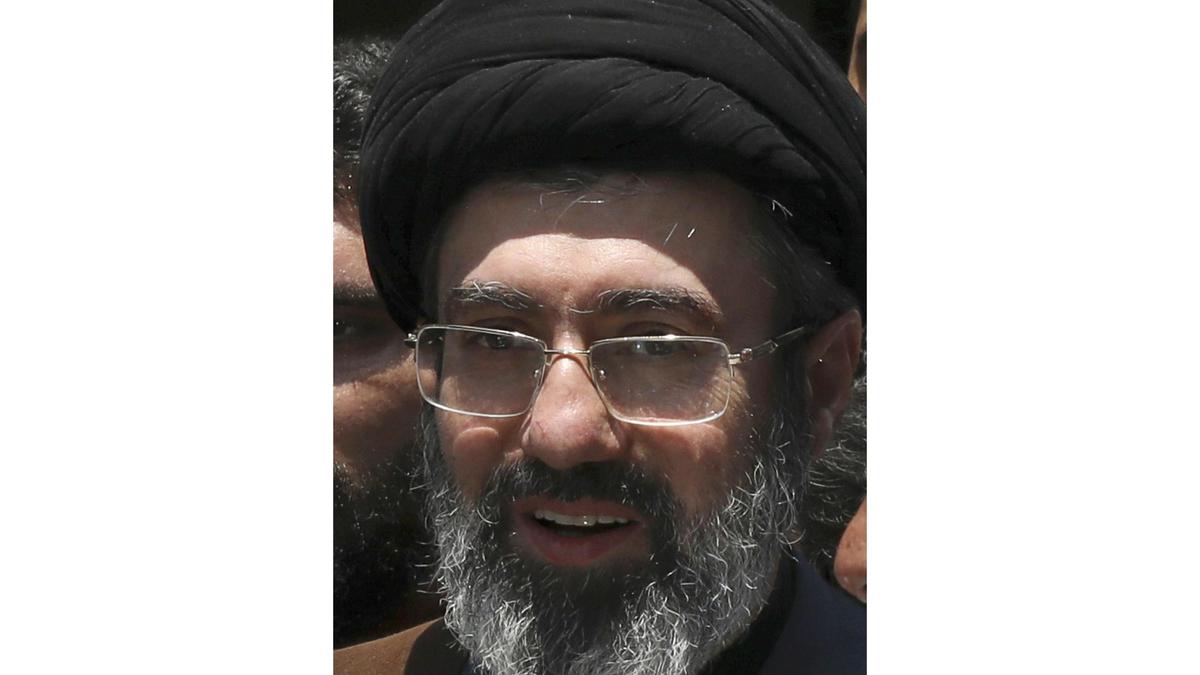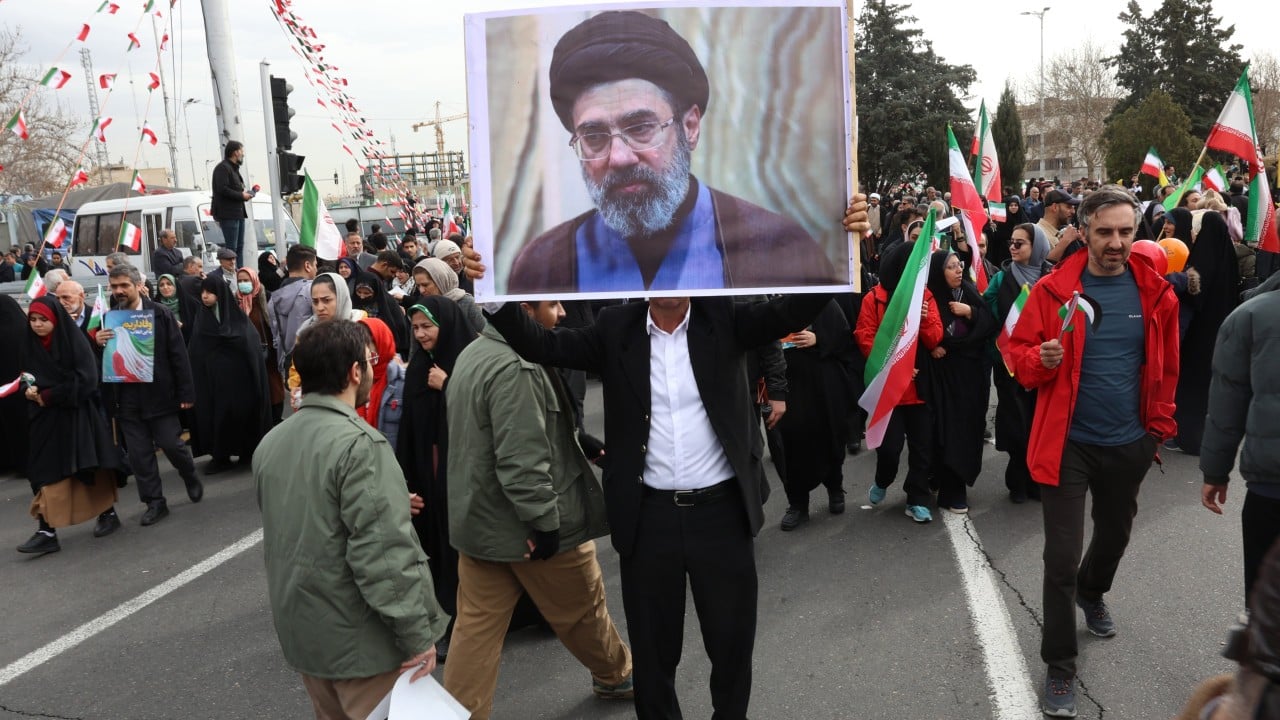
The appointment of Mojtaba Khamenei as the successor to the Supreme Leadership signifies a shift from a revolutionary meritocracy—however flawed—to a formalized dynastic structure within the Iranian clerical-military complex. This transition is not merely a personnel change; it is a structural reconfiguration of the Velayat-e Faqih (Guardianship of the Jurist) designed to preserve the institutional interests of the Office of the Supreme Leader (Beit-e Rahbari) and the Islamic Revolutionary Guard Corps (IRGC). The survival of the regime now depends on the seamless integration of religious legitimacy with paramilitary enforcement, a dual-track strategy that Mojtaba Khamenei has spent two decades refining from the shadows.
The Triad of Power Consolidation
To understand the elevation of Mojtaba Khamenei, one must analyze the three structural pillars that support his candidacy. The Assembly of Experts does not operate in a vacuum; it acts as a formalizing body for decisions reached through a consensus of elite stakeholders.
- The Intelligence-Security Apparatus: Unlike his father, Ali Khamenei, who rose through the clerical ranks and the presidency, Mojtaba’s power base is rooted in the "parallel intelligence" networks. He has maintained a functional command over the Ammar Headquarters and the Basij paramilitary, providing him with a direct kinetic lever to suppress internal dissent.
- Financial Hegemony: Through the management of Setad (Execution of Imam Khomeini's Order) and other Bonyads (charitable foundations), the Office of the Supreme Leader controls an estimated 10% to 20% of the Iranian GDP. Mojtaba’s role in overseeing these assets ensures that the patronage networks keeping the IRGC loyal remain funded, regardless of international sanctions.
- Clerical Sanctioning: The primary hurdle for Mojtaba has always been his religious credentials. The transition from Hojatoleslam to Ayatollah is a prerequisite for the role. The recent "fast-tracking" of his jurisprudential standing by loyalist members of the Qom Seminary serves to bridge the gap between political reality and theological requirement.
The Cost Function of Hereditary Succession
The move toward hereditary succession introduces a high-risk variable into the Iranian political equation: the erosion of the "Republican" facade. The 1979 Revolution was fundamentally predicated on the rejection of the Pahlavi monarchy. By installing a son to succeed a father, the regime risks a cognitive dissonance that could alienate its remaining "grey" supporters—those who are not ideological hardliners but view the system as a legitimate alternative to Western-aligned autocracy.
The mathematical risk of this transition can be expressed as a function of Internal Friction (If) and External Pressure (Ep):
$$Succession Stability = \frac{Institutional Cohesion}{If + Ep}$$
If the IRGC perceives that Mojtaba cannot maintain the flow of resources or that his presence triggers uncontrollable civil unrest, their loyalty may pivot toward a collective leadership council rather than a single individual. The second limitation is the potential for "elite fragmentation." Senior clerics who have spent decades in the seminaries may resent being bypassed for a younger candidate whose primary claim to power is lineage, potentially leading to a quiet but devastating withdrawal of religious endorsements.
Mechanical Integration of the IRGC
The relationship between Mojtaba and the IRGC is symbiotic but transactional. The IRGC requires a Supreme Leader who provides a "sacred" cover for their economic and geopolitical activities. In return, Mojtaba requires the IRGC to act as the ultimate guarantor of his physical and political survival.
This creates a bottleneck in the decision-making process. Because the IRGC is not a monolithic entity, Mojtaba must balance the competing interests of the aerospace, naval, and intelligence wings. The current strategy involves:
- Vertical Integration: Placing loyalist commanders from the Quds Force into key administrative roles within the Beit-e Rahbari.
- Economic Shielding: Ensuring that the IRGC’s "grey market" oil exports are protected from internal audits and reformist interference.
- Information Control: Utilizing the IRGC’s sophisticated cyber and surveillance capabilities to identify and neutralize rival power centers before the formal transition occurs.
Strategic Vulnerabilities and the Post-Transition Environment
The immediate threat to a Mojtaba-led Iran is not an external invasion, but a systemic liquidity crisis combined with a legitimacy vacuum. If the transition occurs during a period of high inflation or energy shortages, the tactical cost of maintaining order increases exponentially.
The regime’s response to this is "The Fortress Strategy." This involves tightening the national intranet (Filternet), increasing the frequency of public executions to deter street protests, and deepening the strategic alliance with Russia and China to ensure a "veto shield" at the UN Security Council. This is not a sign of strength, but a calculated survival mechanism intended to weather the initial shocks of the succession.
The selection of Mojtaba Khamenei is a defensive maneuver. It prioritizes continuity and security over reform or popular mandate. The "merit" of the candidate is defined here by his ability to preserve the status quo for the existing elite.
The strategic play for external observers and internal rivals is to monitor the Loyalty-to-Competence Ratio within the IRGC's middle management. Should the cost of defending a dynastic transition outweigh the benefits of institutional stability, the "Pillar of Security" may fracture, leading to a transition not to a son, but to a military-dominated junta that discards the clerical veil entirely.
The final operational step for the Beit-e Rahbari is the neutralization of the "Pragmatist" faction. By isolating figures who suggest a return to the JCPOA or a loosening of social restrictions, the regime ensures that when the transition happens, there is no viable alternative platform for the public to rally behind. The consolidation is total, or it is nothing.