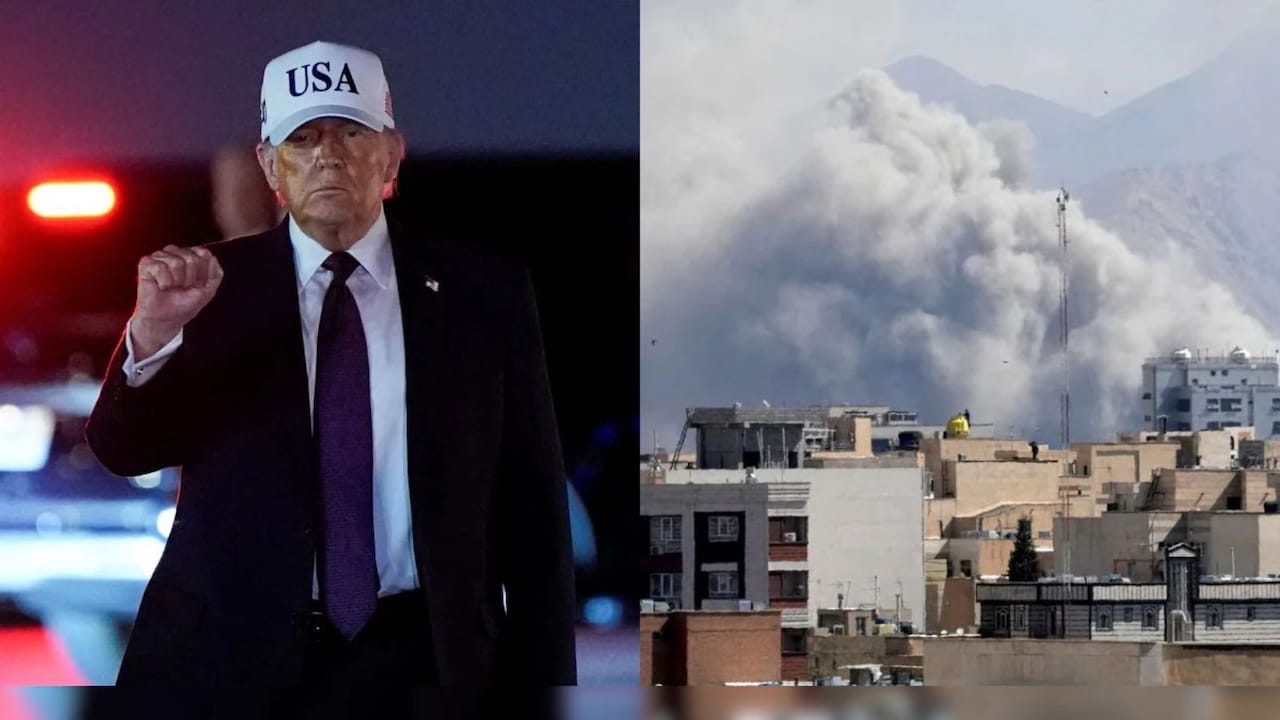
The announcements of immediate peace accords between asymmetric adversaries frequently obscure the underlying structural barriers to conflict resolution. When a superpower signals an imminent bilateral breakthrough while its regional opponent issues an immediate blanket denial, the divergence is rarely a simple matter of miscommunication. Instead, it reflects a fundamental mismatch in geopolitical incentives, domestic audience costs, and verification protocols. Forcing a resolution in the US-Iran theater requires navigating three distinct strategic friction points: the asymmetry of political calendars, the credibility deficit in unilateral sanctions relief, and the structural constraints of proxy-network delegation.
The Asymmetry of Political Calendars
Bilateral negotiations do not occur in a vacuum; they are tightly bound to the domestic political lifecycles of each participant. This temporal misalignment creates a structural barrier to signing comprehensive treaties.
[Superpower Short-Term Electoral Cycle] ----> Demands Immediate, High-Profile Wins
                                                    |
                                                    v  (Strategic Mismatch)
                                                    |
[Regional Power Multi-Decade Horizon]   ----> Prioritizes Regime Survival & Systemic Continuity
For an American administration, the political calendar operates on a highly compressed, four-year cycle. Executing a high-profile diplomatic breakthrough yields immediate domestic political equity, shifts media narratives, and fulfills campaign directives. The incentive structure heavily favors rapid, highly visible declarations of success, often before the technical mechanisms of compliance are finalized.
Conversely, the Iranian state apparatus operates on a multi-decade strategic horizon, insulated from rapid electoral shifts by a permanent clerical and security establishment. The Supreme Leader and the Islamic Revolutionary Guard Corps (IRGC) view immediate concessions through the lens of long-term regime survival and systemic continuity. Signalling premature compliance with an American timeline carries two profound risks:
- Domestic Legitimacy Erosion: The ruling elite derives a core component of its domestic authority from an institutionalized anti-imperialist stance. Appearing to capitulate to unilateral Western demands without securing verified, structural concessions undermines the ideological foundation of the state.
- The Lame-Duck Liability: Tehran is acutely aware that any executive agreement signed with a US president can be unilaterally rescinded by a subsequent administration via executive order. The historical precedent of the Joint Comprehensive Plan of Action (JCPOA) withdrawal demonstrates the irrationality of trading permanent structural assets for temporary political alignments.
Consequently, a public declaration of an imminent deal by Washington triggers a defensive, non-compliance response from Tehran to preserve its bargaining leverage and domestic credibility.
The Sanctions Escalation and Verification Dilemma
The primary tool of economic coercion in this theater—the unilateral secondary sanctions framework—contains an inherent design flaw that prevents smooth de-escalation. This is defined by the Sanctions Irreversibility Paradox: while sanctions can be imposed via rapid executive decree, their removal requires dismantling complex legal, regulatory, and corporate compliance architectures.
+-------------------------------------------------------------------------+
|                      THE SANCTIONS IRREVERSIBILITY PARADOX              |
+-------------------------------------------------------------------------+
|                                                                         |
|  [US Executive Action]  --->  De Decrees Rapid Economic Sanctions       |
|                                                                         |
|  [Global Banks/Corps]   --->  Build Deep Regulatory Risk-Aversion       |
|                                                                         |
|  [US Relief Offer]      --->  Cannot Instantly Erase Corporate Fear     |
|                                                                         |
|  [Resulting Effect]     --->  Iran Suffers Continued Economic Isolation |
|                                                                         |
+-------------------------------------------------------------------------+
When Washington offers sanctions relief as a quid pro quo for a security pact, the offer frequently lacks structural credibility. Global financial institutions and multinational corporations do not resume trade with a sanctioned state the moment a political announcement is made. Years of compliance penalties create deep risk aversion. The legal costs of accidentally violating residual restrictions outweigh the marginal utility of entering a newly opened, yet highly volatile market.
Iran’s economic strategists calculate the net present value of any proposed deal by analyzing the specific mechanisms of financial normalization, rather than the rhetoric of political leaders.
Net Bargaining Position = Verified Capital Inflows - Irreversible Asset Liquidation
If the Western proposal offers vague or easily revocable sanctions waivers while demanding the immediate, verifiable dismantling of nuclear enrichment infrastructure or missile telemetry development, the equation yields a negative return for Tehran. Irreversible physical assets cannot be traded for highly reversible regulatory pauses.
Proxy Networks and the Principal-Agent Friction
The third structural barrier lies in the misalignment between the principals signing an agreement and the agents tasked with executing security protocols on the ground. The US-Iran security dynamic is heavily mediated by an expansive network of non-state actors throughout the Levant, the Arabian Peninsula, and Iraq.
[ Tehran (Principal) ]
        |
        | Funding, Material, Ideological Alignment
        v
[ Regional Proxies (Agents) ] ---> Possess Independent Local Agendas & Survival Imperatives
While external observers often treat this network as a monolith directed entirely by Tehran, organizational theory reveals a classic principal-agent problem. The principal (Tehran) provides material support, strategic doctrine, and ideological alignment. However, the agents (local militias, political factions, and insurgent groups) possess independent local agendas, domestic political ambitions, and distinct survival imperatives.
A top-down diplomatic declaration signed in a foreign capital cannot instantly freeze kinetic operations across multiple conflict zones.
- The Command-and-Control Lag: Translating a diplomatic breakthrough into a total cessation of hostilities across decentralized networks requires time, internal consensus-building, and the management of hardline factions within those proxy groups.
- The Spoiler Phenomenon: Sub-state actors who perceive a bilateral US-Iran detente as a threat to their localized power structures have a strong incentive to act as spoilers. Launching a low-cost, asymmetrical strike during sensitive negotiations effectively disrupts the diplomatic process, forcing both major powers back into defensive, reactive postures.
Therefore, any peace framework that does not explicitly integrate localized stabilization mechanisms and realistic timelines for proxy demobilization is structurally predisposed to collapse upon its first contact with operational reality.
The Security Dilemma and Strategic Miscalculation
The cumulative effect of these misalignments is a classic manifestation of the Security Dilemma: actions taken by one state to increase its security or improve its bargaining position are inherently interpreted by the adversary as offensive threats.
When Washington increases its naval deployment to force Tehran to the negotiating table, the Iranian security apparatus interprets the move not as an invitation to diplomacy, but as a precursor to kinetic containment or regime subversion. In response, Iran increases its technological readiness at enrichment facilities and escalates its maritime surveillance. This defensive escalation is then cited by Western policymakers as empirical evidence of Iranian intransigence, creating a self-reinforcing feedback loop of hostility.
Breaking this cycle requires a fundamental shift away from high-visibility, zero-sum announcements toward a model of incremental, structurally verified reciprocity.
The Reciprocal Optimization Framework
To bypass the structural bottlenecks of the US-Iran de-escalation paradox, negotiators must replace the pursuit of a singular, all-encompassing treaty with a transactional, phased execution model. This framework prioritizes verifiable, low-stakes concessions that gradually build the regulatory and political infrastructure necessary for long-term stability.
Phase 1: Micro-Asset Normalization
Instead of demanding broad infrastructural concessions, the initial phase focuses exclusively on highly isolated, easily measurable assets. Washington issues specific, legally binding letters of comfort to a limited selection of international banks, explicitly guaranteeing immunity from secondary sanctions for the processing of frozen Iranian humanitarian assets. In return, Tehran halts advancement on a single, easily verifiable vector of its fuel cycle, such as the installation of advanced centrifuge cascades at a specific facility. This creates an immediate, low-risk test of compliance mechanisms without forcing either side to surrender core strategic leverage.
Phase 2: Regional De-escalation Corridors
Addressing the principal-agent friction requires geographic compartmentalization. Rather than attempting a sweeping, region-wide ceasefire, negotiators establish a singular localized pilot zone—for instance, a specific maritime corridor or a defined border sector. Within this zone, both powers utilize established, indirect communication channels to coordinate the pull-back of heavy assets and the implementation of a joint incident-management protocol. Success in this micro-theater provides a scalable operational blueprint and tests the principal's capacity to effectively manage and restrain its local agents.
Phase 3: The Symmetrical Sunset Protocol
The final, most complex phase replaces the vulnerability of permanent structural concession with a symmetrical, time-bound legal framework. Legislative triggers are built into both domestic systems: the US Congress codifies statutory sanctions relief that automatically extends every 180 days, contingent solely on International Atomic Energy Agency (IAEA) verification of Iranian compliance. Simultaneously, Iran codifies permanent oversight access, with the legal caveat that any reimposition of Western sanctions instantly voids the inspection mandates. By explicitly tying the survival of the agreement to automated, reciprocal legal mechanisms rather than individual political fortunes, the framework insulates the diplomatic process from the volatility of electoral cycles.
Implementing this phased approach demands an analytical departure from theatrical diplomacy. True de-escalation is not achieved through rapid announcements or unilateral declarations of peace; it is engineered through the precise, tedious synchronization of economic, regulatory, and military mechanisms. Until both states transition from symbolic posturing to structural reciprocity, public announcements of immediate breakthroughs will continue to generate nothing more than predictable, systematic denials.