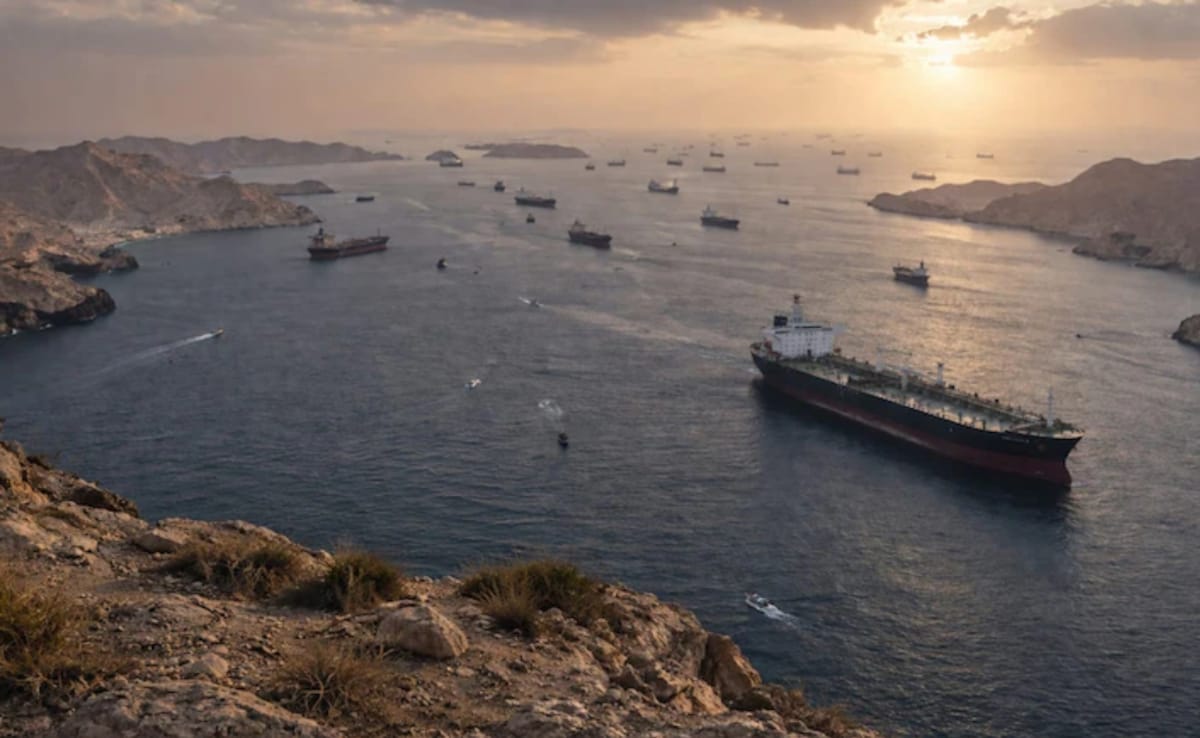
The intersection of energy security and asymmetric naval warfare is currently defined by the Strait of Hormuz, a chokepoint where approximately 20% of global petroleum consumption passes daily. The recent boarding and harassment of two Indian-flagged vessels by Iranian paramilitary forces is not an isolated tactical event; it is a calculated stress test of maritime insurance benchmarks and sovereign diplomatic resolve. To understand the gravity of these incursions, one must analyze the strategic logic of "gray zone" operations, the mechanics of maritime sovereignty, and the cascading economic impacts on the Indo-Pacific energy corridor.
The Triad of Maritime Vulnerability
Maritime security in the Persian Gulf operates on three distinct levels of risk. When state actors engage commercial shipping, they exploit specific structural weaknesses in international law and physical logistics.
- Jurisdictional Ambiguity: While the United Nations Convention on the Law of the Sea (UNCLOS) provides a framework for "innocent passage," the interpretation of what constitutes a threat allows coastal states to justify boardings under the guise of "security inspections" or "environmental compliance."
- Escalation Dominance: Asymmetric forces, such as the Islamic Revolutionary Guard Corps Navy (IRGCN), utilize fast attack craft (FAC) to swarm large tankers. The tanker, optimized for volume and fuel efficiency, lacks the kinetic maneuverability to evade and the defensive systems to repel without high-level naval escort.
- The Flag State Paradox: Vessels flying the Indian flag carry the sovereign weight of a rising global power. Attacking these specific assets is a direct signal to New Delhi, forcing a choice between increased naval deployment costs or diplomatic concessions.
The Mechanics of the Incursion
The reported incidents involve a specific operational pattern designed to maximize psychological impact while remaining below the threshold of open war. Iranian gunboats utilize high-speed maneuvers to force a vessel to slow down or change course, often targeting the bridge or the engine room areas with visual intimidation.
The safety of the crew, while touted as a success in initial reports, is a secondary variable in the aggressor's equation. The primary objective is the temporary seizure of the "flow." When a vessel is boarded, the immediate result is a cessation of transit. For a standard Long Range 2 (LR2) tanker, every hour of delay incurs demurrage costs that can range from $50,000 to $150,000, depending on the charter party agreement.
The Economic Cost Function of Maritime Instability
The market does not react to the physical damage of the ships, which in this case was negligible, but to the shift in the Risk Premium. This premium is calculated through three primary financial vectors:
Hull and Machinery (H&M) and War Risk Premiums
Underwriters at Lloyd’s of London and similar markets categorize the Persian Gulf as a "Listed Area." Following an attack, the "Additional Premium" (AP) for a single transit can spike by 10% to 25% overnight. For a vessel valued at $100 million, a 0.5% war risk premium translates to a $500,000 cost for a seven-day window.
The Security Surcharge
Shipowners are forced to hire Privately Contracted Armed Security Personnel (PCASP). While effective against piracy, these teams are often legally barred from engaging state-affiliated military forces. This creates a "security theater" cost—expenditure that provides no actual protection against the IRGCN but is required to maintain insurability.
The Opportunity Cost of Re-Routing
If the Strait is perceived as untenable for specific flags, the alternative is the Cape of Good Hope. This adds approximately 10 to 15 days to the voyage from the Middle East to Asian refineries. The mathematical reality of this detour is a massive reduction in the global "effective capacity" of the tanker fleet, leading to a spike in Worldscale (WS) rates.
India’s Strategic Bottleneck
For India, the Strait of Hormuz is a vital artery. Approximately 60% of India's crude oil imports and a significant portion of its LNG requirements transit this waterway. The targeting of Indian-flagged vessels represents a significant shift in Iranian strategy, which has historically focused on Western or Israeli-linked shipping.
This shift suggests a breakdown in the "neutrality assumption." New Delhi’s increasing participation in the Quad (comprising the US, Japan, Australia, and India) and its burgeoning defense ties with Middle Eastern rivals of Iran may be the underlying drivers. The logic is simple: by targeting the flag, Iran tests the limits of India’s "Strategic Autonomy."
Logistic and Defensive Counter-Measures
Modern maritime defense in high-threat environments relies on a "Layered Hardening" approach. However, these systems have inherent limitations when facing state actors.
- Long-Range Acoustic Devices (LRAD): These emit high-frequency sound waves to deter boarders. While effective against small-scale pirates, they are easily countered by military-grade hearing protection.
- Automatic Identification System (AIS) Manipulation: Vessels often "go dark" by turning off AIS to avoid tracking. However, coastal radar and thermal imaging used by the IRGCN render this tactic largely ineffective in the narrow confines of the Strait.
- Naval Convoying: The Indian Navy’s "Operation Sankalp" provides a persistent presence, but the ratio of naval assets to commercial tankers is roughly 1:100. Continuous escort for every Indian-flagged vessel is logistically impossible without a total mobilization of the Western Fleet.
The Probability of Kinetic Escalation
The risk function suggests that as long as the attacks remain "bloodless"—meaning the crew is unharmed—the international community’s response will remain confined to diplomatic protests and increased insurance rates. However, the margin for error in these maneuvers is razor-thin.
A single miscalculation—a collision between a gunboat and a tanker, or a panicked guard opening fire—would trigger a kinetic feedback loop. The closure of the Strait of Hormuz, even for 72 hours, would cause a projected $10 to $20 surge in the price of Brent Crude.
The Strategic Play
The persistence of these attacks necessitates a transition from reactive patrolling to proactive risk management. For stakeholders in the energy and maritime sectors, the following logic must be applied:
The "India-Middle East-Europe Economic Corridor" (IMEC) must be accelerated not as a trade luxury, but as a survival necessity to bypass the vulnerability of the Strait. Simultaneously, shipowners must renegotiate "Force Majeure" clauses in charter parties to specifically address state-sponsored harassment, which is currently a gray area between "piracy" and "act of war."
Refineries must shift their inventory models from "Just-in-Time" to "Strategic Buffer" (holding 90+ days of supply) to decouple domestic pump prices from the immediate volatility of Persian Gulf skirmishes. The reality of the modern maritime landscape is that the "Indian Flag" is no longer a shield of neutrality; it is now a focal point in a broader struggle for regional hegemony.
Future maritime security will not be won through larger hulls, but through the integration of unmanned surface vessels (USVs) providing 24/7 surveillance pickets, allowing naval assets to intercept harassment craft before they reach the "last mile" of engagement. The era of the unescorted commercial transit in the Hormuz chokepoint has effectively ended.