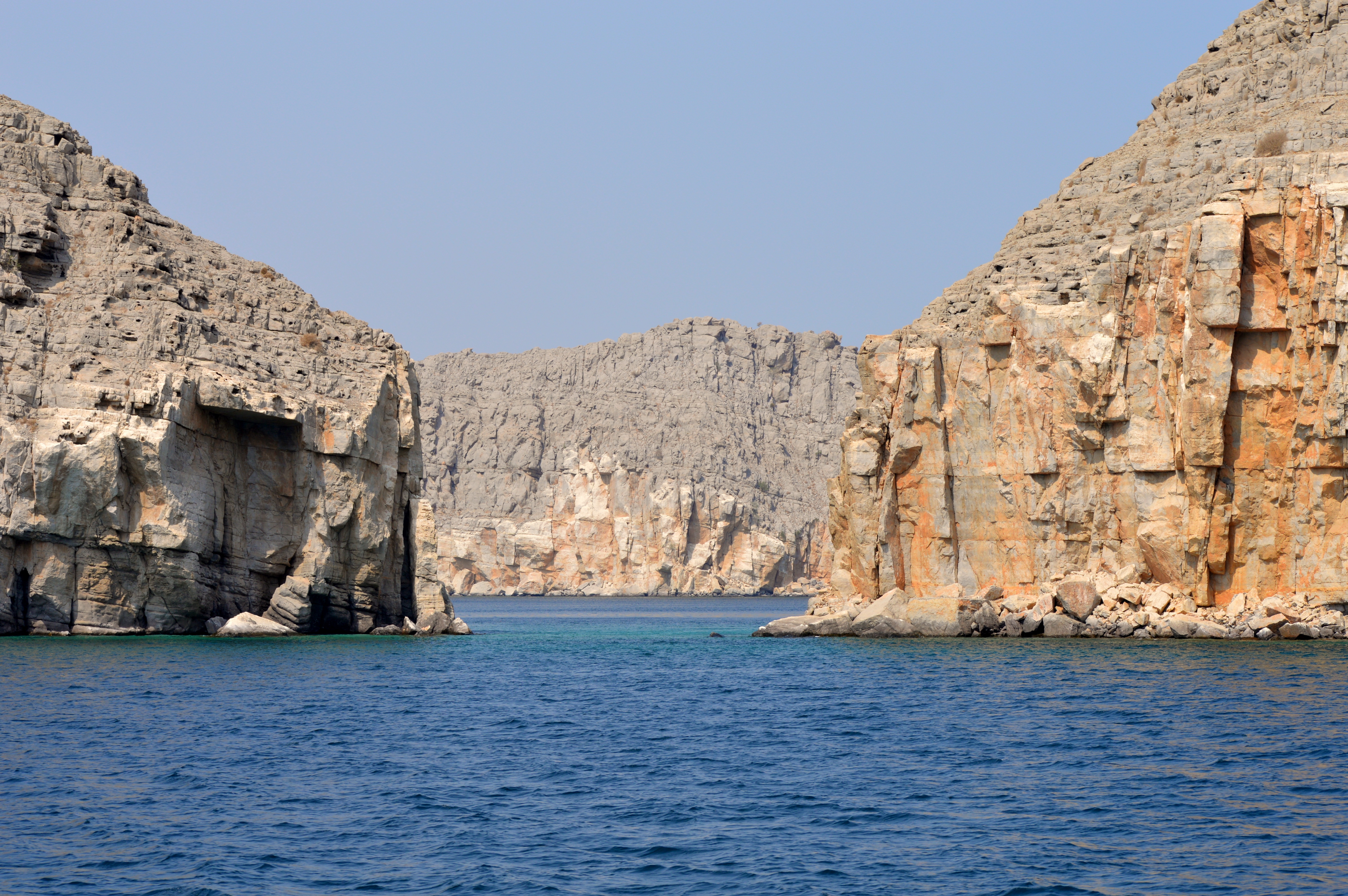
In a small, windowless room in Northern Virginia, a desk officer stares at a satellite image of the Iranian plateau. The colors are muted—ochre, slate, and a dusting of white on the Alborz peaks. To the officer, these are coordinates, potential enrichment sites, and transit corridors. But look closer. If you could zoom in past the resolution of the lens, past the concrete of the Natanz facility or the hulls of the speedboats in the Strait of Hormuz, you would find a ghost.
It is the ghost of a 1953 street scene in Tehran. It is the lingering scent of tear gas from 1979. It is the specific, sharp grief of a family in Isfahan whose son didn't come home from the front lines of a war that ended thirty-five years ago.
Washington has spent nearly half a century trying to solve Iran like a Rubik’s Cube. The American approach assumes that if you just twist the right side—sanctions—and align the top—diplomatic isolation—the colors will eventually match. But the cube is rigged. Every time a new administration sits down at the table, they find the stickers have been moved.
We treat the relationship as a series of technical hurdles. We talk about centrifuges. We debate the exact diameter of a missile’s nose cone. We argue over the "breakout time" as if it were a digital countdown on a kitchen appliance. These are facts. They are measurable. They are also, in many ways, the least important part of the story.
The real conflict isn't happening in the vacuum of a laboratory. It is happening in the friction between two wildly different versions of reality.
The Weight of the Long Memory
Imagine you are an Iranian official. You aren't necessarily the caricature often portrayed on the evening news. You might be a pragmatist, a veteran of the brutal eight-year war with Iraq. You remember when the world cheered while chemical weapons rained down on your soldiers. You remember the USS Vincennes accidentally shooting an Iranian civilian airliner out of the sky in 1988, and the United States subsequently giving a medal to the ship’s commander.
To you, the "International Order" isn't a set of fair rules. It is a fence designed to keep you in.
Now, shift the lens. Imagine you are a policymaker in D.C. You see a regime that hangs dissidents from cranes, funds militias that have killed American troops, and calls for the erasure of allies from the map. You see a bully that only understands the language of a clenched fist.
Both sides are working from a script written in blood and betrayal. This isn't just a "foreign policy puzzle." It is a psychological deadlock. When the U.S. offers a hand, Iran sees a hidden blade. When Iran makes a concession, the U.S. sees a desperate ploy to buy time.
The Sanctions Trap
We have become addicted to the "maximum pressure" model. It feels productive. We pass a bill, we sign an executive order, and we watch the Iranian rial tumble. We see the statistics: oil exports dropping, inflation soaring past 40 percent, the middle class evaporating.
In a briefing room, this looks like leverage. On the ground in Tehran, it looks like a father who can no longer afford his daughter’s asthma medication.
Sanctions are a blunt instrument. They are designed to make the population so miserable that they force the government to change its ways. But history suggests a different outcome. Often, these measures just thin the ranks of the moderate reformers and give the hardliners a perfect scapegoat for their own corruption.
When the lights go out or the shelves go bare, the person in the street doesn't always blame their own leaders. Sometimes, they blame the distant superpower that is actively trying to starve their economy. We are trying to win a marathon by breaking the runner's legs, then wondering why they won't agree to our terms of the race.
The Proxy Maze
The geography of the conflict is a shifting sandscape. It isn't fought on a traditional battlefield. It is fought in the alleys of Baghdad, the mountains of Yemen, and the suburbs of Beirut.
Iran’s "Forward Defense" strategy is a masterclass in asymmetric survival. They know they cannot win a conventional war against the most powerful military in human history. So, they don't try to. Instead, they build a web. They find the disenfranchised, the angry, and the forgotten across the Middle East. They provide them with drones, cash, and a sense of purpose.
This turns every regional flare-up into a potential trap for Washington. If the U.S. strikes back at a militia in Iraq, it risks a broader war. If it stays quiet, it looks weak.
The invisible stakes here are human lives caught in the middle. We speak about "proxies" as if they are remote-controlled robots. They aren't. They are local actors with their own grievances, their own histories, and their own agendas. Iran provides the spark, but the fuel was already there, piled high by decades of regional instability.
The Nuclear Mirage
Why does Iran want a nuclear program? If you ask a hawk, the answer is simple: to destroy Israel and dominate the region. If you ask a dove, the answer is: for energy and medical research.
The truth is likely much more boring and much more dangerous. It is about insurance.
Look at the neighbors. Libya gave up its nuclear program; Gaddafi ended up dead in a drainage pipe. Ukraine gave up its Soviet-era arsenal; it is currently being dismantled by an invasion. North Korea kept its nukes; its leader gets summits with American presidents.
In the cold logic of survival, the nuclear threshold is the only thing that guarantees you won't be the next target for "regime change." For the leadership in Tehran, the program isn't a weapon—it’s a life jacket.
This is why negotiations are so agonizingly slow. We are asking them to take off the life jacket while they believe the water is shark-infested. We think we are negotiating a treaty. They think they are negotiating their existence.
The Generational Shift
The most profound change isn't happening in the halls of the UN. It is happening in the cafes and bedrooms of Tehran and Mashhad.
Over 60 percent of the Iranian population is under the age of 30. They don't remember the revolution. They don't care about the grievances of 1953. They want high-speed internet, jobs, and the freedom to wear what they want. They are the most pro-Western population in the Middle East, living under one of its most anti-Western governments.
This is the great irony of American policy. By painting Iran with a broad brush—labeling it an "Axis of Evil" or a "Terrorist State"—we often alienate the very people who are most likely to change the country from within.
When we threaten to "bomb them back to the Stone Age," we aren't just threatening the clerics. We are threatening the young woman who wants to be a tech entrepreneur and the student who stayed up all night watching American movies on a VPN.
The Cost of Certainty
The primary failure of Washington’s policy isn't a lack of intelligence. It is a lack of imagination.
We have spent forty years convinced that the "next big thing" will fix the Iran problem. The next round of sanctions. The next covert operation. The next election. We are always one move away from a checkmate that never comes.
We forget that Iran is not a project to be finished. It is a nation of 88 million people with a civilization that stretches back millennia. They were an empire when our ancestors were living in mud huts. That pride is a powerful, combustible force.
When we approach the negotiating table with a list of demands and no understanding of the other side’s dignity, we have already lost. Policy without empathy is just arithmetic. And you cannot solve a human tragedy with math.
The Unseen Path
There is no "win" condition here. There is no parade. There is no moment where the Iranian leadership walks out and says, "You were right, we were wrong, we give up."
The goal should not be victory. The goal should be management.
It is about finding the small, quiet spaces where interests align. It is about acknowledging the trauma of the past without being held hostage by it. It requires a level of patience that doesn't fit into a four-year election cycle or a twenty-four-hour news loop.
We are terrified of the "slippery slope" of engagement. We fear that talking to our enemies makes us look complicit in their crimes. But the alternative—the endless cycle of threats, assassinations, and economic warfare—hasn't made the world safer. It has only made the walls higher.
The Empty Chair
At the end of the day, foreign policy is just a collection of people making choices based on fear.
The desk officer in Virginia goes home. The Iranian diplomat in Geneva checks into a hotel. The mother in Tehran tucks her children into bed.
Somewhere in the middle of all that noise is the truth: we are two nations staring at each other across a canyon of our own making. We are shouting across the void, and the echoes are coming back as threats.
The map of the Middle East is covered in lines we drew ourselves—borders, red lines, zones of influence. But the most important line is the one we refuse to cross: the line between "us" and "them," between the monster we've created in our heads and the complex, hurting, stubborn reality of a people who aren't going anywhere.
Until we learn to see the person behind the centrifuge, the puzzle will remain unsolved. The pieces are all there on the table. We just have to stop trying to force them into a shape they were never meant to take.
The sun sets over the Alborz mountains, casting long, jagged shadows across the city. The lights of Tehran flicker on, millions of them, each one a life, a story, a defiance. The satellite doesn't see the light; it only sees the heat. And that is exactly the problem.
Would you like me to dive deeper into the specific history of the 1953 coup to show how it still dictates the vocabulary of today's negotiations?