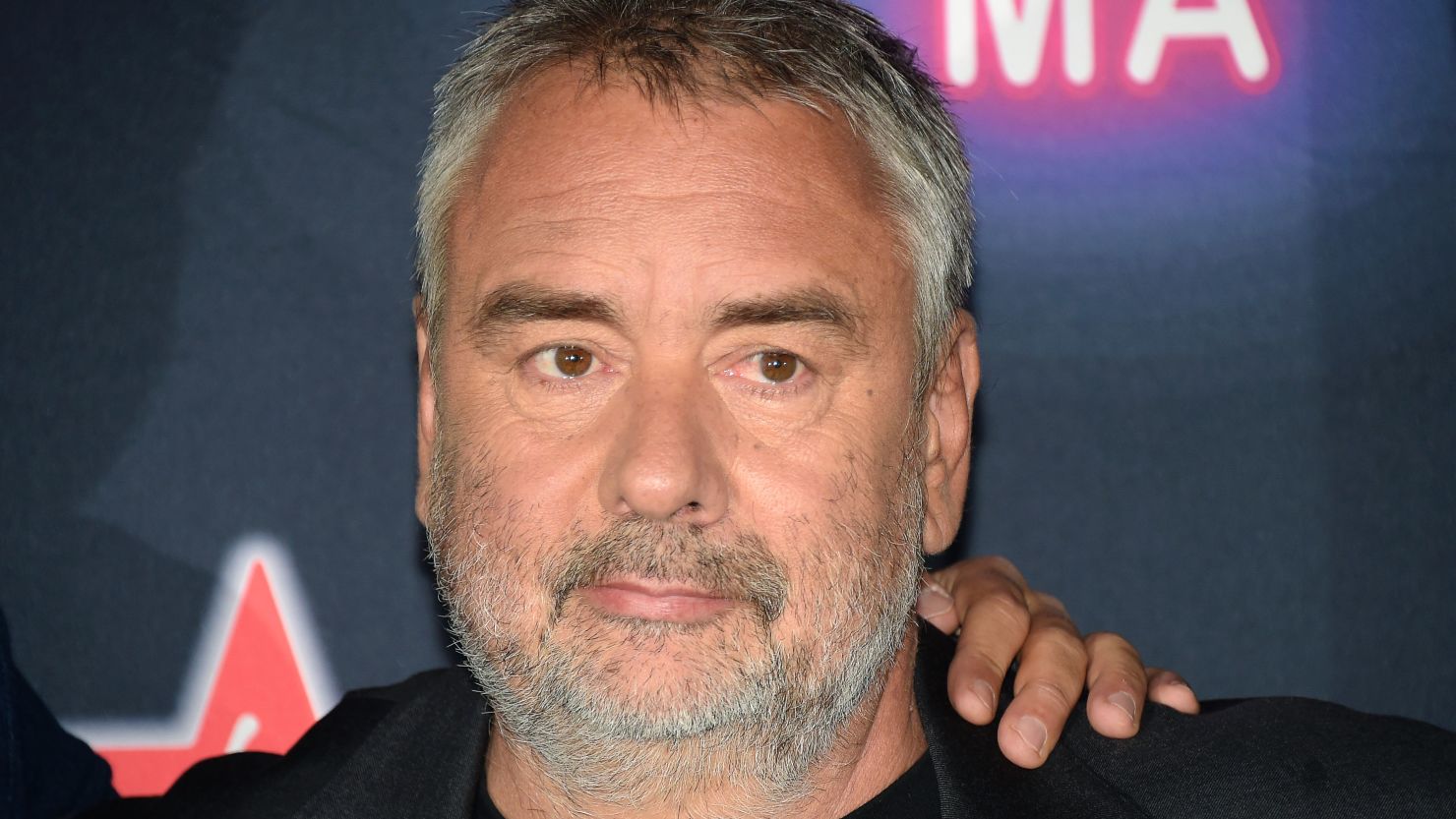
Luc Besson is betting his legacy on a monster. With his upcoming adaptation of Dracula, the French director isn't just revisiting a Victorian ghost story; he is attempting to dismantle the traditional horror framework to center the narrative on the creature's internal agony. This isn't a film about a hunter tracking prey. It is a high-budget, hyper-stylized exploration of eternal grief. By casting Caleb Landry Jones as the Count, Besson signals a departure from the suave, predatory aristocrat of the past. He is hunting for something more raw and pathetic.
The project arrives at a precarious moment for Besson’s production house, EuropaCorp. After years of legal battles and fluctuating box office returns, the director needs a definitive hit. But rather than playing it safe with a standard jump-scare flick, he is leaning into the "romantic monster" archetype that Bram Stoker hinted at but never fully embraced. This version of Dracula isn't an embodiment of evil. He is a victim of time and a broken heart, a shift that turns the classic Van Helsing dynamic on its head.
The Architecture of a Gothic Fever Dream
Besson’s visual language has always been maximalist. From the neon grime of The Fifth Element to the fluid action of Leon, he prioritizes the "look" as a narrative tool. In this new Dracula, the production design serves as a physical manifestation of the Count’s decaying psyche. We are moving away from the dusty, cobweb-laden castles of the 1930s Universal era. Reports from the set suggest a sprawling, ornate environment that feels more like a gilded cage than a lair.
The costumes and lighting are designed to evoke the Belle Époque, a period Besson knows well. By setting the emotional core in the late 19th century, he captures the friction between ancient superstition and the rising tide of modernity. This Dracula isn't hiding in the shadows; he is drowning in the opulence of his own immortality. The camera work reportedly mimics this suffocating luxury, using tight close-ups and saturated colors to make the audience feel the weight of the character’s unending life.
Casting the Fragile Vampire
Choosing Caleb Landry Jones was the first major signal that this would be a different kind of vampire movie. Jones has built a career on playing characters who exist on the fringes of stability. He possesses a nervous, electric energy that contrasts sharply with the stoic stillness of Christopher Lee or the brooding handsomeness of Gary Oldman.
Besson is utilizing Jones's ability to appear physically vulnerable. This Dracula is lean, almost skeletal, and visibly burdened by his condition. The "monster" here is less about the fangs and more about the isolation of being the last of a kind. Christoph Waltz, cast as the priest, provides the necessary grounded foil. The conflict between them is less about silver stakes and more about the theological implications of a soul that refuses to depart. It is a battle of philosophies staged in the ruins of a Transylvanian estate.
Why the Sympathetic Monster Matters Now
The shift toward "taking the side of the monster" isn't just a stylistic choice. It reflects a broader cultural trend in how we consume myth. In the original 1897 novel, Dracula was a "xenophobic" threat—the outsider coming to pollute London’s bloodline. Today, that narrative feels dated and crude. Modern audiences find more resonance in the idea of the misunderstood outcast.
Besson is tapping into the concept of the "anti-villain." By focusing on the trauma that created the monster—the loss of his wife, the rejection by God—the film asks the audience to complicitly support his survival. This flips the moral script. When the villagers arrive with torches, we aren't rooting for the heroes; we are mourning the interruption of a man’s private sorrow. This perspective is risky. It threatens to strip the character of his menace, but Besson seems convinced that the horror lies in the loneliness, not the kill count.
The Financial Stakes of French Cinema
Beyond the artistic merit, there is a cold business reality behind this production. The French film industry is watching Besson closely. For decades, he was the only European director who could consistently compete with Hollywood’s blockbuster machinery. Dracula represents his bid to regain that standing.
The budget is substantial, and the international distribution rights are being handled with the intensity of a high-stakes poker game. To succeed, the film must appeal to both the gore-hungry horror crowd and the prestige cinema audience. This dual requirement is often where ambitious projects fail. If it’s too "artsy," it loses the mass market. If it’s too violent, it loses the critics. Besson is walking a razor-thin line by trying to make a philosophical treatise that still functions as a popcorn movie.
Breaking the Stoker Mold
Most adaptations treat Bram Stoker’s text as a holy relic, even when they change the plot. They keep the structure of the voyage, the London setting, and the group of brave men fighting for Mina’s soul. Besson is reportedly stripping much of that away. He is narrowing the focus to the Count’s origin and his internal state.
By removing the clutter of the subplots, the film becomes a character study. This allows for a deeper dive into the mechanics of immortality. How does a mind stay intact over centuries? What happens to the concept of love when it is stretched across generations? These are the questions Besson is interested in, far more than how many milliliters of blood a vampire consumes per night. It is a deconstruction of the legend to find the man buried underneath the cape.
The Visual Evolution of the Vampire
To understand where Besson is going, one must look at where the vampire has been. The transition from the rat-like Orlok in Nosferatu to the romantic lead of Twilight shows a steady "humanization" of the creature. Besson is taking the final step in this evolution. He isn't making the vampire a "boyfriend" or a "superhero." He is making him a tragic figure in the classical sense—a person of great stature brought low by a single, catastrophic flaw.
The special effects are expected to be practical where possible. Besson has expressed a desire for the "tangible," using makeup and prosthetics to show the physical toll of vampirism. This grounded approach to the supernatural helps maintain the emotional stakes. If the monster looks real, his pain feels real. When he moves, the weight of his age should be apparent in every gesture. This isn't the fast-moving, CGI-enhanced predator of modern action-horror. This is a creature of gravity and history.
The Role of Faith and Rebellion
A recurring theme in Besson’s work is the individual against a massive, unfeeling system. In Dracula, that system is the divine order. The Count’s transformation is portrayed as an act of ultimate rebellion—a refusal to accept the death of his beloved as part of a "greater plan."
This makes the film inherently blasphemous in its logic. It frames the vampire’s existence as a legitimate protest against a cruel creator. This ideological backbone gives the stylized violence a purpose. Every drop of blood spilled is a strike against the heavens. For an audience increasingly disillusioned with traditional institutions, this narrative of the ultimate rebel holds a powerful, if dark, appeal.
Navigating the Legacy of Gary Oldman
Any director tackling Dracula must contend with the shadow of Francis Ford Coppola’s 1992 masterpiece. That film also leaned into the romance, but it did so with a lush, operatic theatricality. Besson’s challenge is to find a visual language that is equally distinct but modernized.
While Coppola used old-school cinematic tricks—in-camera double exposures and shadow play—Besson is known for a more aggressive, kinetic style. The clash between this modern energy and the period setting will define the film's identity. If he can capture the frantic desperation of a soul trapped in time, he may succeed in creating the first "essential" Dracula for the 21st century.
The production is a gamble on the idea that we are ready to stop fearing the dark and start empathizing with what lives within it. By stripping away the villainy and replacing it with a profound, agonizing humanity, Besson isn't just making a movie; he is attempting to reclaim the most overused character in fiction. He is betting that there is still something new to say about the man who lived forever, provided we are willing to look at him through the lens of his own sorrow.
You should watch the casting choices in the supporting roles as they are announced; they will reveal whether this is a localized French production or a global play for the mainstream.