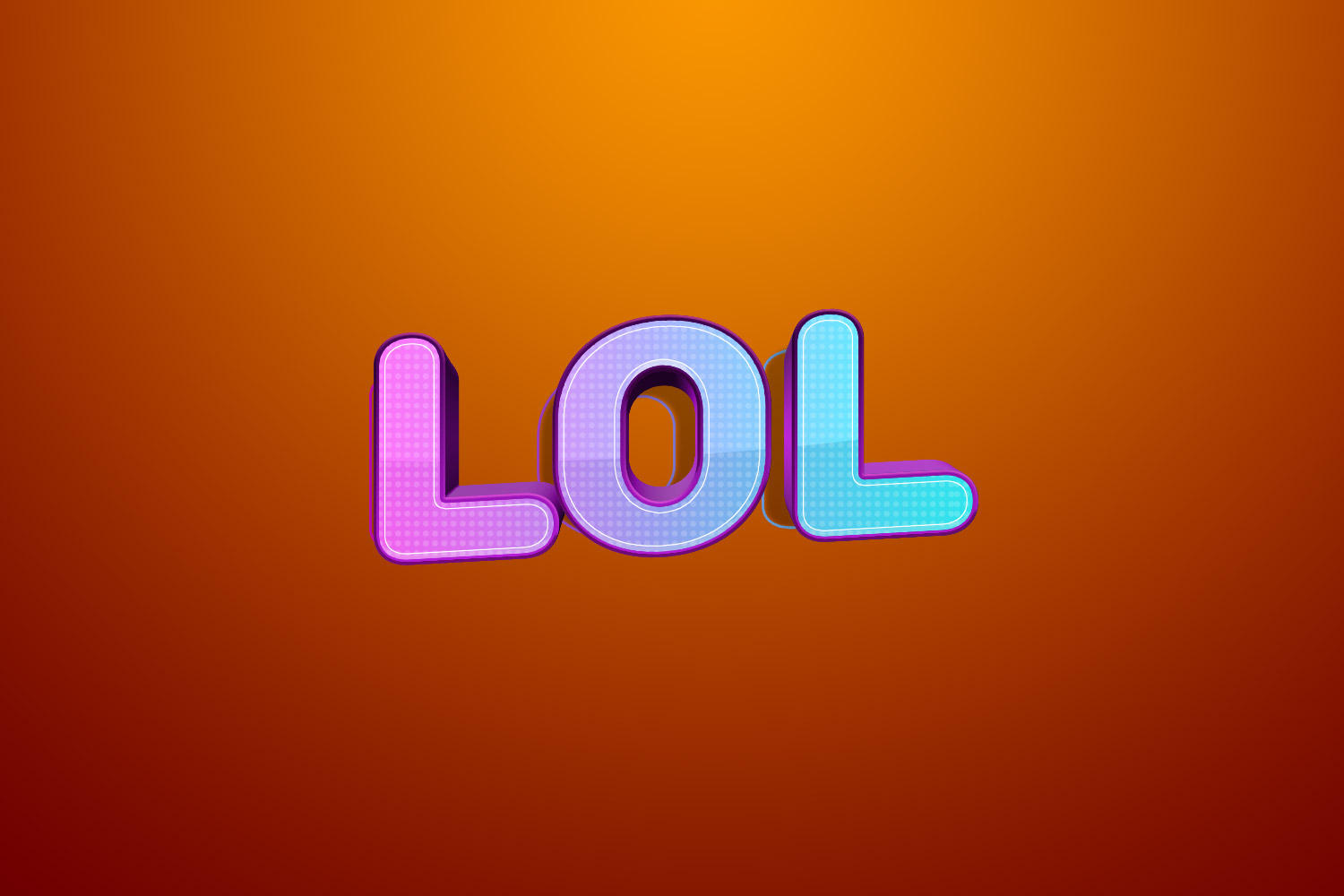
You see it everywhere. It's in your work Slacks, your family group chats, and plastered across every corner of the internet from TikTok comments to dusty old forums. LOL. It stands for "laughing out loud," obviously. But if you’ve been online for more than five minutes, you know that almost nobody using "lol" is actually physically laughing.
It’s a lie. A tiny, harmless, linguistic lie that we all agreed to tell each other decades ago.
The reality of what lol means today is way more complex than just a simple acronym. It’s become the "period" of the internet—a piece of emotional punctuation that stops a sentence from sounding too aggressive or dry. If I text you "I'm on my way," I might sound like I'm rushing or annoyed. If I text "I'm on my way lol," suddenly I'm chill. I'm relaxed. I'm definitely not mad that you're making us late again.
The Short, Weird History of LOL
Believe it or not, we can actually trace this back. Wayne Pearson, a Canadian programmer, is widely credited with the first recorded use of "lol" in the early 1980s on a digital bulletin board system called Viewline. He didn’t mean it as a casual filler. He actually laughed so hard at a joke that he had to tell people.
Back then, the internet was slow. Real slow. Every character cost time and effort. You didn't waste letters.
Fast forward to the 1990s and early 2000s, and AOL Instant Messenger (AIM) turned it into a global phenomenon. It sat alongside "ASL" (age/sex/location) and "BRB" (be right back) as the foundation of "netspeak." But as the 2010s rolled around, something shifted. Linguists like John McWhorter started noticing that lol wasn't a verb anymore. It became what he calls a "pragmatic particle."
Basically, it’s a way to signal empathy. It’s the digital equivalent of nodding your head while someone talks.
Why "LOL" Doesn't Mean You're Laughing
If you send a meme to a friend and they reply "lol," they probably didn't even crack a smile. They might have just exhaled slightly harder through their nose. In some cases, they didn't even do that.
So why do we do it?
We use it to soften the blow of digital text. Texting is inherently "flat." You lose tone, pitch, and body language. When you say "That’s fine," it can sound passive-aggressive. When you say "That’s fine lol," you’re adding a layer of "no worries" to the message. It's a social lubricant.
There's also the "lowercase lol" vs. "uppercase LOL" distinction.
- lol: I acknowledge what you said. I’m being friendly.
- LOL: That was actually kind of funny.
- LMAO / ROFL: Okay, now we’re getting into actual amusement territory.
Interestingly, younger generations have started to move away from it. On platforms like Discord or TikTok, "lol" can sometimes feel "boomer" or "millennial." Gen Z often prefers "LMAO," the skull emoji (meaning "I'm dead from laughing"), or even just "I—" (the keysmash of disbelief). But lol persists because it's the safest, most neutral option in the toolkit.
The Dark Side: Irony and Sarcasm
Then there’s the "sarcastic lol." This is where things get messy.
"I just spent $200 on groceries lol." In this context, the lol isn't about humor. It’s about pain. It’s a way of saying, "This situation is ridiculous and I’m frustrated, but I’m going to pretend it’s fine so I don't have to deal with the existential dread of inflation." It’s a coping mechanism disguised as an acronym.
Social scientists have looked into how this affects our communication. Because we use lol to mask true feelings or to "keep things light," it can sometimes lead to misunderstandings. If someone uses it at the end of a serious argument, it can feel dismissive. "I think we need to talk lol" is a nightmare sentence. It’s confusing. Is it a joke? Is it a threat? Nobody knows.
Breaking Down the Different Species of LOL
It's not just one thing. It's a whole ecosystem of meanings.
Sometimes it's a Conversation Starter. You drop a "lol" before a sentence just to warm up the room. "lol so I saw this guy today..." Sometimes it's a Conversation Killer. When you don't know what else to say, but you don't want to leave the person on "read," you hit them with the "lol." It's the polite way of saying "I have nothing to contribute to this, please stop talking."
Then you have the Self-Deprecating lol. "I'm so bad at this lol." This is a classic. It’s a shield. If you say you’re bad at something and add the laugh, nobody can judge you for being bad at it because you already "admitted" it was funny. It takes the power away from any potential critics.
Does It Translate?
Every culture has its own version. In Spanish, it’s "jajaja." In Thai, it’s "55555" because the number five is pronounced "ha." In Japanese, it’s "www" (from wara, meaning to laugh), which eventually looks like a field of grass, leading to the slang "kusa."
The fact that every language developed its own "lol" proves how much humans need a way to signal "I'm being friendly/joking" in written form. We aren't built to communicate solely through silent, static text. We need the "lol" to fill the gaps.
How to Use LOL Without Looking Out of Touch
If you're worried about how you're coming across, there are a few unwritten rules that have solidified over the last decade.
First, don't overdo it. Using lol at the end of every single sentence makes you look nervous or like you're trying too hard to be liked. It loses its "softening" power and just becomes noise.
Second, pay attention to the platform. In a professional email? Maybe avoid it. In a LinkedIn message? Use with extreme caution (usually only if the other person starts it). In a text to your crush? It’s a high-stakes game. Too many "lols" make you look uninterested; too few make you look cold.
Third, acknowledge the "New LOL." Currently, the most "modern" way to express laughter isn't a word at all—it's the Loudly Crying Face emoji (😭) or the Skull emoji (💀). If you see someone reply to a joke with a row of skulls, don't worry. They aren't threatening you. They just think you're hilarious.
The Evolution Continues
Language never stays still. Words like "gay" or "awful" meant completely different things 200 years ago. lol is undergoing that same transformation in real-time. It started as a specific description of a physical action (laughing) and turned into a grammatical marker of intent.
It’s possible that in another 20 years, lol will be gone, replaced by something even more efficient. Or maybe it will become an official part of formal grammar. Imagine a world where a legal contract ends with "Terms and conditions apply lol." (Let's hope not).
Ultimately, when you ask what lol means, the answer is: whatever you need it to mean to make the person on the other side of the screen feel comfortable.
Actionable Takeaways for Digital Communication
- Audit your usage: Check your last ten texts. If you used "lol" in more than five of them, try replacing a few with actual punctuation. See how it changes the vibe.
- Match the energy: If you’re talking to someone who doesn't use slang, keep the "lols" to a minimum. If they use it constantly, feel free to lean in.
- Use it for clarity, not as a crutch: If a sentence feels mean or sharp, try rewriting it rather than just slapping a "lol" on the end to fix it.
- Understand the "Skull" shift: If you’re communicating with Gen Z, don't be offended by 💀 or 😭. Treat them as the modern "LOL."
- Keep it lowercase: Unless you are genuinely surprised or actually laughing, lowercase "lol" is the standard for casual conversation. Save the caps for the big moments.