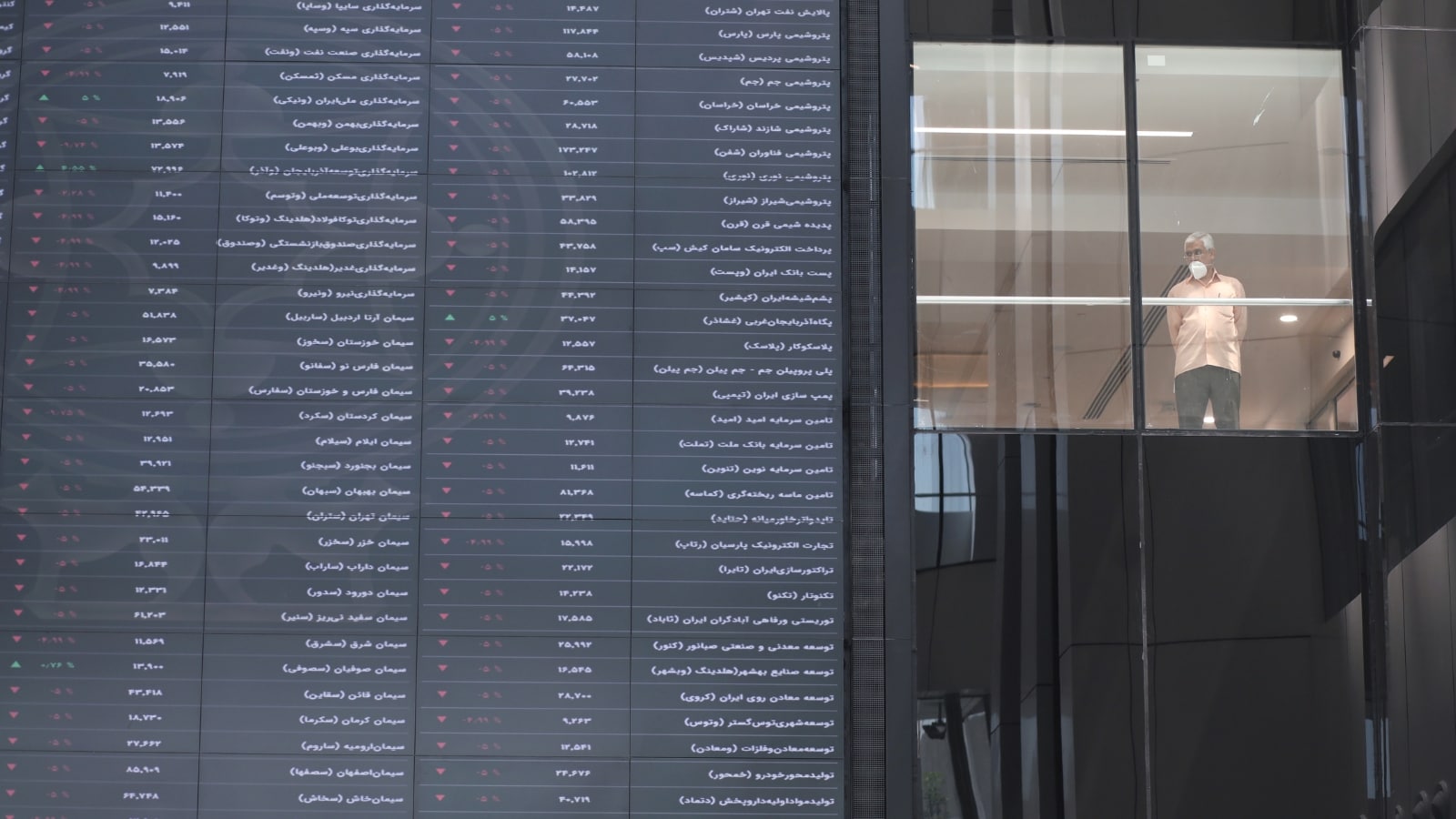
The Friday Night Clearance
The fluorescent lights in the Canary Wharf office don't flicker; they hum at a frequency just high enough to be ignored until the room goes silent. It was a Tuesday when the memo arrived, but for Sarah, a middle-manager who had spent twelve years reconciling international settlements, it felt like a cold Friday evening. The document didn't use her name. It didn't use any names. Instead, it spoke of "lower-value human capital" and the "optimization of operational expenditure."
Sarah looked at her hands. They were the same hands that had typed through the 2008 crash, the same hands that had navigated the frantic uncertainty of the pandemic. Now, according to a spreadsheet she wasn't allowed to see, those hands were a liability.
The UK banking sector is currently undergoing a silent, tectonic shift. Major institutions are no longer just looking to shave margins; they are looking to delete the very concept of the "entry-level" or "routine" employee. By integrating sophisticated large language models and automated processing units, banks are targeting the roles they have quietly labeled as low-value. But value is a fickle metric. When a bank executive looks at a balance sheet, they see a salary, pension contributions, and a desk. They don't see the institutional memory of the woman who knows exactly why a specific client in Singapore always forgets their tax ID.
The Ghost in the Spreadsheet
We often think of automation as a giant mechanical arm swinging through a factory floor. In the world of high finance, it is much quieter. It looks like a software update.
Consider a hypothetical clerk named David. David’s job is to scan loan applications for inconsistencies. He’s good at it. He notices when a signature looks rushed or when a business’s reported revenue doesn't quite match the local economic climate. He’s a human filter. To the bank’s new AI-driven strategy, David is a bottleneck. An AI can process ten thousand applications in the time it takes David to sip his lukewarm coffee.
The bank’s logic is cold and mathematically sound. If a machine can perform a task with 98% accuracy for 0.01% of the cost, the 2% error rate is simply a "cost of doing business." It is cheaper to pay for the occasional mistake than it is to pay for David’s life. This isn't just a change in tools. It is a fundamental rewriting of the social contract between the City of London and the people who keep its gears turning.
The Myth of the Value Ladder
The phrase "lower-value human capital" suggests a ladder. The idea is that if you are at the bottom, you simply need to climb higher to where the air is safer. Banks argue that by removing "drudgery," they are freeing staff to focus on "high-value advisory roles."
This is a convenient fiction.
Skills are not developed in a vacuum. You don't become a master navigator without first learning how to scrub the deck. In the banking world, those "low-value" roles were the training grounds. They were where young graduates and career-switchers learned the texture of the industry. They learned how money moves, how people lie, and how the system breaks. By amputating the bottom rungs of the career ladder, banks are creating a gap that no amount of "upskilling" can bridge.
If you remove the junior analysts today, where will the senior directors come from in ten years? You cannot manage a system you don't understand from the ground up. We are witnessing the cannibalization of the future for the sake of the quarterly earnings report.
The Emotional Tax of Efficiency
There is a specific kind of exhaustion that comes from competing with an entity that never sleeps, never eats, and doesn't have a mortgage. In offices across London, Bristol, and Edinburgh, the atmosphere has changed. It’s a subtle tightening of the chest when a new "productivity tool" is announced.
I remember talking to a teller who had been moved to a back-office processing role. She told me that the hardest part wasn't the work itself; it was the feeling of being hunted by an algorithm. Every second of her day was tracked. If she spent too long on a complex case, her "efficiency score" dipped. The AI wasn't just a tool she used; it was her supervisor, her competitor, and eventually, her replacement.
She wasn't a "lower-value" person. She was a mother, a local choir member, and a person who had given fifteen years to an institution that now viewed her as a line item to be erased. When we talk about "human capital," we are dehumanizing the very people who built the trust these banks rely on. Trust is not a digital commodity. It is built in the small interactions, the "unnecessary" conversations, and the human empathy that an AI cannot simulate.
The Logic of the Machine
The mathematics of this transition are undeniably impressive. Let’s look at the raw mechanics of the shift.
- Processing Speed: $S = \frac{D}{t}$, where $D$ is data volume and $t$ is time. For a human, $t$ is limited by biology. For an AI, $t$ approaches zero.
- Cost Reduction: A typical back-office role in the UK costs roughly £35,000 to £45,000 annually, including benefits. An API call for a cloud-based AI costs fractions of a penny.
- Error Distribution: While humans make "tired" errors, AI makes "systemic" errors. The bank bets that systemic errors are easier to patch with code than tired errors are to fix with culture.
But these equations ignore the "Negative Externalities"—the costs borne by society rather than the firm. When thousands of "lower-value" workers are displaced, the cost of their retraining, their mental health, and their lost purchasing power falls on the taxpayer. The bank privatizes the profit of AI and socializes the cost of the human fallout.
The Invisible Stakes
What happens to the soul of a city when its largest employers stop being communities and start being server farms?
The impact ripples outward. The sandwich shop near the office closes because there are fewer people on the floor. The local trains have fewer commuters. The sense of professional identity—the pride of "working at the bank"—evaporates. We are trading the social fabric of our professional lives for a few extra basis points on a profit margin.
There is a chilling irony in the fact that the very people who are being replaced are often the ones who are most loyal to these institutions. They are the ones who stayed when the bonuses were cut, the ones who believed in the "corporate values" printed on the breakroom posters. Now, they are discovering that "values" are subject to the same depreciation as a laptop or a fleet of cars.
The Ghost in the Machine
We are told that this is progress. We are told that this is the inevitable march of technology, as unstoppable as the tide. But the tide doesn't make choices. People do.
The executives making these decisions are often insulated from the consequences. They live in a world of "high-value" strategy, far removed from the terror of a forty-five-year-old father wondering how he will pivot to a "tech-adjacent" career when his only skill is a deep, nuanced understanding of legacy banking systems that no longer exist.
The real danger isn't that AI will become too human. The danger is that we are becoming too much like the machines we admire—valuing only what can be measured, optimized, and scaled. We are stripping away the "noise" of humanity, forgetting that the noise is actually the music.
The Breaking Point of Trust
Banking is, at its core, a business of faith. We give them our money because we trust they will guard it. We work for them because we trust they will reward our labor. When a bank publicly declares that a significant portion of its workforce is "lower-value," it shatters that faith.
It tells the remaining employees that they are simply the "not-yet-automated." It tells the customers that their problems will eventually be handled by a script that cannot feel regret or offer a genuine apology. It creates a vacuum where the human element used to be.
Sarah still goes to the office, for now. She trains the software that will eventually take her job. She feeds it the edge cases, the weird anomalies, and the nuances of her decade of experience. She is teaching her successor how to think, and the successor doesn't even have a face.
She sits in the hum of the fluorescent lights, a "lower-value" ghost in a high-value machine, waiting for the hum to stop.
The spreadsheet is almost complete. The cells are turning green. The humans are turning gray.