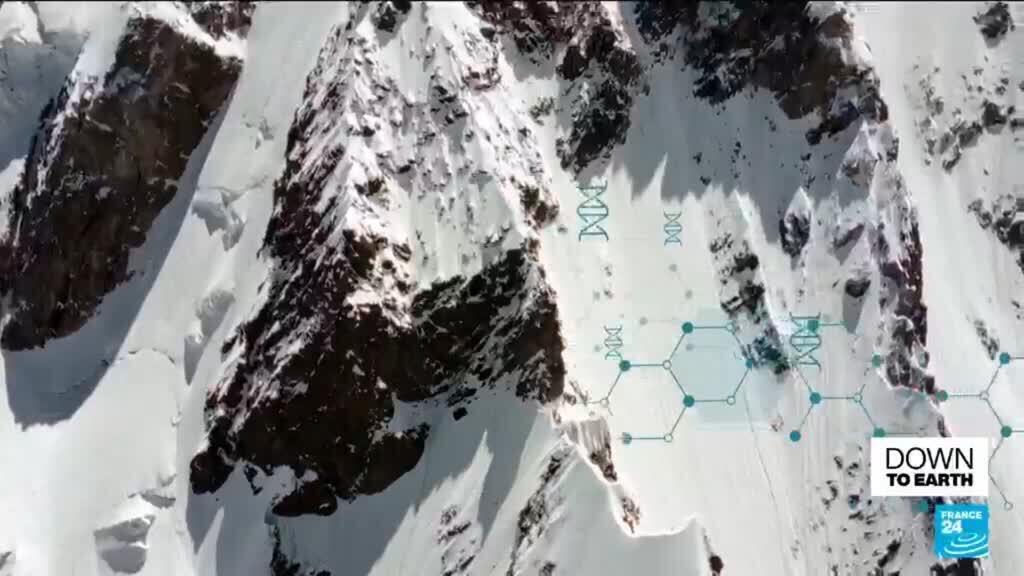
The silence at 12,000 feet is not actually silent. It is a physical weight, a pressure against the eardrums that makes you hyper-aware of your own heartbeat. When the wind drops on a high-altitude glacier, the world holds its breath. You stand on a tongue of ice that has been frozen since before the Industrial Revolution, looking down at a surface that looks like a sterile, white wasteland.
We were wrong. It is teeming with life. If you liked this piece, you should read: this related article.
For decades, we treated glaciers like the massive, inert statues of the natural world. They were scenery. They were background. We measured how fast they moved and how quickly they melted, focusing on the physics of the collapse while ignoring the biology of the architecture. But as these ice giants begin to sweat under a warming sun, a frantic group of scientists is realizing that we are losing an entire biome before we have even named its inhabitants. This isn't just about rising sea levels. It is about a mass extinction of things we never bothered to meet.
The Microscopic Cities
Imagine a city. Not one made of steel and glass, but one carved into the crystalline lattice of a glacier. Biologists once thought these high-altitude environments were "biological deserts," places too cold and nutrient-poor for anything to survive. For another angle on this event, refer to the recent coverage from AFAR.
Then they found the cryoconite holes.
A cryoconite hole is a small, water-filled depression on the surface of the ice. It forms when dark dust—soot from distant wildfires, pulverized rock, or volcanic ash—settles on the glacier. Because the dust is darker than the surrounding ice, it absorbs more solar radiation. It heats up. It sinks. It drills a perfect, cylindrical well into the frozen surface, creating a tiny, isolated aquarium.
Inside these holes, life doesn't just survive; it thrives. Bacteria, algae, and even microscopic animals like rotifers and tardigrades (the legendary water bears) build complex ecosystems in a few inches of meltwater. They are the pioneers of the ice. These organisms have evolved specialized proteins that act like antifreeze, preventing their internal fluids from crystallizing and tearing their cells apart. They are the toughest residents on Earth, living in a neighborhood that tries to kill them every single night when the sun goes down and the water turns back to solid glass.
The Stake in the Ice
Why does a microscopic worm on a remote glacier in Kyrgyzstan matter to a person living in a coastal city or a suburban sprawl? Because these organisms are the planetary engineers of the cryosphere.
They change the math of the melt.
When algae bloom on the surface of a glacier, they turn the ice pink, green, or deep purple. This "watermelon snow" isn't just a visual curiosity. It lowers the albedo—the reflectivity—of the ice. Clean white snow reflects about 90% of the sun’s energy back into space. Algae-covered ice might only reflect 60%. The darker the ice becomes because of biological activity, the faster it melts.
We are currently witnessing a feedback loop that remains largely absent from our most popular climate models. The warmer it gets, the more the algae grow. The more the algae grow, the darker the ice gets. The darker the ice gets, the more heat it absorbs.
We are in a race to document these habitats because they are the "black box" of the glacier. If we don't understand how the biology is accelerating the physics, we can't accurately predict how much time our coastal cities have left.
The Human Element in the Cold
Dr. Sarah (a composite figure based on the researchers currently trekking into the Andes and the Himalayas) spends her days on a surface so bright it can burn the skin off your nose in twenty minutes if you forget your zinc. She doesn't look like a traditional lab scientist. She looks like a high-altitude mountaineer, draped in Gore-Tex and hauling a forty-pound pack filled with sterile vials and ice drills.
She describes the feeling of sampling a glacier that is scheduled to disappear within her lifetime as "performing an autopsy on a living patient."
There is a specific kind of grief that comes with this work. You hike for three days to reach a sampling site, only to find that the glacier has retreated another fifty meters since the previous season. The "little-known habitats" she studies—the cryoconite holes and the subglacial streams—are vanishing into the valleys below, turning into generic river water and losing their unique chemical signatures forever.
"Every time a glacier disappears," she says, "it’s like a library burning down. But in this case, we haven't even finished the catalog. We are losing species that might have held the key to new antibiotics or enzymes that could function at near-freezing temperatures."
The Invisible Stakes
The scale of the loss is staggering. In the European Alps, glaciers have lost more than 50% of their volume since 1850. In Glacier National Park in the United States, only 26 of the 150 glaciers that existed in the late 19th century remain.
Consider the statistics of the "Third Pole"—the Hindu Kush-Himalaya region. It contains the largest reserve of freshwater outside the polar regions. Over 1.4 billion people depend on the water that flows from these heights.
- 200 million: The number of people who live in the immediate shadow of the Himalayan glaciers.
- $1.6 trillion: The estimated economic value of the ecosystem services provided by these ice sheets annually.
- 36%: The minimum amount of ice that will be lost in the region by 2100, even if we meet the most ambitious global warming targets.
These numbers are cold. They are dry. But the reality is a village in Nepal watching their local stream turn into a seasonal torrent that washes away their crops, followed by a bone-dry summer because the "water tower" in the sky has run out of storage.
The microbes in the ice are the first to feel the shift. They are the canaries in the coal mine, or more accurately, the bacteria in the ice cube. When the melt becomes too rapid, the cryoconite holes are washed away. The stable, circular wells are replaced by rushing surface rivers that flush the entire ecosystem off the mountain and into the silt-heavy valleys where they cannot survive.
The Engineering of Survival
To capture this data before it’s gone, scientists are turning to technologies that feel like they belong in a sci-fi novel.
They are using drones equipped with multispectral cameras to map the "bio-albedo" of entire mountain ranges. They are deploying environmental DNA (eDNA) kits, which allow them to scoop up a single liter of meltwater and identify every organism that has touched that water by the genetic breadcrumbs they leave behind.
But technology has its limits. A drone cannot feel the softness of the ice or hear the ominous "calving" sound of a glacier breaking apart from the inside. It cannot capture the human intuition required to know which crevasse holds a secret and which holds a dead end.
There is a deep irony in our current scientific moment. We are using the most advanced tools ever created to document the collapse of the most ancient structures on the planet. We are like historians trying to record a language as the last three speakers are in the hospital.
The Moral Weight of the Ice
We often talk about the environment as something "out there"—a place we visit on the weekends or see in a documentary. But the glaciers are connected to our lungs and our dinner tables. The soot from a coal plant in Ohio or a forest fire in Siberia travels across the globe and lands on a glacier in the Pamir Mountains. It feeds the algae. It melts the ice. It changes the pressure of the atmosphere.
The story of the glacial habitats is not a story of a remote frontier. It is a story of intimacy. It is proof that there is no such thing as a "remote" location on a closed-loop planet.
You can see it in the eyes of the researchers when they pack up their gear at the end of a season. There is a sense of urgency that borders on desperation. They are no longer just documenting the world; they are witnessing its transformation. They are the last generation that will see these glaciers in their current form.
Every vial of water they collect is a time capsule.
One day, someone will look at these samples in a museum and wonder what it felt like to stand on a mile-thick sheet of ice and realize it was alive. They will wonder if we knew what we were losing. They will wonder why we didn't move faster.
The ice is not a silent spectator. It is a record-keeper. It has trapped the air of the 1700s, the dust of the Roman Empire, and the chemicals of the 1950s. Now, it is recording our own era—the era of the Great Thaw.
The microbes in the cryoconite holes will continue to drill their tiny wells as long as the sun shines and the ice remains. They don't know the world is changing. They only know the light and the cold. It is up to us to decide how much of their world—and ours—is left when the sun reaches its zenith tomorrow.
The blue ice is waiting. But it is waiting for an end we are still writing.


