The dust is not like the dust in your attic. It is jagged, microscopic shards of glass, born from eons of meteorite impacts that pulverized the lunar crust without the softening hand of wind or water to round the edges. It clings to everything. It smells like spent gunpowder. And by 2030, a human being—flesh, bone, and a heart full of terrifying ambition—will likely be trying to brush it off their boots before stepping into a pressurized mudroom on the South Pole of the Moon.
We have spent decades looking at the Moon as a destination for flags and footprints. A place to visit, take a selfie with the Earth, and leave. But the blueprints currently circulating through space agencies and private boardroom offices aren’t for a visit. They are for a neighborhood.
The Architecture of Survival
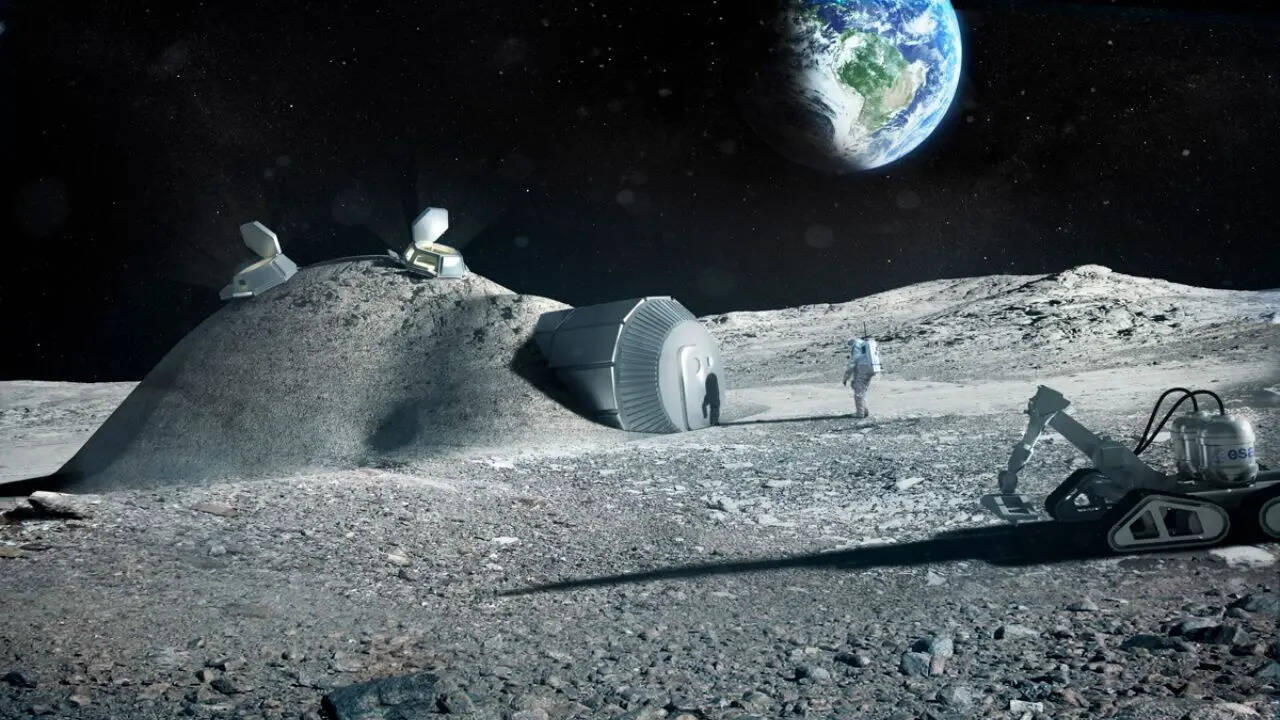
Consider a woman named Elena. She doesn't exist yet, but the engineers at NASA and the European Space Agency are already building her house. Elena is a geologist. In the year 2031, she doesn't wake up to the sound of birds, but to the hum of life-support scrubbers and the steady, artificial rhythm of a habitat buried under three meters of lunar regolith.
She lives underground because the sun, while beautiful, is a silent killer without an atmosphere to filter its rage. A solar flare on the Moon isn’t a beautiful aurora; it is a lethal dose of radiation. To survive, we aren’t building glass cathedrals. We are digging in. We are becoming cave dwellers again, using 3D printers to turn that jagged lunar dust into thick, protective shells.
The core of this "bold plan" is the Artemis program, but the logistics are more akin to building a transcontinental railroad than a simple rocket launch. It begins with the Gateway—a small space station orbiting the Moon that acts as a staging ground. Think of it as a high-altitude base camp before the final push to the summit. From there, landers will ferry crews down to the Shackleton Crater, a place of eternal shadow and slivers of ancient ice.
Water From Stone
The stakes of this mission are hidden in the shadows of those craters. We aren't going to the Moon's equator this time; we are heading for the poles because of the ice.
Water is the gold of the solar system. It is heavy. Shipping it from Earth costs thousands of dollars per liter. If we want to stay, we cannot be tethered to the Earth's well. We have to learn to mine. By 2030, the "permanent" nature of this mission relies on our ability to harvest lunar ice, melt it, and split its molecules.
Hydrogen for fuel. Oxygen for lungs.
If Elena wants to stay for six months, she has to trust that the robotic harvesters a kilometer away are successfully chewing through frozen dirt to keep her tanks full. It is a fragile chemistry set keeping her alive in a vacuum. If the machines fail, the clock starts ticking. That is the invisible pressure of lunar life: every breath is a manufactured product.
The Loneliness of the Quarter Million Miles
The technical hurdles are immense, but the psychological ones are deeper. When the Apollo astronauts looked out their windows, they saw the Earth as a vibrant, blue marble. It was a sight of awe. But for a permanent resident, that view changes.
Earth becomes a ghost.
It hangs there, twenty-four hours a day, never rising or setting from certain vantage points on the South Pole. It is a constant reminder of everything you left behind: the smell of rain, the feeling of wind on your skin, the ability to walk outside without twenty minutes of safety checks.
The human element of the 2030 plan involves more than just life support. It involves "habitation modules" designed to prevent the crushing claustrophobia of space. Designers are experimenting with high-resolution screens that mimic windows, showing forests or oceans, and lighting systems that simulate a twenty-four-hour circadian rhythm.
Why do it? Why spend billions to put Elena in a tin can under a pile of radioactive dirt?
Because the Moon is the laboratory for the rest of the universe. If we can figure out how to live in a place that actively tries to kill us every second of the day, we can live anywhere. The Moon is our training wheels. It is the place where we learn to stop being a single-planet species.
The Economy of the Vacuum
By the mid-2030s, the plan moves from survival to industry. This isn't just about science; it's about business. The Moon is rich in Helium-3, a potential fuel for clean fusion energy that is rare on Earth. There are rare earth metals sitting in the dust, waiting for a workforce that doesn't need a ride home every two weeks.
We are looking at the birth of a lunar economy. There will be "lunar-standard" time zones. There will be legal disputes over mining rights. There will, eventually, be the first child born in low gravity, a human being whose bones may never be strong enough to withstand the crushing pull of Earth's 1g.
This is the part the brochures leave out. The transition to a "permanent lunar life" means a permanent fracture in the human experience. We will become two different kinds of people: those of the Earth, and those of the High Ground.
The First Morning
Imagine Elena finishing her shift. She sits in a small common area with three other people. They drink recycled water. They eat food grown in hydroponic trays—greens that taste slightly of minerals and LED lights.
She looks at a sensor readout. It’s -170°C outside. A few meters of rock and a few centimeters of aluminum are all that stand between her and an instant, frozen end. But she isn't thinking about the danger. She's thinking about the fact that, for the first time in four billion years, there is a light burning on the dark side of the Moon that wasn't put there by a sun.
It is a porch light.
We are no longer just looking at the stars. We are moving in. The plan for 2030 isn't about a rocket ship or a lunar rover. It is about the moment we stop calling the Moon "out there" and start calling it "home."
The transition is messy. It is expensive. It is terrifyingly dangerous. But the blueprints are signed, the steel is being forged, and the dust is waiting for the first permanent broom.
The Earth is a cradle, and you cannot stay in the cradle forever.