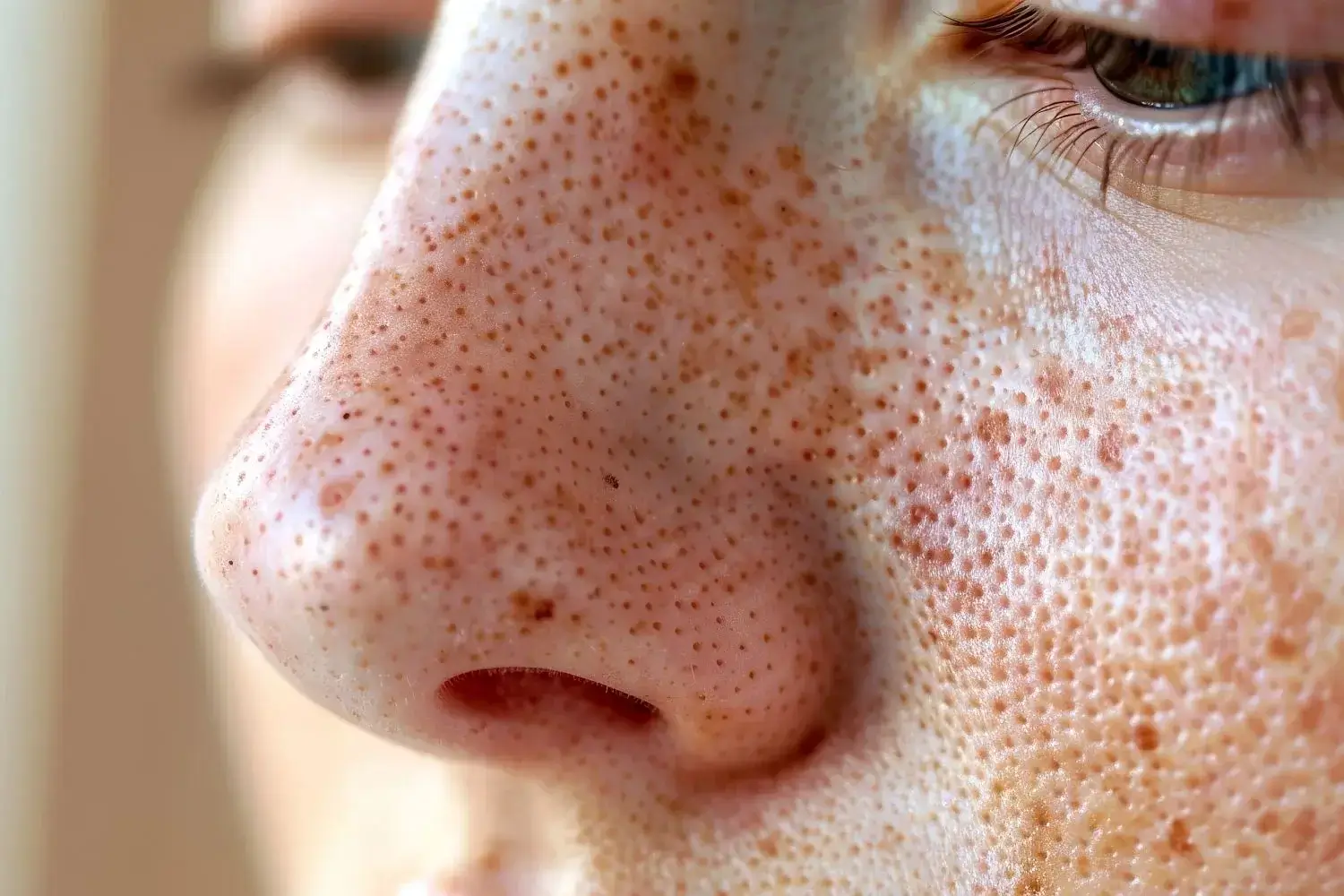
You’ve probably spent way too much time staring into a 10x magnifying mirror, wondering why your nose looks like a strawberry. It’s a common obsession. We’ve been conditioned by filtered Instagram photos and airbrushed magazine covers to believe that skin should look like smooth, poreless porcelain. But here’s the reality: pores are basically the chimneys of your skin. They have a job to do.
Honestly, the whole "large vs small pores" debate is mostly a misunderstanding of biology. Your pores aren't like doors; they don't have muscles to open and close. They are simply openings for hair follicles and sebaceous glands. Some people are born with tiny, barely-there openings, while others have more prominent ones. It’s mostly luck of the genetic draw, though age and sun damage definitely crash the party later on.
The Biology of Large vs Small Pores
So, what’s the actual difference? It usually comes down to sebum production. People with oily skin tend to have larger pores because their glands are pumping out more oil, which requires a "wider pipe" to reach the surface. If you have dry skin, your pores likely look smaller because the oil production is minimal.
Dr. Enrizza P. Factor, a clinical dermatologist, often points out that pore size is also heavily dictated by the thickness of the skin and the size of the hair follicle inside it. If you have thick, terminal hair on your face, that pore is going to be larger than the one housing a tiny vellus "peach fuzz" hair. It’s physics.
Why your pores look bigger than they used to
It’s not just your imagination. They do get bigger.
As we age, we lose collagen and elastin. Think of collagen as the scaffolding that keeps the pore walls tight and snappy. When that scaffolding sags, the pore falls open, looking more like a teardrop than a circle. This is often called "orange peel skin." It’s not that you're making more oil; it's that the skin lacks the tension to hold the pore narrow. Sun damage accelerates this significantly. UV rays eat collagen for breakfast. If you’ve spent your twenties tanning without SPF, your pores in your thirties will likely be the ones paying the price.
The "Invisible" Pore Myth
Let’s get one thing straight: you cannot "shrink" your pores permanently. Any product claiming to "erase" pores is selling you a temporary cosmetic fix. Most of these products use silicones like dimethicone to fill in the divots, creating a flat surface for makeup. It’s like using spackle on a wall. It looks great, but the hole is still there underneath.
If you have naturally small pores, you're not necessarily "better off." People with smaller pores often struggle with severe dryness and early fine lines because they lack the natural lubrication that sebum provides. On the flip side, people with larger pores often age "slower" in terms of wrinkles because their skin is constantly being moisturized from the inside out.
There's a trade-off.
What Actually Works for Pore Refinement?
If you're frustrated with the large vs small pores situation on your own face, you have to target the two main culprits: congestion and elasticity.
Chemical Exfoliation (The Game Changer)
Stop using walnut scrubs. They create micro-tears and do nothing for the inside of the pore. You need Salicylic Acid (BHA). Because BHA is oil-soluble, it can actually dive into the pore and dissolve the "glue" holding dead skin cells and oil together.
- BHA (Salicylic Acid): Best for oily types. It keeps the pore clear so it doesn't stretch out.
- AHA (Glycolic or Lactic Acid): Better for surface texture and "glow," but less effective at deep cleaning the pore itself.
- Retinoids: These are the gold standard. Tretinoin or over-the-counter retinol increases cell turnover and helps build collagen. By strengthening the "walls," the pores appear tighter.
Professional Interventions
Sometimes, over-the-counter stuff doesn't cut it.
Microneedling is a popular choice for "shrinking" the appearance of pores. By creating controlled micro-injuries, the body rushes to produce new collagen. This tightens the skin and, by extension, the pores. Chemical peels—the real deal, not the 10-minute home masks—can also deep-clean the follicle more effectively than any face wash ever could.
Misconceptions That Refuse to Die
We need to talk about steam. You’ve heard it a million times: "Steam opens your pores."
No, it doesn't.
Pores aren't windows. Heat can soften the hardened oil (sebum) trapped inside the pore, making it easier to extract, but it doesn't change the diameter of the opening. In fact, using water that is too hot can cause inflammation and broken capillaries, which actually makes the skin look worse.
And then there's the "cold water closes pores" myth. Splashing cold water on your face might slightly reduce inflammation and make the skin feel tighter for about thirty seconds, but it's a fleeting effect. It's essentially a temporary vascular reaction.
How to Manage Your Pores Based on Type
If you have large pores, your goal is debris management. Keep the oil moving. If the oil gets stuck and oxidizes, it turns into a blackhead. A blackhead is essentially a plug that stretches the pore wider. The longer that plug stays there, the more "stretched out" the pore becomes permanently.
If you have small pores, your goal is barrier protection. You don't need to be aggressive with acids. Focus on hydration so that your skin doesn't become brittle.
Wait, what about primers?
Primers are fine. But if you don't double-cleanse at night to remove those heavy silicones, you're just creating a cycle of congestion. Use a cleansing oil first, then a regular water-based cleanser. This "like dissolves like" method is the most effective way to keep large pores from looking like craters.
The Impact of Lifestyle
Stress and diet aren't just buzzwords. High-glycemic diets (lots of sugar and white bread) spike insulin, which can trigger an increase in androgen hormones. Those hormones tell your sebaceous glands to go into overdrive. More oil equals more prominent pores.
It's all connected.
Practical Steps for Better Skin Texture
- Stop the magnifying mirror habit. Nobody sees your skin from three inches away.
- Wear SPF 30+ every single day. This is the only way to prevent the collagen loss that leads to sagging, "teardrop" pores.
- Incorporate a BHA. Start twice a week. Don't overdo it or you'll wreck your moisture barrier, leading to "reactive seborrhea"—where your skin overproduces oil to compensate for being dry.
- Try Niacinamide. This B-vitamin is a powerhouse for regulating oil production and improving skin elasticity. It’s a "pore's best friend."
- Double Cleanse. If you wear makeup or sunscreen (which you should), a single wash isn't enough to get the gunk out of the "chimneys."
The large vs small pores debate usually ends when you realize that texture is human. You can optimize what you have by keeping the "pipes" clean and the "scaffolding" strong, but you'll never be a flat 2D image. And that's okay. Focus on the health of the skin tissue rather than the diameter of the openings. Clean, hydrated skin with large pores looks significantly better than "poreless" skin that is irritated, red, and flaking.
Summary of Actionable Next Steps
Start by auditing your current routine for any "pore-clogging" ingredients—look up comedogenic ratings if you're prone to breakouts. If your pores look larger lately, introduce a Retinoid at night and a dedicated Sunscreen during the day to preserve your remaining collagen. For immediate smoothing, look for a niacinamide-based serum, which works over time to normalize the pore's lining. Avoid harsh physical scrubs which can cause inflammation-induced swelling, making pores appear even more prominent.