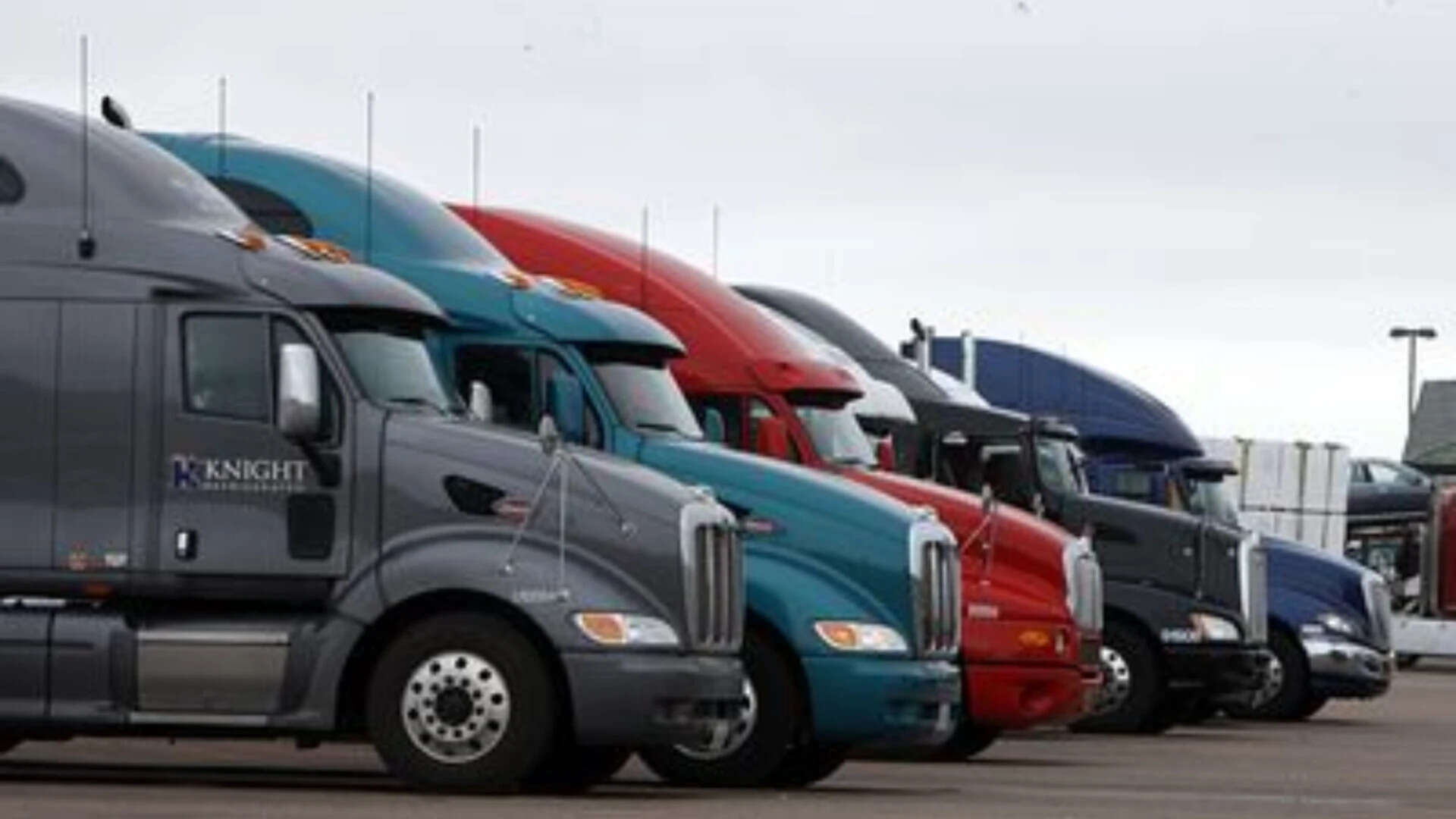
Wyoming is no longer turning a blind eye to the federal requirement that commercial truck drivers must be able to communicate in English. State troopers are now empowered to issue fines of up to $1,000 and sentence drivers to 90 days in jail if they cannot meet basic language proficiency standards during a roadside inspection. This is not a new law, but the shift toward criminalizing a lack of fluency marks a significant escalation in how states manage the delicate balance between highway safety and the desperate need for labor in the logistics sector.
The crackdown targets a specific federal regulation—49 CFR § 391.11—which mandates that any person operating a commercial motor vehicle must be able to read and speak the English language sufficiently to converse with the general public, to understand highway traffic signs and signals, to respond to official inquiries, and to make entries on reports and records. While this has been on the books for decades, enforcement has historically been a "fix-it" issue or a minor citation. Wyoming's decision to attach jail time to a linguistic deficiency changes the stakes for every trucking company hauling freight across the Interstate 80 corridor.
The Friction Between Safety and Scarcity
The trucking industry is currently gasping for air. Estimates suggest a shortage of nearly 80,000 drivers across the United States, a gap that has forced many carriers to recruit heavily from immigrant communities. These drivers are often the backbone of long-haul routes that domestic-born workers increasingly shun. By introducing the threat of incarceration, Wyoming creates a legal bottleneck that could sideline thousands of essential workers.
Safety advocates argue the move is long overdue. A driver who cannot read a "Hazmat Prohibited" sign or understand a trooper’s instructions during a brake failure is a rolling liability. The physics of an 80,000-pound vehicle do not care about cultural sensitivity. When a language barrier prevents a driver from communicating a mechanical issue to a dispatcher or emergency services, the potential for a catastrophic event increases exponentially.
Critics, however, see a different motive. They point out that "sufficient" English is a subjective standard. There is no standardized test administered on the shoulder of a highway at 2:00 AM. The determination of whether a driver is "fluent enough" rests entirely on the discretion of an individual officer. This creates a high risk for inconsistent enforcement and potential profiling, where a driver’s accent might be mistaken for a lack of technical understanding.
The Economic Toll of Discretionary Enforcement
For a small fleet owner, a $1,000 fine is a blow to the margins. A 90-day jail sentence for a driver is a death knell for the business. When a driver is pulled off the road and detained, the cargo sits. If that cargo is perishable or part of a "just-in-time" manufacturing chain, the ripple effects move through the economy rapidly.
The Wyoming Highway Patrol maintains that this is about compliance, not harassment. They argue that drivers have had years to adjust to the federal standards. Yet, the industry has relied on a "don't ask, don't tell" culture regarding language for a generation. By suddenly moving from administrative warnings to criminal penalties, the state is effectively pulling the rug out from under carriers who have spent years building their workforce under a more relaxed enforcement regime.
The Technical Reality of the English Requirement
The federal rule is more specific than many realize. A driver doesn't need to recite Shakespeare, but they must be able to perform these specific tasks:
- Interpret highway signs that are not purely symbolic, such as specific weight limits or detour instructions.
- Communicate with law enforcement during a North American Standard Inspection.
- Complete a Driver Vehicle Inspection Report (DVIR) and manage Electronic Logging Devices (ELDs).
- Describe cargo and safety equipment to inspectors or emergency responders.
When an officer conducts a stop, they are looking for functional English. If a driver cannot explain what they are hauling or where they are going, they are flagged. Under the new Wyoming protocol, that flag now leads to a courtroom rather than just a ticket.
Why This is Not Just a Wyoming Problem
Wyoming is a "bridge state." It is a critical link between the West Coast ports and the Midwest markets. If drivers begin to perceive Wyoming as a high-risk zone for criminal prosecution based on language ability, they will reroute. Rerouting adds hundreds of miles and thousands of dollars in fuel costs to every trip.
Other states are watching Wyoming's experiment. If the "jail time" deterrent leads to a measurable decrease in accidents involving non-English speaking drivers, expect Idaho, Nebraska, and Utah to follow suit. We are looking at the fragmentation of the national trucking market into "easy" and "hard" states for immigrant labor.
The legal community is already preparing for challenges. The primary argument will likely center on the Vagueness Doctrine. If the law does not provide a clear, objective measure for what constitutes "sufficient" English, it may be unconstitutionally vague. Without a standardized rubric, the difference between a free driver and a jailed driver is the subjective opinion of a state trooper.
The Compliance Gap
Many trucking companies are now scrambling to implement internal language assessments. It is no longer enough to check a CDL; carriers must verify that their drivers can handle a high-pressure interrogation by an officer.
This creates a secondary market for specialized training. We are seeing a rise in "Trucking English" courses designed to teach the specific vocabulary of the road—terms like "axle weight," "slack adjuster," and "bill of lading." However, these courses take time and money that most independent owner-operators don't have.
A Systemic Failure of Oversight
The real question is how these drivers obtained their Commercial Driver's Licenses (CDLs) in the first place. The federal English requirement is supposed to be verified at the time of testing. If a driver cannot speak English, they should not be able to pass the skills and knowledge tests.
The reality is that many states offer the written test in multiple languages or allow translators during certain portions of the process. This creates a massive disconnect. A driver can legally obtain a CDL in one state using a translator, then drive into Wyoming and find themselves facing 90 days in jail for using that very same license.
This is a failure of federal cohesion. The Department of Transportation has allowed a patchwork of testing standards to exist while maintaining a rigid roadside communication rule. Wyoming is simply the first state to exploit this gap with maximum force.
The Weight of the Badge
Roadside inspections are already tense environments. Adding a language barrier to the mix increases the likelihood of misunderstandings that can escalate into physical confrontations. When a driver is confused and an officer is frustrated, the risk of a "non-compliance" charge being added to the language charge is high.
We are entering an era where the truck cab is a legal minefield. For the driver, it’s about their freedom. For the company, it’s about their survival. For the state, it’s about a literal interpretation of a dusty federal handbook that has suddenly been weaponized.
The industry cannot afford to wait for a Supreme Court ruling on the definition of a "fluent" truck driver. Carriers must begin auditing their rosters immediately. If a driver cannot pass a basic verbal test in the terminal, they shouldn't be sent across the Wyoming state line. The cost of a replacement driver is high, but the cost of a hijacked supply chain and a jailed employee is far higher.
Check your logs. Audit your drivers. The era of the "wink and a nod" at the weigh station is over.