Linear progression in high school track and field rarely matches the geometric breakthroughs required to shatter multi-decade records. On May 21, 2026, Venice High School senior Lawrence Kensinger upended the historical baseline of the CIF Los Angeles City Section Championships by executing a 65-foot, 11-inch shot put heave. This performance surpassed a 53-year-old City record, shifting Kensinger to the top of the current state leaderboard.
Evaluating an athletic milestone of this magnitude requires moving past standard local media narratives centered on crowd energy or vague descriptions of physical strength. To understand how a thrower advances from a consistent high-50s baseline to a near-66-foot historic threshold, one must analyze the event through quantitative sports science, biomechanical principles, and the systemic variables that govern optimal force transmission.
The Biomechanical Calculus of Flight Distance
The physical distance traveled by a 12-pound shot put is dictated entirely by its state parameters at the exact moment of release. These parameters form a precise mathematical framework involving three primary variables:
- Release Velocity ($v_0$): The linear speed of the implement as it leaves the fingers. This is the single most critical determinant of total distance, as the flight path distance scales quadratically with changes in initial velocity.
- Release Angle ($\theta$): The trajectory vector relative to the horizontal plane. While the theoretical optimum angle for a projectile in a vacuum is $45^\circ$, human biomechanics and the height of release shift the practical optimal angle for elite shotputters to a range between $37^\circ$ and $42^\circ$.
- Height of Release ($h_0$): The vertical altitude of the shot put relative to the landing surface at the instant of release. Increased height creates a longer phase of descent, marginally extending flight time and horizontal distance.
An elite thrower optimizing for maximum distance focuses on maximizing kinetic energy production during the brief preparatory phase inside the 7-foot diameter circle. To transition from a previous seasonal peak of 59 feet, 8.5 inches to a record-breaking 65 feet, 11 inches, Kensinger’s technique had to deliver a substantial increase in release velocity.
The underlying physical relationship can be calculated using the standard projectile motion equation incorporating initial release height:
$$d = \frac{v_0^2 \sin(2\theta)}{2g} + \frac{v_0 \cos\theta \sqrt{v_0^2 \sin^2\theta + 2gh_0}}{g}$$
Where $d$ represents horizontal distance and $g$ represents the acceleration due to gravity ($9.81 \text{ m/s}^2$). Because $h_0$ is relatively fixed based on an athlete's anthropometry and $\theta$ is bound by a narrow anatomical bandwidth, a shift from an approximate 59-foot mark to nearly 66 feet implies a required velocity increase of roughly 4% to 5% at the point of release. This indicates a massive optimization in kinetic sequencing.
The Transfer Function: Kinetic Chain Efficiency
The human body acts as a biological kinetic chain, generating force from the ground up and channeling it through larger muscle groups to smaller terminal segments. In both the glide and rotational throwing styles, performance bottlenecks occur when energy is lost or dissipated through poor posture or mistimed muscle recruitment.
Ground Reaction Force Production
The throw begins with the lower extremities. As the athlete drives across the circle, the back leg applies a force into the surface, generating an equal and opposite ground reaction force. This force represents the foundational energy input of the system.
Rotational Torque and Axial Separation
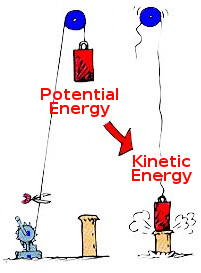
The torso must remain closed while the hips turn aggressively toward the sector. This creates torque across the core, stretching the major muscle groups of the abdomen and chest. This tension acts as a biological spring, storing elastic potential energy that is rapidly converted into kinetic energy as the upper body unwinds.
The Terminal Block
As the athlete enters the front of the circle, the lead leg must lock securely into the ground, acting as a rigid brace. This instantaneous deceleration of the lower body triggers a conservation of momentum, transferring the accumulated velocity rapidly up through the torso, shoulder, and arm, and directly into the 12-pound shot.
If the lead leg bends or sags during this terminal block, the energy generated during the drive phase leaks into the ground or collapses the torso, reducing release velocity. Kensinger's performance indicates a highly rigid block phase, ensuring that the kinetic energy generated across the circle was fully transferred to the implement rather than absorbed by structural instability.
Technical Adaptation: Rotational vs. Glide Methodologies
Achieving a historical outlier mark within a high school athletic program frequently involves tactical choices regarding the throwing style used. Track and field analysts categorize shot put execution into two primary technical methodologies: the traditional linear glide and the modern rotational technique.
The linear glide relies on a explosive backward drive across the circle, establishing a long path of force application along a single axis. This technique favors athletes with exceptional explosive power and vertical jumping capabilities, providing a highly reliable and consistent technical platform.
Conversely, the rotational technique adapts the mechanics of the discus throw to the shot put circle. By spinning across the 7-foot ring, the athlete increases the length of the acceleration path and uses rotational angular momentum to build linear velocity.
The structural trade-offs between these two styles are definitive:
- Acceleration Path Length: The rotational style allows the shot put to travel along an extended, curved path before release, giving the athlete more time to apply force to the implement.
- Velocity Potential: Because of the longer path and the contribution of rotational torque, the rotational method possesses a higher theoretical ceiling for maximum release velocity.
- System Stability: The glide method features a lower degree of movement complexity, making it easier to replicate under high-pressure competitive conditions. The rotational technique demands extreme spatial awareness and precise foot placement within narrow boundaries, leaving a much smaller margin for error.
Kensinger's evolution from a 46-foot, 8-inch freshman baseline to a 65-foot, 11-inch senior record reflects the long-term compounding returns of high-velocity technical training. The steep trajectory of his performance gains suggests an athletic profile that has mastered the complex timing required to handle high rotational forces without compromising balance at the front of the ring.
Environmental and Psychological Variables in Peak Performance
While structural mechanics establish the boundaries of physical performance, the acute execution of an elite throw is influenced by immediate environmental and psychological conditions.
The presence of a highly engaged crowd clapping in unison at the City championships is frequently characterized by media as mere entertainment. However, sports science identifies a distinct physiological mechanism at work: social facilitation. This psychological phenomenon demonstrates that presence of evaluative spectators increases an experienced athlete's physiological arousal, triggering a controlled release of adrenaline.
This hormonal spike elevates heart rate, increases motor unit recruitment, and shortens muscle contraction times. For an elite athlete whose movement patterns are deeply automated through thousands of practice repetitions, this heightened physiological state does not disrupt technical execution. Instead, it provides the additional neural drive required to execute the terminal block and arm extension with maximum velocity.
Strategic Implications for Post-Season Contention
Breaking a 53-year-old regional record establishes a new competitive standard, but it also alters the strategic landscape as the postseason shifts toward the state level. Kensinger's 65-foot, 11-inch mark positions him as a primary contender, yet maintaining this level of performance requires careful management of peak physical conditioning.
The primary risk following an elite performance is a physiological regression to the mean, often caused by central nervous system fatigue. Generating the extreme forces necessary to hit a lifetime personal best places immense stress on the neuromuscular system.
To secure a state title, training volumes must be managed strategically:
- Neuromuscular Deloading: Reducing overall lifting volumes while preserving high-intensity, low-repetition movements to allow the central nervous system to fully recover.
- Kinematic Stabilization: Utilizing sub-maximal technique throws focused entirely on maintaining structural alignment during the terminal block.
- Variable Management: Preparing for different circle textures and weather conditions at the state meet to ensure the technical model remains effective outside of familiar home facilities.
The data shows that regional records are milestones, but peak performance at the state level requires a deliberate transition from raw force production to precise mechanical replication. The thrower who successfully stabilizes their release velocity within the optimal $37^\circ$ to $42^\circ$ window under changing conditions will ultimately secure the state title.