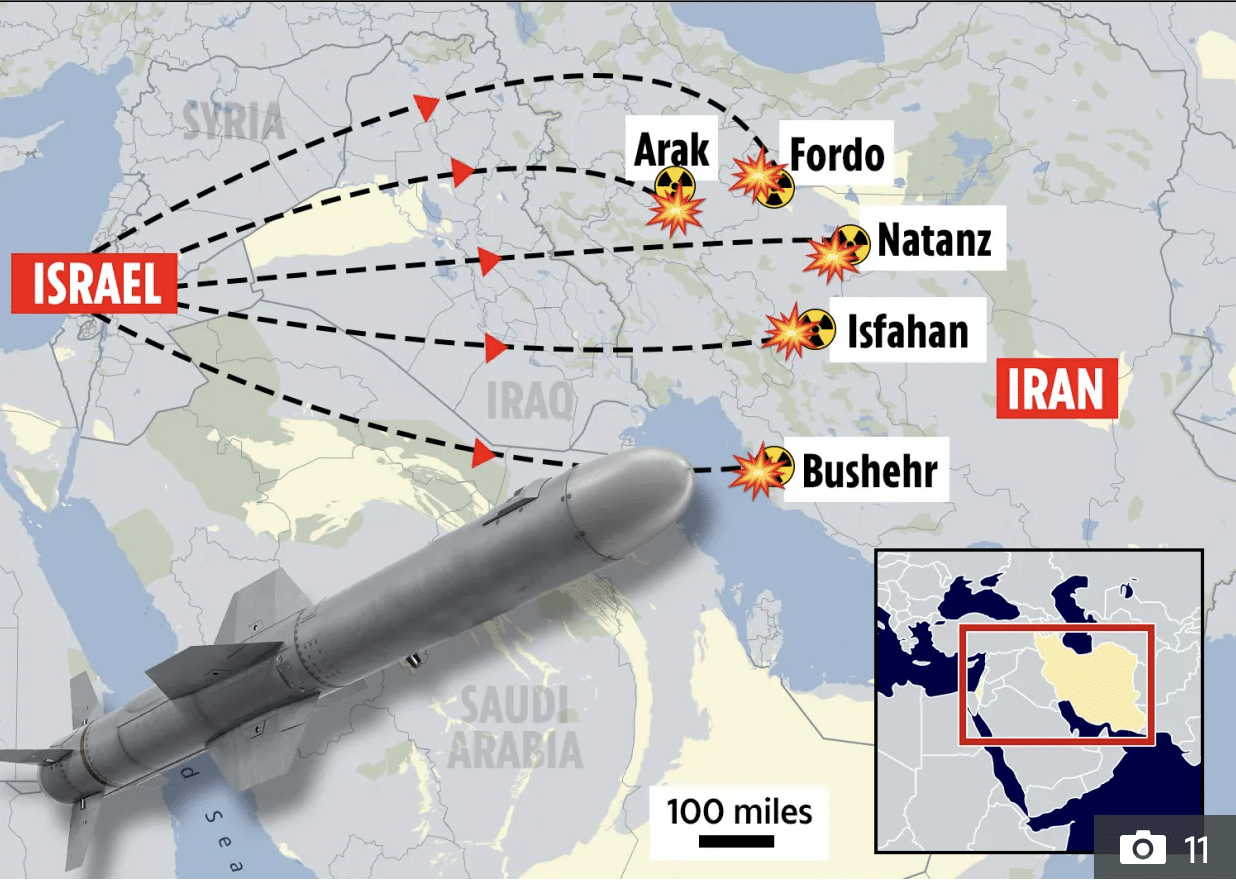
Benjamin Netanyahu is no longer content with merely "containing" the Iranian nuclear threat through sabotage and cyberwarfare. The Israeli Prime Minister has shifted toward a more ambitious and dangerous doctrine designed to trigger the collapse of the Islamic Republic from within. This is not a sudden whim but the culmination of decades of intelligence gathering, targeted assassinations, and a calculated gamble that the Iranian public is ready to break. By striking at the regime’s regional proxies and humiliating its leadership on the world stage, Israel aims to strip away the "wall of fear" that keeps the clerical establishment in power.
The strategy hinges on a fundamental belief held within the upper echelons of the Israeli security cabinet. They see the current Iranian government as a hollowed-out shell, propped up only by its internal security apparatus and a dwindling sense of ideological legitimacy. To collapse that shell, Israel is moving beyond the "Octopus Doctrine"—which targeted the head of the Iranian regime while fighting its "tentacles" like Hezbollah—and into a phase of active destabilization.
The Decapitation of Regional Influence
For years, Iran’s primary defense against a direct Israeli or American attack was its "Ring of Fire." This was a network of heavily armed proxies in Lebanon, Syria, Iraq, Yemen, and Gaza. The idea was simple: if you touch Tehran, we set the region ablaze. That insurance policy is currently being liquidated.
The systematic destruction of Hezbollah’s command structure in Lebanon serves as the blueprint for this new phase. By removing Hassan Nasrallah and his entire top-tier military leadership, Israel did more than just secure its northern border. It signaled to the Iranian people that their government’s most expensive and prized project—a thirty-year investment in Lebanese regional dominance—could be dismantled in a matter of weeks.
When the Iranian public sees billions of their oil dollars literally going up in smoke in the suburbs of Beirut while their own economy craters, the resentment grows. This is the "condition" Netanyahu refers to. It is the psychological decoupling of the Iranian people from the regime’s revolutionary foreign policy. If the regime cannot protect its greatest asset abroad, the logic goes, it cannot protect itself at home.
Economics as a Weapon of Revolt
While the bombs fall in Lebanon and Syria, a different kind of pressure is being applied to the streets of Tehran and Isfahan. Israel’s strategy relies heavily on the hope that economic misery will eventually outweigh the fear of the Basij militia.
The Iranian Rial has lost massive value against the dollar over the last decade. Inflation is a permanent guest at every Iranian dinner table. By targeting Iranian energy infrastructure or forcing the regime to spend its remaining reserves on defense and proxy reconstruction, Israel is tightening the noose.
However, this is where the strategy encounters its first major hurdle. Historical precedent suggests that external pressure often allows authoritarian regimes to wrap themselves in the flag. The "rally 'round the flag" effect is a real phenomenon. If the Iranian public perceives that Israel is trying to destroy their country rather than just their government, they may hunker down. Netanyahu’s challenge is to convince the Iranian street that Israel is their silent partner in liberation, a narrative he has attempted through several direct video addresses to the Iranian people.
The Intelligence Breach and Internal Paranoia
The most potent weapon in this campaign is not a missile but a sense of profound insecurity within the Iranian Revolutionary Guard Corps (IRGC). The assassination of Ismail Haniyeh in a secure guesthouse in the heart of Tehran was a masterclass in psychological warfare. It didn't just kill a Hamas leader; it told every high-ranking Iranian official that they are being watched, that their subordinates are compromised, and that no room is truly safe.
Paranoia is a corrosive force in any dictatorship. When a leader begins to doubt their inner circle, they purge. When they purge, they weaken the very institutions that keep them in power.
Israeli intelligence operations have reached a level of penetration that allows them to snatch nuclear archives or plant explosives in high-security facilities with terrifying regularity. This creates a perception of omnipotence. For a regime that relies on an aura of strength to suppress its own population, being repeatedly embarrassed by a "Zionist entity" they claim to despise is a slow-acting poison. It emboldens domestic dissidents who previously thought the regime was invincible.
The Washington Variable
No Israeli plan for Iranian regime change can succeed in a vacuum. The relationship with the United States remains the most critical, and often the most friction-filled, part of the equation.
Successive U.S. administrations have been wary of "regime change" as a formal policy, haunted by the ghosts of Iraq and Libya. They prefer "behavior change." Netanyahu, however, appears to have concluded that the regime’s behavior—specifically its pursuit of nuclear weapons and regional hegemony—is baked into its DNA. To change the behavior, you must change the DNA.
This creates a rift. Israel wants to push the envelope, taking risks that could draw the U.S. into a direct conflict. The U.S., meanwhile, often seeks to de-escalate, fearing a global energy crisis or a massive refugee wave. Israel’s current path is designed to create "facts on the ground" that leave Washington with no choice but to support the outcome. If the Iranian regime begins to crumble under the weight of internal protests triggered by Israeli military successes, the U.S. will be forced to back the winning side.
The Role of the Diaspora and Domestic Dissent
Netanyahu's gamble also leans heavily on the "Woman, Life, Freedom" movement that exploded after the death of Mahsa Amini. While that movement was largely suppressed through sheer brutality, the underlying grievances never went away.
The strategy assumes that the Iranian opposition is a dry forest waiting for a spark. Israel is trying to provide that spark by showing that the regime is a "paper tiger." If the IRGC is seen as unable to defend itself against Israeli strikes, the cost-benefit analysis for a young Iranian protester changes. If the regime is distracted by a looming war or internal power struggles, the security forces may be less willing to fire on their own citizens.
But we must acknowledge the risks. A cornered regime is often the most dangerous. If the clerics in Tehran feel the end is near, they may decide that their only hope is to sprint for a nuclear weapon or to launch a total regional war. This "Samson Option" for the Iranian regime is what keeps regional analysts awake at night.
The Strategic Miscalculation Factor
There is a danger in overestimating the fragility of the Iranian state. The Islamic Republic has survived an eight-year war with Iraq, decades of sanctions, and multiple waves of domestic unrest. It is a system built for survival.
The IRGC is not just a military; it is a massive business conglomerate that owns significant portions of the Iranian economy. Its members have everything to lose. Unlike a traditional military that might switch sides during a revolution, the IRGC knows that a change in regime likely means their imprisonment or execution. This creates a "dead-end" loyalty that is very hard to break with external pressure alone.
Furthermore, the "conditions" Netanyahu wants to create could lead to a failed state rather than a democracy. A power vacuum in Iran would be a catastrophe of unimaginable proportions, potentially leading to a civil war that would make Syria look like a minor skirmish. Israel’s planners argue that any outcome is better than a nuclear-armed Iran, but that is a gamble of biblical proportions.
The Shift to Direct Confrontation
The direct exchange of missiles between Iran and Israel in 2024 and 2025 marked the end of the "shadow war." The veil is off. Israel is now openly hitting targets inside Iran, and Iran is responding from its own soil.
This directness serves Netanyahu’s goal of "creating conditions" by forcing the Iranian leadership to make impossible choices. If they don't respond to Israeli hits, they look weak to their supporters and the domestic population. If they do respond, they risk a massive retaliatory strike that could destroy the very infrastructure—oil refineries, power grids, and command centers—that keeps the country functioning.
Every time Tehran is forced to choose between humiliation and escalation, the internal fractures in the leadership widen. There are "pragmatists" who want to save the system through some form of renewed diplomacy, and there are "hardliners" who want to double down on the revolutionary path. Israel’s actions are designed to make the pragmatists look like fools and the hardliners look like a suicide cult.
Beyond the Battlefield
The "conditions" for regime change also involve a massive information war. Israel is leveraging social media and satellite broadcasts to speak directly to Iranians, bypassing the state-controlled media. They highlight the luxury lives of the children of regime officials—the "Aghazadehs"—while ordinary Iranians struggle to buy meat.
This focus on corruption is often more effective than geopolitical arguments. It strikes at the heart of the regime’s claim to moral and religious superiority. When an Israeli official tweets in Persian about the regime stealing water or mismanaging the environment, it is a calculated attempt to align Israeli interests with the daily survival of the Iranian people.
The path Netanyahu has chosen is one of high-stakes disruption. It moves away from the cautious containment of the past and toward a volatile future where the goal is a total reordering of the Middle East. Whether this results in a liberated Iran or a regional conflagration depends on whether the Iranian people see these "conditions" as an opportunity or a threat to their national existence.
Monitor the Iranian Rial’s black market exchange rate over the next quarter; it is the most accurate barometer of how much the "wall of fear" is actually cracking.