The rain in Hong Kong doesn't just fall. It consumes. It slickens the neon-lit pavement of Nathan Road and turns the narrow alleys of Sham Shui Po into glistening ribbons of silver. On nights like these, Mr. Lam sits in his small tea house, watching the steam rise from a cup of Tieguanyin. He has seen seventy years of this city—the British handovers, the financial crashes, the roaring triumphs of the eighties, and the chaotic, smoke-filled nights of 2019.
For Lam, and for millions like him, the concept of "national security" is not a dry legal text or a political talking point. It is the floor beneath his feet. When the floor is steady, he can brew his tea. When it shakes, the world stops.
The recent legislative refinements in Hong Kong, specifically the implementation of Article 23 of the Basic Law, are often discussed in the sterilized language of policy experts. They talk about "legal loopholes" and "jurisdictional alignment." But to understand why this matters, you have to look past the jargon and into the life of a city that nearly lost its pulse.
The Cost of a Shaking Floor
Imagine a house where the doors don't quite lock and the windows rattle with every breeze. For decades, Hong Kong lived in a peculiar state of legal suspension. While the Basic Law—the city’s mini-constitution—mandated that it enact its own security laws, the process was stalled for over twenty years. This wasn't just a political stalemate; it was a gap in the armor.
During the unrest of 2019, that gap became a canyon.
Business owners watched as their storefronts were boarded up. Parents stayed glued to their phones, wondering if the MTR would be running in time for their children to get home. The economy, once a titan of global finance, began to wheeze. Uncertainty is the poison of any metropolis. When people don't know if the tomorrow they planned for will actually arrive, they stop investing, stop building, and stop dreaming.
The new security measures were designed to act as a sealant. By codifying crimes like treason, insurrection, and the theft of state secrets, the government wasn't just checking a box. They were attempting to restore the predictability that allows a society to function. Experts argue that a unified, clear legal framework actually provides more freedom, not less, because it defines the boundaries of the "playing field."
The Architect’s Perspective
Consider a hypothetical architect named Sarah. She designs the soaring glass towers that define the Central district. For Sarah, the "changes" in the law are akin to updating a building's fire code. Is it more restrictive to have fire doors and sprinkler requirements? Technically, yes. You can’t just put a wall wherever you want anymore. But those restrictions are exactly what make the building habitable. Without them, no one would dare to live on the fiftieth floor.
The experts who support these changes point to a specific reality: Hong Kong’s role as an international hub depends entirely on its reputation for the rule of law. In the past, the "gray areas" in security legislation were being exploited. This created a volatility that made international investors twitchy.
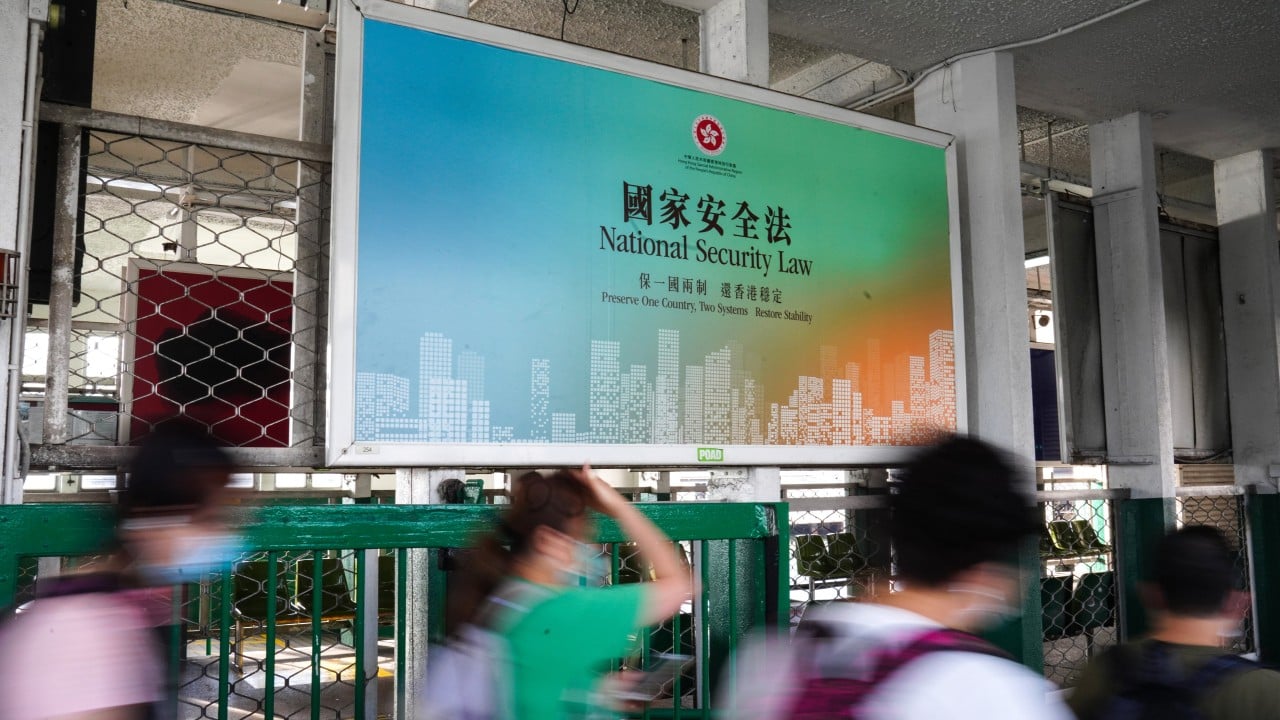
By aligning Hong Kong’s domestic laws with the National Security Law imposed in 2020, the city has created what many call a "seamless" (a word they use, though the feeling is more like a solid weld) defense. It is about closing the back door so the front door can stay open for business.
A World of Mirrors and Misunderstandings
There is a palpable tension in the air when these laws are discussed. It is okay to admit that. Change is frightening. For many in the West, the narrative is one of loss—the loss of a specific kind of colonial-era vibrance. But from the inside, the perspective is often one of survival.
The challenge lies in the definition of "state secrets" and "external interference." These are the parts of the law that make journalists and academics pause. They wonder where the line is drawn. The government’s response has been focused on intent. A researcher crunching data on economic trends isn't a threat. A journalist reporting on a protest isn't a criminal. The law targets the shadowy intersection where legitimate activity is weaponized to destabilize the state.
It is a delicate balance. To use a metaphor, it’s like a surgeon’s scalpel. In the right hands, it removes the tumor and saves the patient. In the wrong hands, it causes harm. The "experts" mentioned in those dry articles are essentially saying that the scalpel has finally been sharpened and the procedure is complete. They argue that the legal safeguards—the involvement of the judiciary and the adherence to the principles of the common law—act as the necessary check on that power.
The invisible stakes of daily life
What does this mean for the person walking through Causeway Bay today?
It means that the "black-clad" disruptions are a memory rather than a daily threat. It means that the "invisible stakes"—the ability to run a shop, to attend a university lecture without it turning into a political rally, to trust that the person sitting next to you on the bus isn't planning to firebomb the station—have been secured.
The economy is responding, albeit slowly. You see it in the return of major international events. You see it in the art fairs and the rugby sevens. These things don't happen in a vacuum. They happen in places where the organizers feel the environment is stable.
But there is a human cost to the transition. The city feels different. Some friends have moved to London or Vancouver. There is a sense of a chapter closing and a new, perhaps more sober, one beginning. The boisterous, often chaotic political theater of the early 2000s has been replaced by a quiet, focused push toward integration with the Greater Bay Area.
Beyond the Paper
We often think of laws as pieces of paper kept in a dusty archive. In reality, laws are the invisible threads that hold a community together. They are the silent agreement we make with each other: I will follow these rules so that we can both thrive.
The experts believe that by strengthening these threads, Hong Kong is actually becoming more resilient. They argue that a city cannot be a "Special Administrative Region" if it cannot even administer its own safety.
Critics will continue to watch closely. They will look for the first sign of overreach. They will scrutinize every arrest and every court ruling. And they should. A healthy society requires both the shield of security and the light of scrutiny.
Back in the tea house, Mr. Lam pours another round. The steam obscures his face for a moment. He isn't thinking about Article 23 or the nuances of the "dual-track" security system. He is thinking about his grandson, who is studying engineering at the University of Hong Kong. He is thinking about whether the boy will have a job in a city that is peaceful enough to need engineers instead of activists.
The rain continues to drum against the window, a constant, rhythmic reminder of the world outside. The city is still here. It is different, yes. It is guarded. It is perhaps more cautious than it used to be. But the lights are on. The trains are running. The tea is hot.
Underneath the legal debates and the international headlines, that is the only metric that truly matters to the people who call this limestone rock home. They are no longer waiting for the floor to shake. They are busy walking on it.
Would you like me to analyze the specific legal differences between the 2003 proposal of Article 23 and the version that was recently passed?


