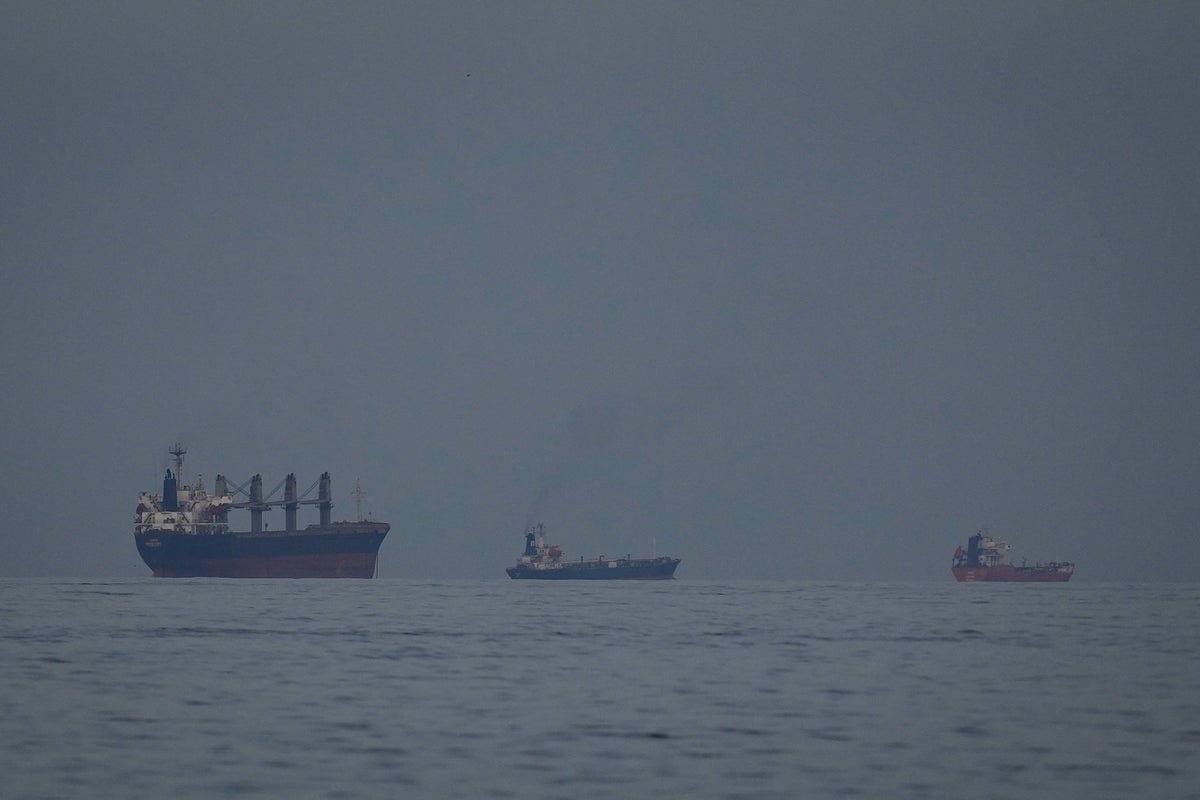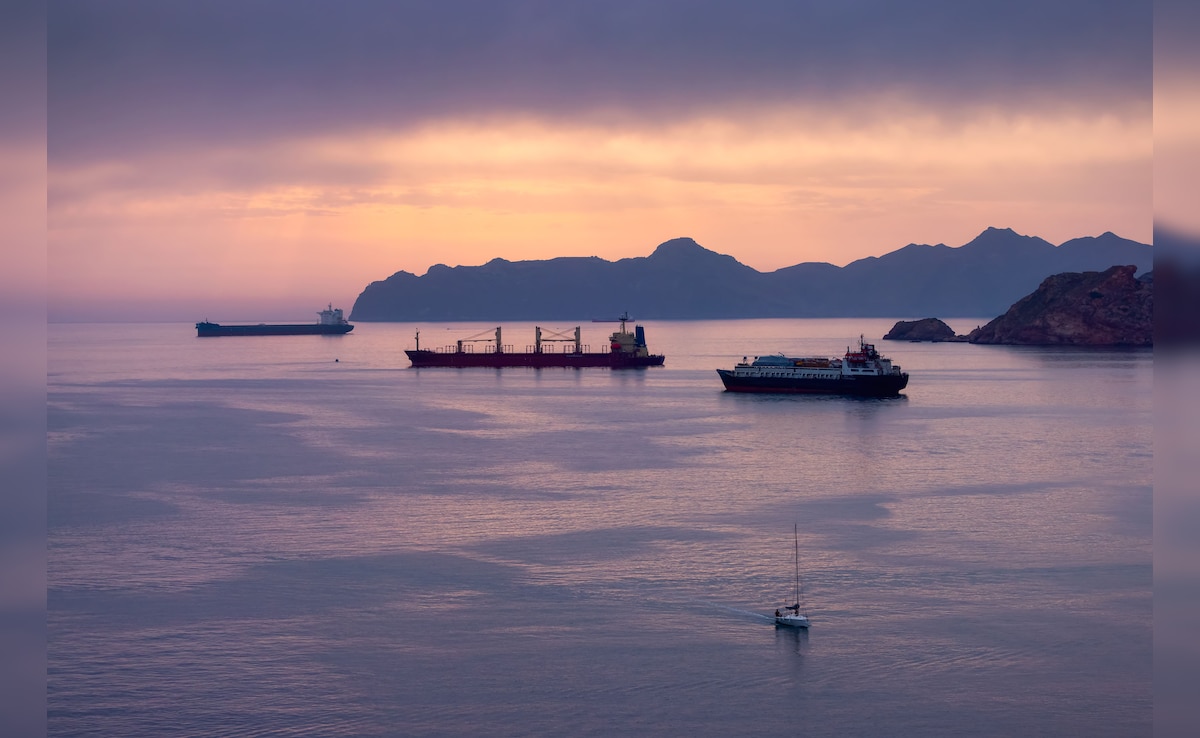
A single degree of steering. That is often all that separates a standard Tuesday in global commerce from a systemic heart attack. To understand the Strait of Hormuz, you have to stop looking at it as a line on a map and start seeing it as a throat. It is narrow—barely twenty-one miles wide at its tightest pinch—and through that small gap pulses the literal lifeblood of the modern world. One-fifth of the globe’s liquid energy moves through these waters.
Now, imagine the pulse stops.
Recently, the United States military dropped a heavy, uncomfortable truth into the public record. They admitted they are not ready. Specifically, the Navy signaled that it lacks the immediate capacity to provide full-scale, sustained escorts for commercial tankers through this volatile corridor. It wasn't a statement of cowardice. It was a cold, hard calculation of math, logistics, and the decaying state of maritime dominance.
Consider a hypothetical captain named Elias. He sits on the bridge of a Very Large Crude Carrier (VLCC). He is responsible for two million barrels of oil and a crew of twenty-four souls. As Elias approaches the Musandam Peninsula, he isn't looking at the sunset. He is scanning the radar for the fast-attack craft that have become the ghosts of these waters. He knows that if a boarding party swarms his deck, there is no grey-hulled destroyer sitting on his horizon to wave them off. He is, for all intents and purposes, on his own.
The disconnect between our expectations of safety and the reality of naval geometry is staggering. We assume that because the U.S. spends hundreds of billions on its military, a protective umbrella exists over every essential trade route. We are wrong.
The math of an escort mission is brutal. To protect a single tanker, you need a dedicated surface combatant. To protect a fleet, you need a literal wall of steel. But the U.S. Navy’s ship count has been shrinking for decades while its responsibilities have ballooned. You cannot be in the South China Sea, the North Atlantic, and the Persian Gulf all at once with a fleet that is tired, overworked, and undergoing constant maintenance.
When the Pentagon says "we are not ready," they are describing a gap in "hull days." There simply aren't enough ships in the right state of repair to play bodyguard for private corporations.
But why should the average person care if a multi-billion-dollar oil company has to hire its own security? Because the economy is not a series of spreadsheets; it is a physical chain. When insurance premiums for tankers spike—which they do the moment a "not ready" statement hits the wires—that cost doesn't vanish. It migrates. It moves from the shipping manifest to the refinery, then to the logistics provider, and finally to the digital display at your local gas station.
The Strait of Hormuz is a psychological pressure point as much as a physical one. It is a place where a cheap, $20,000 drone or a magnetic mine can hold a $200 million ship hostage. This asymmetry is the nightmare of modern naval doctrine. We are trying to defend against "mosquito" tactics using "sledgehammer" tools, and we are running out of hammers.
The situation reveals a deeper, more unsettling vulnerability in how we built the 21st century. We designed a global system that relies on total, uninterrupted flow, yet we neglected the infrastructure required to police that flow. We built the "just-in-time" world on a "maybe-it's-safe" foundation.
Naval leaders are now forced to speak in the language of triage. They have to decide which routes are "essential" and which are "acceptable risks." For the crews manning the tankers, being labeled an "acceptable risk" is a terrifying prospect. They are the ones who have to watch the horizon, wondering if the next fast-moving speck on the radar is a fishing boat or a paramilitary unit looking for leverage.
The technology of war has moved faster than the bureaucracy of shipbuilding. While we debated the budget for next-generation carriers, our adversaries perfected the art of the cheap disruption. They realized they don't need to sink the Navy; they just need to make the Navy’s presence too expensive or too spread-thin to be effective.
This lack of readiness isn't just about ships. It’s about the erosion of the "freedom of navigation" principle that has governed the seas since 1945. If the world’s preeminent naval power admits it cannot secure the most important chokepoint on earth, the message to every regional power and non-state actor is clear: The door is ajar.
We are entering an era of "sovereign shadows," where trade is no longer guaranteed by international law but by the temporary, flickering presence of force. If that force isn't there, the shadow grows.
The ships are still moving for now. Elias still grips the bridge rail, watching the dark water. The oil still flows. But the silence from the horizon is getting louder. We have spent decades assuming the guards would always be at the gate, never stopping to check if the guards had enough boots, enough bullets, or even enough gates.
The cost of a gallon of gas is one thing. The cost of realizing the ocean is no longer a neutral highway is quite another. We are waking up to a world where the maps are the same, but the safety of the lines drawn upon them has evaporated. The ships are out there, vulnerable and alone, waiting for a protection that isn't coming.